

Long before we grow old, we are already shaping the body that will carry us through those years.
Most people do not struggle with health because they lack discipline. They struggle because they approach health the same way they approach work, goals, and deadlines. It becomes something to start, fix, complete, and move on, from another item on a list rather than something that lives with us every day. So we begin with intensity.
We change everything at once, we commit to strict routines, we push ourselves because effort feels productive, for a while, it works. There is structure, momentum, and a sense of control. But life eventually does what it always does… it interrupts.
Energy fluctuates, schedules tighten, responsibilities grow, and slowly, the routine fades. What follows is familiar: a frustration, a little guilt, and the promise that we will “start again” when life settles down.
But what if the problem was never discipline?
What if the problem was the way we understood health in the first place? Because the body was never meant to be treated like a project.
A project has a finish line.
A project can be paused and restarted.
A project exists outside of us.
The body does not work that way, the body responds to continuity. It notices how we treat it today, tomorrow, and the day after that. When care disappears, it responds. When attention returns, it responds again with consequence. This is not punishment, it is relationship.
And relationships follow different rules. They are not built through bursts of intensity but through steady presence. They are shaped by small acts repeated over time how we move, how we rest, how we nourish ourselves, and how we listen when the body begins to speak.
Image

Once we begin to see health this way, something shifts.
Health is no longer something we turn “on” and “off.” It becomes a companionship with our own physical being. Some days we are more attentive, some days we drift away but the relationship remains.
And in midlife, this realization begins to carry a different weight because time starts to feel more concrete. The body that once recovered quickly now asks for a little more patience. Energy has limits, rest becomes meaningful, and signals that once seemed small … begin to matter.
What worked in youth, pushing hard and recovering later no longer fits the body that is now asking for wiser care. This is where many people feel frustrated as they assume something is wrong with them. But often, nothing is wrong. The body is simply asking for a different relationship, instead of asking, “What program should I follow?” a wiser question becomes more useful:
What does my body need from me today?
Some days it asks for movement, other days it asks for rest, sometimes nourishment maybe, or even restraint. The body does not demand heroics, it simply asks to be listened to. When that listening becomes consistent, something subtle begins to change.
The body stops feeling like something we have to fight or control. It begins to function more like a partner, responding, adapting, cooperating. Movement becomes smoother, energy becomes steadier, and ecovery becomes more reliable. What many people call “good genetics” is often something else entirely: years of cooperation between a person and their body. And the opposite is also true.
When the body is treated only as a tool for productivity, something to push, ignore, or override, it eventually begins to resist. Mobility shrinks, fatigue lingers, and small discomforts take longer to heal. The body is simply keeping the record. This is where an important question begins to emerge, one that many people only confront later in life.
Image
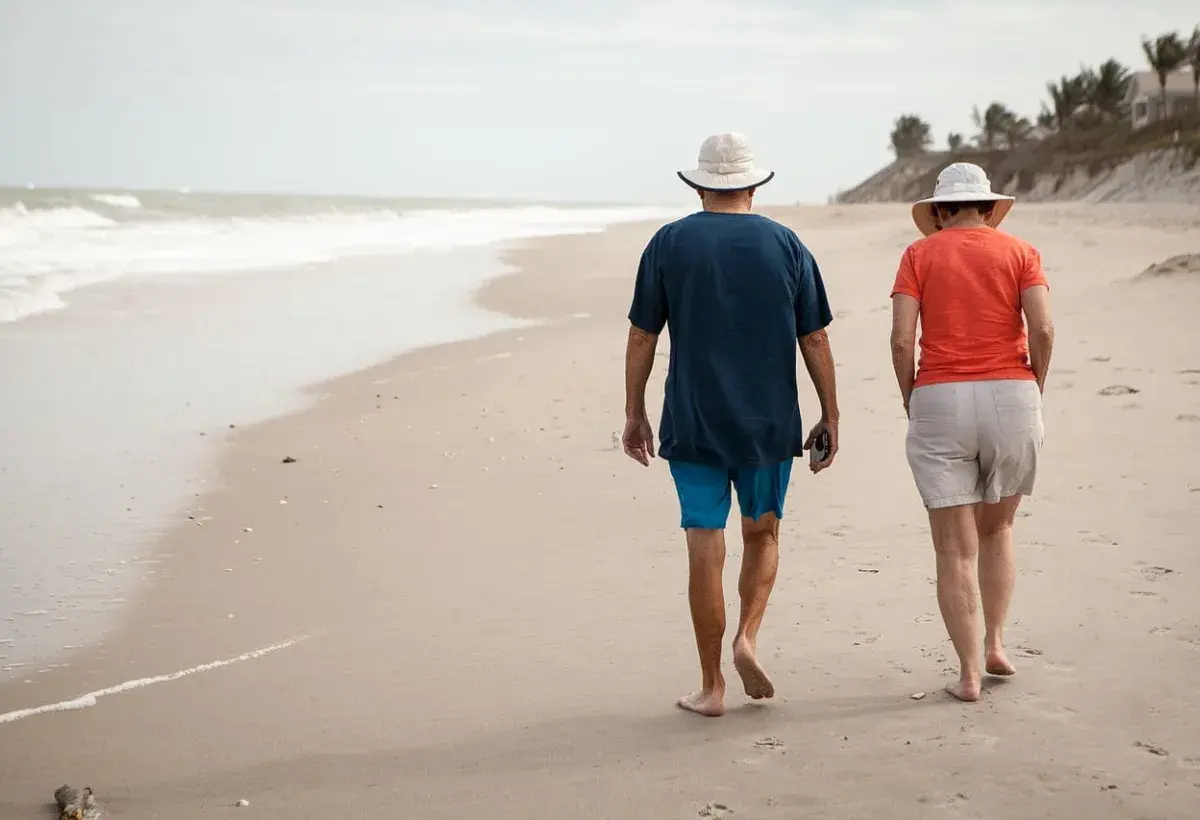
What is wealth if the body cannot move freely within it?
What is success if the body cannot participate in the life it helped build? The ability to walk comfortably, to travel, to bend, to carry, to breathe deeply, to move through the world without fear these are not small privileges. They are the foundation of living well.
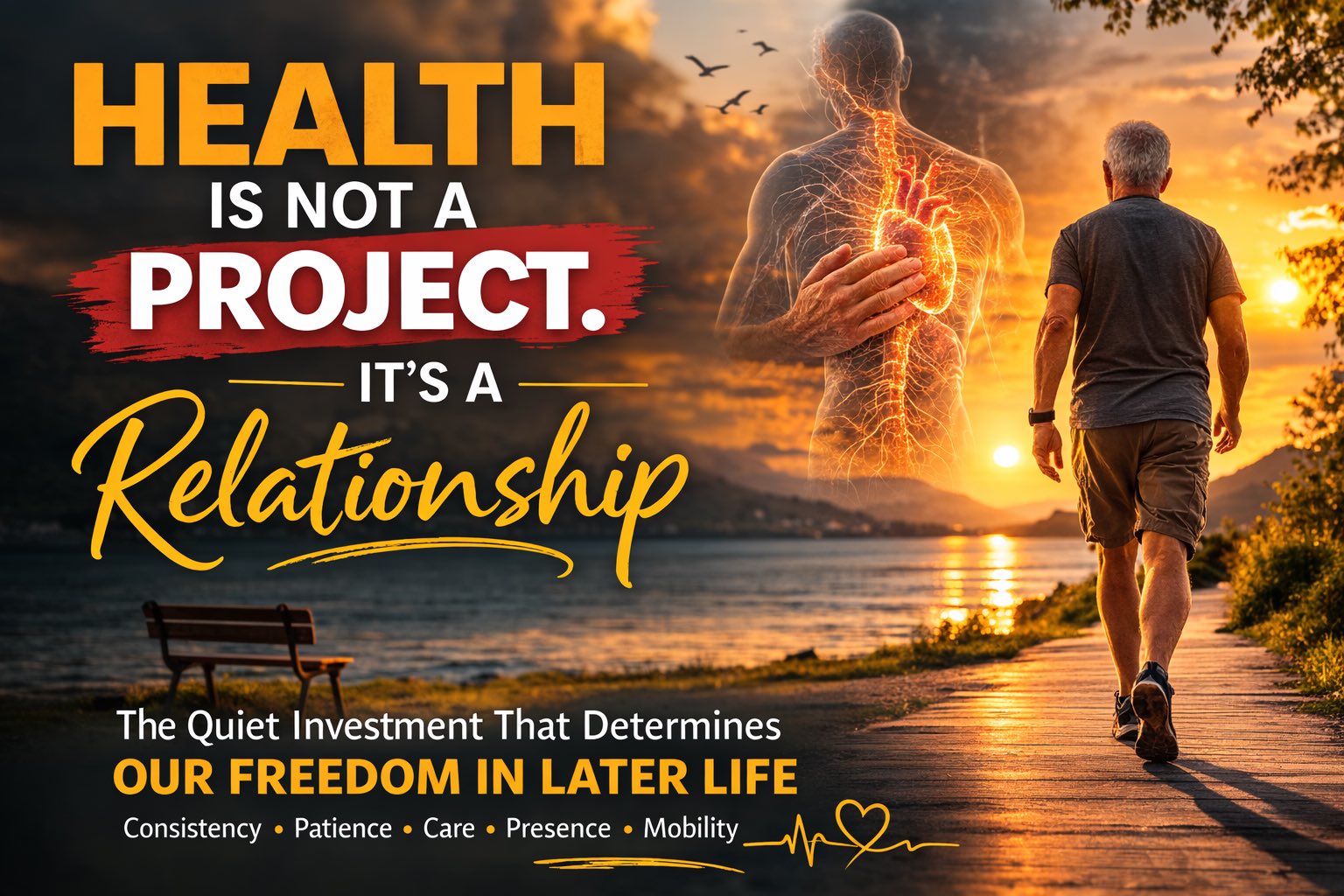
Mobility is not merely a fitness goal. It is freedom. And that freedom in later life is built long before we reach those years. The investment appears in small decisions repeated daily, a walk taken when energy feels low, a meal chosen with care, a moment of rest before exhaustion becomes injury. These acts rarely feel extraordinary, but over time they accumulate.
Years of respectful care lead to resilience while years of neglect lead to limitation, the body remembers both. Understanding this does not mean judging our past. It simply invites reflection. We might ask ourselves:
Have I been treating my body like a task to manage… or like a relationship to tend? Do I only show up when motivation is strong… or do I show up because care matters? When I drift away, do I criticize myself… or do I simply return?
These are not questions meant to expose failure but questions that help us change posture. Because aging without fear requires a different posture toward our bodies. One rooted not in urgency, but in respect. Projects demand quick results while relationships mature slowly. In the later chapters of life, patience becomes protective. Pushing too hard invites injury, ignoring fatigue invites resentment. Overriding signals invites breakdown but listening builds trust.
And when the body trusts you, something remarkable happens: it begins to cooperate rather than resist. Movement becomes less adversarial, energy becomes steadier, recovery becomes more predictable. Not because the body has become younger, but because it no longer feels constantly pressured to perform. From this perspective, health stops being a battle, it becomes stewardship. And stewardship carries a quiet truth: each of us is the primary caretaker of the body we will eventually grow old in.
Image
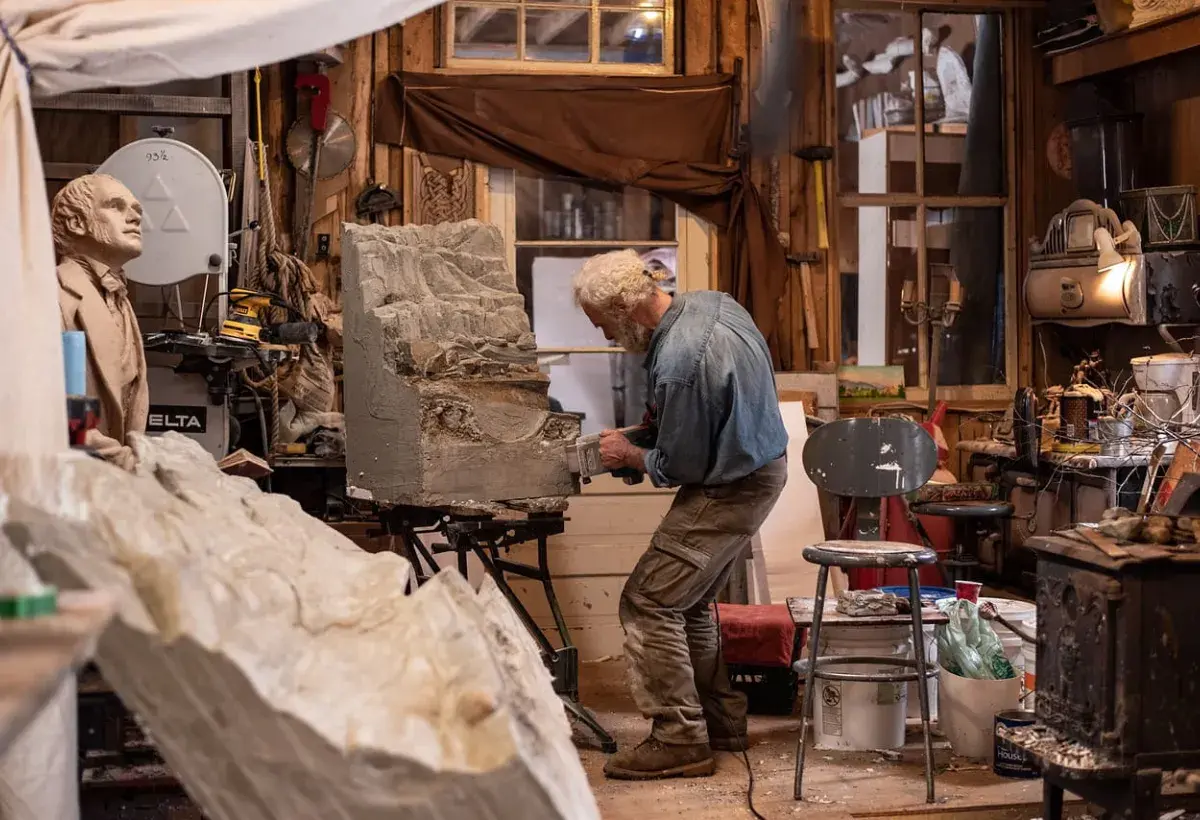
The condition of that future body is not decided in a single year.
It is shaped by thousands of small choices across decades… consistently. When we understand this, the question changes. Instead of asking, “How do I get back on track?” We begin asking something simpler: How do I stay connected? Connection is more than a motivation, but far more reliable as it survives interruptions, busy seasons, and imperfect days. A short walk, a nourishing meal, or a moment of rest.
These gestures may seem small, yet they sustain the relationship that ultimately determines how we will inhabit the later chapters of our lives. Because in the end, the body simply reflects the relationship we have built with it. And the encouraging truth is this: That relationship is always available to renew. Not tomorrow, not when life becomes easier, but today, exactly as we are.
Closing Reflection from the Author
If there is one realization that slowly becomes clearer with age, it is this: the body remembers everything. It remembers the years we cared for it, and it remembers the years we ignored it. Not in anger, and not in judgment but simply in the way it responds to us over time.
When we are young, the body is generous. It absorbs our neglect, forgives our excesses, and recovers quickly. Because of that generosity, many of us believe that health is something we can always repair later.
But life eventually reveals a quieter truth. The body we will inhabit in our later years is not something that suddenly appears when we grow older. It is something we have been building, slowly and quietly, all along.
Every choice leaves a small imprint. Every walk taken, every moment of rest respected, every meal chosen with care becomes part of the story our body carries forward. So this reflection is not meant to create pressure. It is meant to invite awareness.
Image
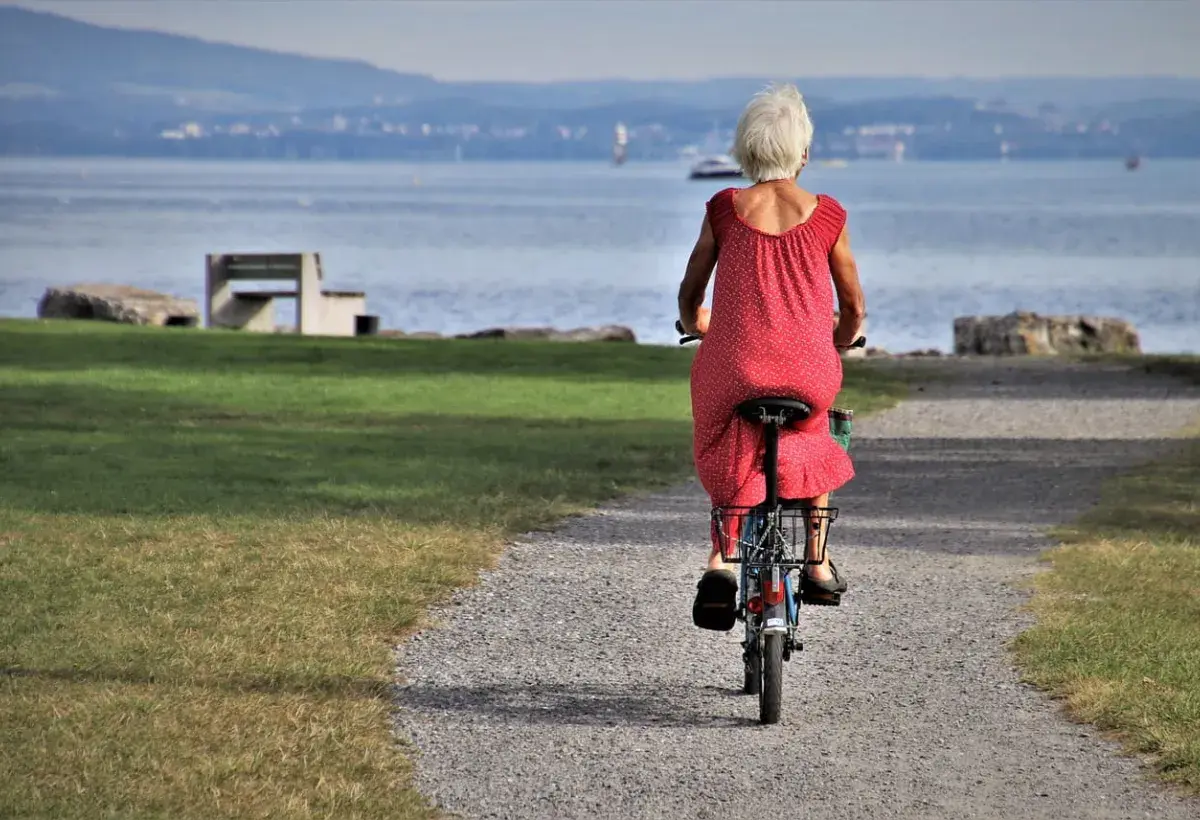
Because the responsibility for our health does not belong to a program, a doctor, or a temporary burst of motivation. It belongs to the relationship we choose to maintain with the physical body entrusted to us. And like any relationship, it does not ask for perfection. It asks for presence.
To listen when the body whispers before it has to shout.
To move when movement is needed.
To rest when rest is necessary.
To care not because we are trying to fix something, but because we are learning to live well inside the body we have been given.
In the end, health is not measured only in strength or numbers, it is measured in freedom. The freedom to walk comfortably through the later years of life. The freedom to participate in the lives of the people we love, the freedom to experience the world without being limited by the body that carries us through it.
And that freedom is built, day by day, through a relationship that we continue to tend. So the most honest question we can ask ourselves today is not whether we are doing health perfectly, but simply this:
Am I caring for the body that will one day carry me into my older years?
Because the future version of ourselves is already taking shape in the choices we make today. And the relationship we build with our body now will eventually become the life we are able to live later.
Written from lived experience, with care for the life we’ve been given.
— CLARITY EDITED, 56
Image
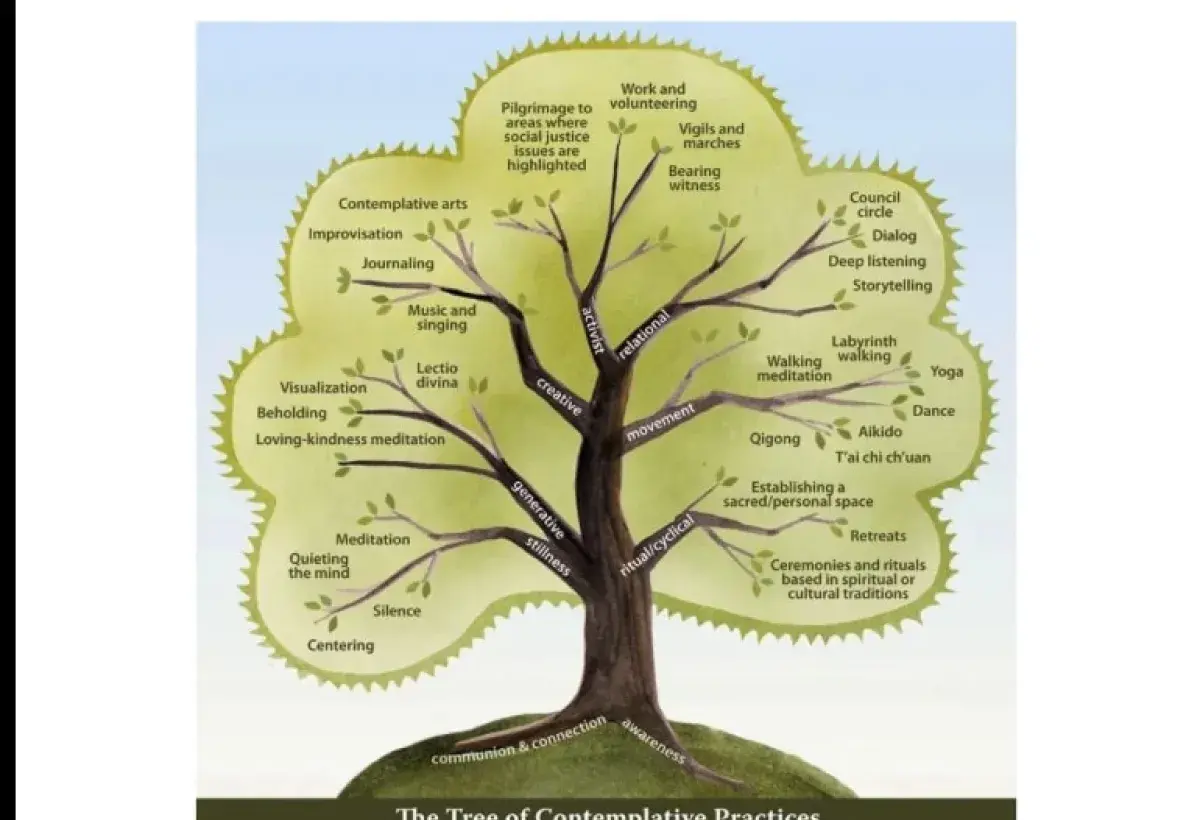
This reflection draws inspiration from contemplative frameworks such as the “Tree of Contemplative Practices” developed by The Center for Contemplative Mind in Society.