


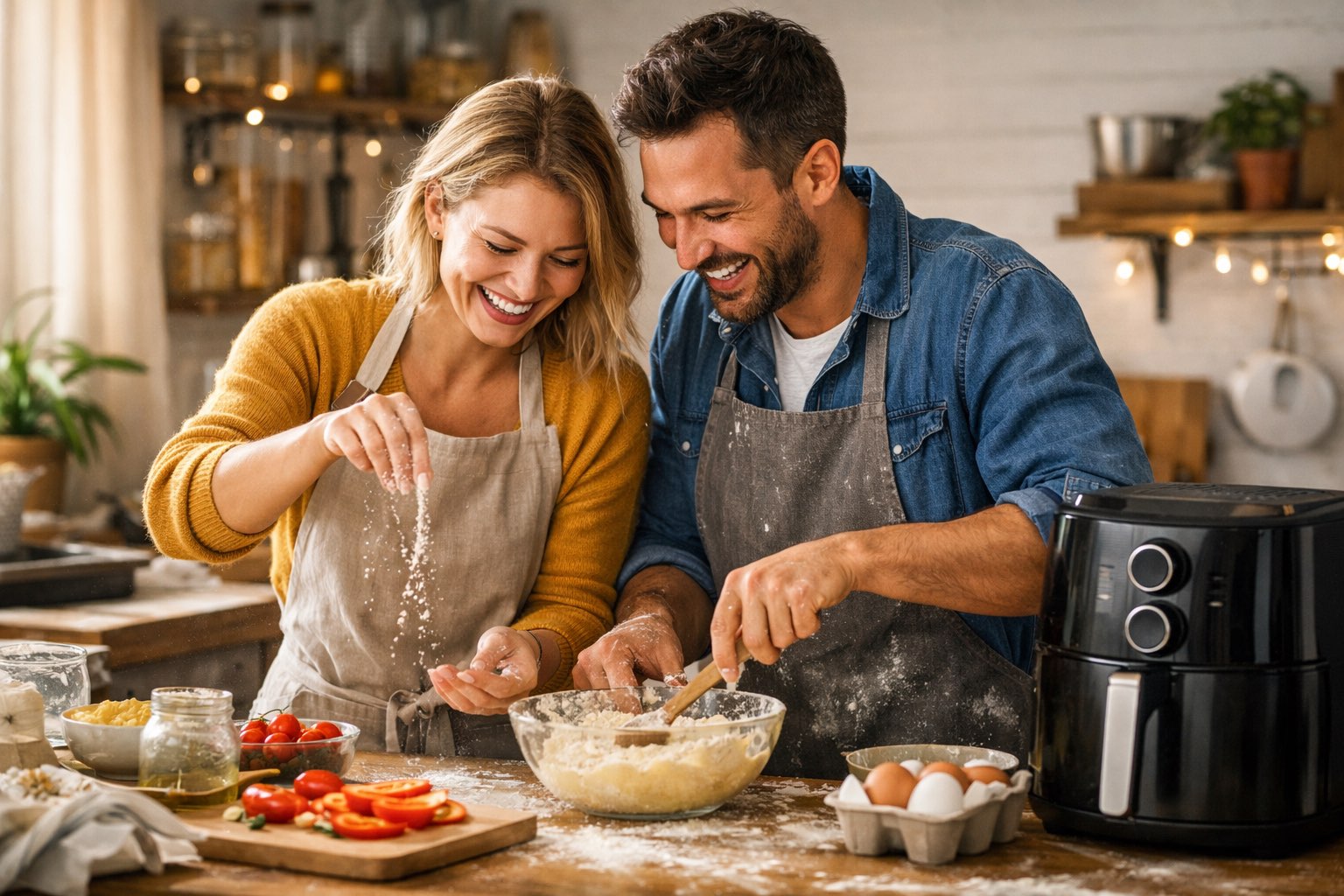
In today’s world, connection often begins with a swipe.
Profiles are polished. Photos are filtered. Compatibility is calculated through algorithms designed to predict attraction. But real relationships rarely unfold that way. Sometimes, connection is discovered in something far less glamorous like standing side by side in a small kitchen, arguing about the timer on an air fryer while garlic bread slowly turns from golden brown to something slightly… smoky.
And oddly enough, those moments often reveal more about a relationship than any dating profile ever could.
When Love Smells Like Burnt Garlic Bread
Dating apps may help you meet people, but your air fryer might actually help you keep them. In a world where romance is built on perfect profiles and filtered smiles, nothing tests compatibility faster than sharing a small kitchen, a timer that keeps beeping, and a plate of slightly burnt garlic bread.
The truth is, Tinder cannot teach you teamwork, but cooking disasters can. When the kitchen turns into a battlefield of sauces, smoke, and laughter, couples often discover the kind of connection no algorithm can replicate. Science might even agree.
A study published in the Journal of Relationship Science (2023) found that couples who cook together have 73 percent fewer fights about household chores. It turns out that surviving a kitchen disaster together does something magical: it strengthens teamwork, builds empathy, and gives you stories that will outlast any dating app bio.
The Story: How an Air Fryer Became Their Therapist
When Sarah and Mark’s relationship therapist suggested they spend “more quality time together,” they almost laughed. Between long work hours and endless scrolling, they felt too exhausted to try anything new. But one night, their newly bought air fryer changed everything.
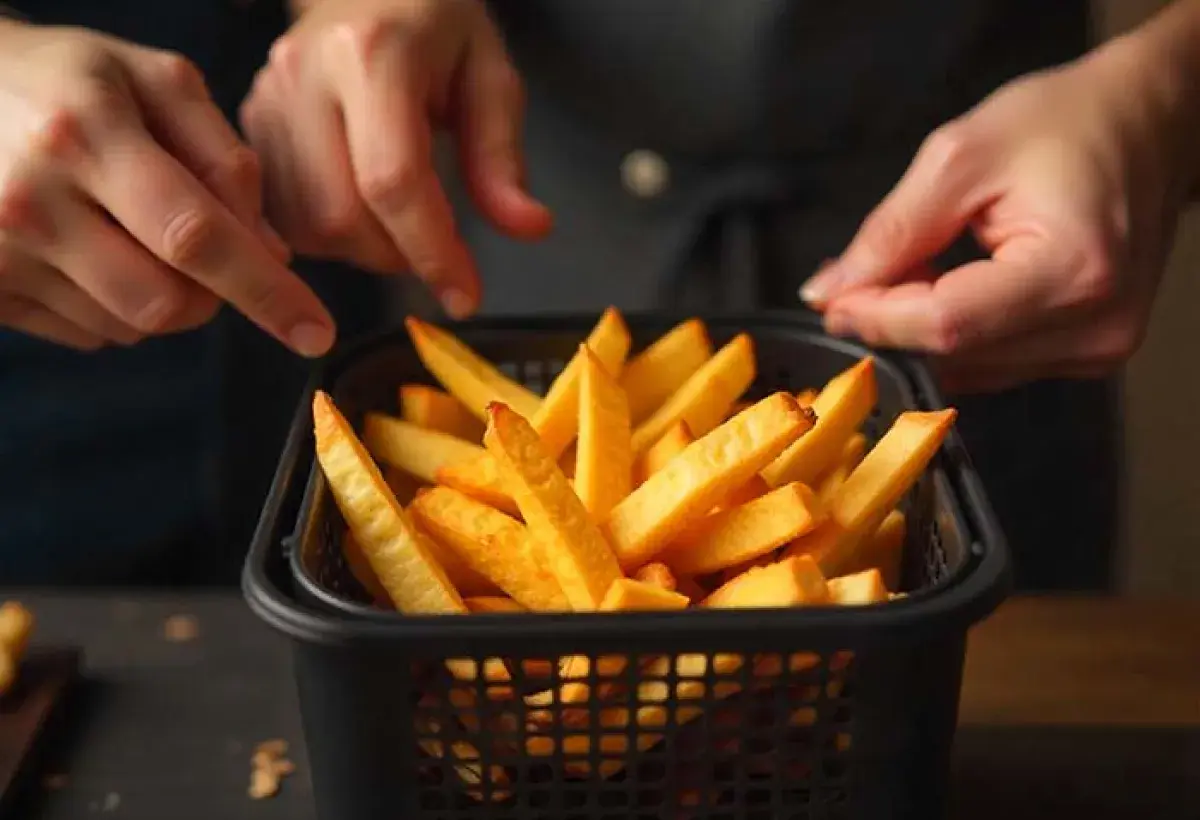
It began with good intentions. They wanted to make fries. Simple, right? Except Mark forgot to shake the basket halfway through, and when he finally opened it, the fries looked like charcoal briquettes.
Sarah laughed so hard she snorted, and Mark half embarrassed, half amused could not stop grinning. That ridiculous moment became their new kind of therapy. It wasn’t about the fries anymore. It was about how they worked together, how they forgave each other’s mistakes, and how laughter replaced what could have been another argument.
From that night on, “air fryer therapy” became their weekly ritual. They tried everything from reheating pizza to making questionable “healthier” desserts. Sometimes the food came out perfectly; sometimes it was inedible. But the process always brought them closer.
What Science Says About Couples Who Cook Together
There is actual research behind this phenomenon. The Journal of Relationship Science found that couples who regularly prepare meals together experience higher relationship satisfaction and stronger communication. Cooking requires cooperation, problem-solving, and patience all the same skills successful relationships rely on.
When partners cook together, they subconsciously learn how to handle minor stress, negotiate roles, and forgive small mistakes. It turns out, “pass me the tongs” can be as intimate as “I love you.”
Cooking also activates shared sensory experiences smelling, tasting, touching which helps create emotional memories. These memories become anchors of connection. The next time you smell burnt garlic or sizzling fries, you might remember laughter instead of frustration.
The Psychology of the Shared Kitchen Disaster
Relationship psychologists say that shared challenges, even small ones, help couples bond faster than romantic gestures alone. A dinner that goes wrong becomes a story you both own. It is no longer your mistake or their mistake it becomes our story.
Every relationship needs “micro adventures,” little unpredictable moments that keep things fresh. The kitchen offers plenty of those, a spilled sauce, a missing ingredient, or an overcooked chicken becomes an invitation to laugh, improvise, and grow together.
Teamwork: “You scrape, I’ll spray.”
Forgiveness: “It’s not burnt, it’s extra crispy.”
Shared trauma: “Remember the Great Mayo Explosion of 2022?”
These moments may sound trivial, but they train couples in real-life partnership negotiating, laughing, and letting go.
Image
The Three-Ingredient Challenge: A Recipe for Connection
One evening, someone jokingly suggested a small experiment.
“What if we cook dinner… but we’re only allowed three ingredients?”
At first it sounded like a terrible idea. But curiosity has a way of winning. The pantry door opened, hands reached inside, after a moment of hesitation, three items appeared on the counter. Sometimes it might be eggs, tomatoes, and cheese, other times it might be peanut butter, noodles, and something that has been sitting on the shelf long enough to raise a few questions.
A timer is set for thirty minutes, then the real entertainment begins. All of a sudden the kitchen becomes a small adventure. One person studies the ingredients as if solving a scientific puzzle. The other confidently declares, “Don’t worry, I have a plan,” even though the plan is clearly being invented on the spot.
There is stirring, there is improvisation, and at some point someone says, “Are we sure this is supposed to look like that?” Flour lands on the counter, a spoon is dropped. Something bubbles a little too enthusiastically in the pan. And yet, somewhere in the middle of the chaos, something wonderful begins to happen.
The focus shifts. It is no longer about making the perfect dish. It becomes about working together, laughing at small mistakes, and discovering how the other person reacts when things do not go according to plan. And thirty minutes later, the final creation is presented with great ceremony no matter how suspicious it looks.
One person tastes first, bravely, the other waits for the verdict, yet the result is always surprisingly good. Other times it is politely described as “interesting.”Either way, the outcome is rarely the most important part.
Because if the kitchen smells a little like smoke but the room is filled with laughter, then something meaningful has already been created, it is not the perfect dinner but a small moment of connection, and those small moments turn out to be the most important ingredients of all.
Cooking Together Is the New Love Language
There are many ways to express love: words, gifts, time, touch, and acts of service. Cooking together combines all of them. You share time, exchange words, touch food and tools, serve one another, and often exchange smiles that need no translation.
In a sense, the kitchen becomes a mirror of your relationship. You learn who leads, who follows, and how both of you adapt when plans fall apart. You also learn to celebrate small victories a perfectly browned toast, a smooth sauce, or just getting through dinner without setting off the smoke alarm. Modern love does not always need expensive restaurants or perfect photos. Sometimes, the secret to lasting connection hides behind that preheat button, waiting for you to notice.
Image

Your Air Fryer Knows More About Love Than You Think
Your dating app matches you with someone who likes the same shows. Your air fryer shows you if you can survive together when things go wrong. One tests compatibility on paper; the other tests it in real life.
So next time you want to strengthen your relationship, skip the candlelight dinner. Stay home, grab your air fryer, and let chaos do its job. Because love is not about perfect recipes. It is about laughter, teamwork, forgiveness, and a few good stories that begin with smoke and end with smiles. Swipe left on boring dates. The secret to lasting love might be hiding behind that preheat button.
Why Shared Experiences Matter
Psychologists have long observed that relationships grow stronger through shared activities and small challenges. Cooking together naturally creates these moments as it requires communication. It invites cooperation, demands patience when things go wrong, and most importantly, it creates stories. Stories become the emotional glue of relationships.
Years later, couples rarely remember the perfect dinner but they always remember the time the sauce exploded across the kitchen, or the night everything burned and they ended up laughing until midnight. Those stories become the invisible threads that hold relationships together.
Passing the Recipe Forward
At some point in life, people begin to realize that the most valuable things they can pass on are not instructions, but experiences.
Advice can be forgotten.
Stories are remembered.
In many families, treasured recipes travel quietly from one generation to the next. A grandmother teaches a daughter how much salt to add not by measuring spoons, but by instinct. A father shows his son when the bread is ready not by the timer, but by the smell.
Relationships are passed forward in much the same way and not through perfect explanations, but through lived moments. Moments of patience when misunderstandings appear, moments of humor when something small goes wrong, moments of forgiveness when pride quietly steps aside. And simply the ability to laugh together when the garlic bread burns.
These ingredients rarely appear in dating profiles, algorithms cannot measure them, and surely cmpatibility tests cannot predict them... they are often the quiet foundations that allow relationships to endure. Maybe this the real secret behind lasting connection we've witnessed around our grandparents. Not perfection, not because of flawless compatibility… but just two people willing to keep learning, adjusting, and refining the recipe, again and again, until it becomes something uniquely their own.
And someday, when others ask how their relationship lasted so long, they may not hand over a perfect formula. They may simply share a story. About a kitchen, and a tray of slightly burnt garlic bread that somehow turned into a memory worth passing on.
Because the real recipe for connection was never written in cookbooks or algorithms… only in the quiet moments two people choose to keep showing up for each other.