


Artificial intelligence has created a major shift in the daily work routines of people across the United States. For many workers, the weight of administrative responsibilities used to feel never ending. The process of sorting messages, preparing reports, managing schedules and keeping records updated often consumed large parts of the day. As a result, many people felt they were always behind or always trying to catch up instead of focusing on meaningful goals. The arrival of reliable AI systems has changed that experience in important ways.
Across the country, office workers, small business owners, educators, freelancers and remote employees have turned to AI tools as reliable partners that handle repetitive tasks with precision. The change has not happened overnight, but the adoption has grown rapidly because the United States has a large digital workforce that depends on communication, organization and quick access to information. Many workers have discovered that AI is not only practical but also essential for keeping up with the constant flow of responsibilities.
Americans now view AI systems as helpful teammates that support their daily workflow. These tools allow people to think more clearly and accomplish complex tasks without feeling overwhelmed by repeated clerical duties. Instead of spending hours sorting email or typing routine documents, workers can devote time to strategy, planning, management and personal development. AI has become an important companion for anyone who wants to achieve more in less time without losing quality.
This new relationship between Americans and AI reflects a broader cultural shift. People are becoming more comfortable working side by side with intelligent systems that execute tasks with careful accuracy. Many individuals feel that AI helps them maintain better work life balance by reducing stress and supporting consistent performance. As more industries embrace automation, AI continues to transform the experience of office work.
Americans Are Using AI to Manage and Sort Communication More Efficiently
Image

Communication is central to nearly every job in the United States, and workers often feel overwhelmed by the constant flow of email messages and digital notifications. Many professionals receive hundreds of messages each week, and important information can easily disappear under unrelated threads. For years, people tried different techniques to manage this problem, such as using folders, labels or time blocking methods. These strategies helped, but they did not fully solve the issue of excessive communication. The arrival of AI inbox management tools has changed this reality for many American workers by offering automated solutions that bring clarity and structure.
AI communication assistants can read entire inboxes and identify the messages that matter most. These tools use advanced pattern recognition to determine which emails require immediate attention and which ones can wait. Instead of spending hours scanning each message, workers now receive quick summaries that highlight essential points. These AI tools often categorize messages automatically and create lists of priority tasks which saves time and reduces stress.
Another benefit is the creation of suggested responses. Many Americans who work in customer support, sales, real estate, consulting and education spend large portions of their day typing similar replies. AI systems can now generate a first draft of these responses based on previous messages. Workers only need to make small edits before sending, which turns a time consuming process into a fast and efficient task. This enhancement allows employees to serve clients and partners with greater speed while maintaining high quality communication.
AI also helps with digital overload by filtering spam, highlighting deadlines and reminding workers about important follow ups. People who used to forget messages buried in crowded inboxes now depend on AI reminders to stay on track. The improvement in organization has had a positive effect on productivity across many US industries. Instead of feeling controlled by their inboxes, workers now feel empowered by tools that simplify their communication routines. This new level of efficiency gives Americans more time to focus on meaningful work that helps their careers grow and supports the success of their organizations.
AI Is Helping Americans Automate Scheduling and Calendar Management
Image
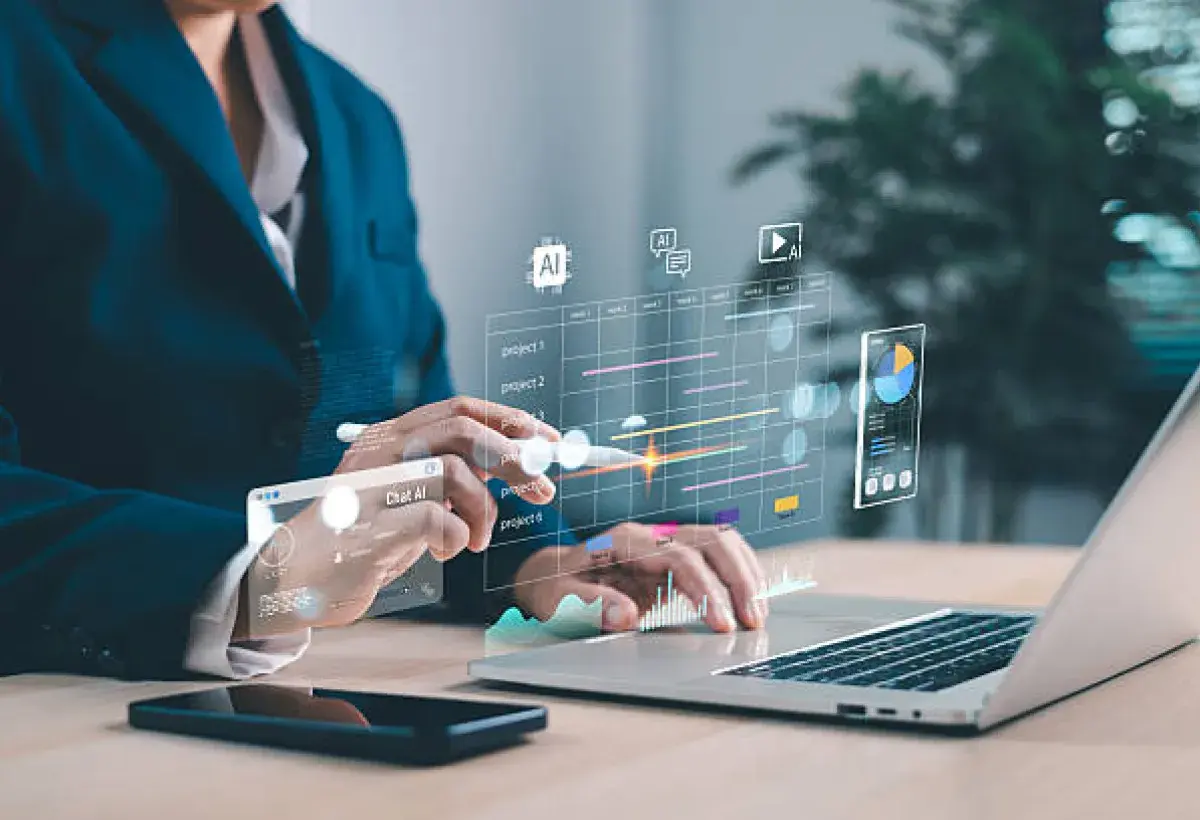
Time management has always been a challenge for workers in the United States. Many people handle busy calendars filled with meetings, calls, deadlines and personal appointments. Before AI assistance became widely accessible, managing these commitments required constant attention. People had to compare time slots, adjust for different time zones, send reminders and resolve scheduling conflicts manually. These repetitive tasks often consumed hours every week. Today, AI driven calendar tools have become essential for Americans who want to simplify their schedules and reclaim lost time.
AI scheduling assistants can automatically compare calendars between multiple participants and find the most convenient meeting times. This ability is especially useful for teams spread across different states. Instead of writing long message threads to coordinate availability, workers rely on AI systems that instantly recommend ideal meeting windows. This approach improves speed and reduces frustration for everyone involved.
The tools can also monitor deadlines and send reminders before important events. Many workers forget upcoming tasks when they are busy with ongoing responsibilities. AI systems prevent these issues by keeping track of key dates and notifying users in advance. This helps professionals maintain a consistent workflow and avoid last minute stress.
Another advantage is that AI scheduling assistants can adjust meetings automatically when sudden changes occur. For example, if an urgent task appears, the AI can rearrange appointments and inform all participants without requiring manual effort. This function is highly valued by executives, managers, team leaders and freelancers who must adapt quickly to shifting priorities.
AI also analyzes patterns in how workers spend their time. It can identify when someone is overwhelmed with meetings and suggest periods for focused work. This insight supports healthier productivity and reduces burnout. Many Americans report that they feel more balanced because their AI assistant protects blocks of time for deep thinking and creative tasks.
With AI managing calendars, people across the United States are experiencing smoother daily routines and greater control over their personal and professional commitments. The technology continues to reshape how Americans approach their schedules and supports a more efficient workplace culture.
Americans Are Using AI to Summarize Documents and Prepare Research Faster
Image

Knowledge based jobs are an important part of the American economy. Many workers in fields such as law, education, healthcare, finance and consulting depend on large volumes of information every day. They read long reports, detailed memos, transcripts, regulations, policy updates and academic papers. This amount of reading can be overwhelming and time consuming. Before AI document tools existed, workers had to manually review everything, take notes and create summaries that could be used for meetings or decision making. AI has now transformed this process across the United States by helping people process information with greater speed and clarity.
AI summarization tools can read entire documents and present the most important points in a clean and concise format. Workers no longer need to spend hours going through pages of text to identify key details. Instead, they receive summaries that highlight relevant insights, action items and essential facts. This saves time and improves accuracy, especially for people who juggle multiple responsibilities.
These tools are particularly helpful in environments where information changes quickly. For example, legal firms often receive new case materials with short deadlines. Healthcare workers need to stay informed about patient histories and treatment guidelines. Educators review lesson plans and student reports while financial professionals monitor market trends. AI tools give these workers the ability to stay informed without feeling overwhelmed.
Another important use is research preparation. AI can gather information from multiple sources, combine the findings and present a unified overview that helps workers make better decisions. This process has become popular among analysts, consultants and investigative journalists who need clear insights to support their work. Instead of spending entire days reading and organizing data, they depend on AI to handle the first stage of research.
AI assisted document preparation also improves collaboration. When teams work on shared projects, AI generated summaries help everyone understand the material quickly. This leads to more productive meetings and faster progress on goals. Americans across many industries now view AI document tools as essential companions that support their work and enhance their ability to stay organized.
AI Is Helping Americans Generate Reports and Handle Data Interpretation
Image

Data guides many decisions in modern American workplaces. Companies depend on performance reports, financial statements, user behavior analysis, sales metrics and project updates to understand their progress and plan for the future. Creating these reports used to require hours of manual work. People had to gather data from different systems, clean the numbers, find patterns and write summaries that others could understand. AI has now changed this process by making report creation faster and more accurate.
AI report tools can collect information from multiple platforms and organize it in a clear structure. Instead of manually copying data from spreadsheets and analytics systems, workers let AI handle the heavy lifting. The tools review the data, identify trends and produce readable summaries that highlight strengths, weaknesses and opportunities. This automation allows employees to focus on developing strategies rather than spending time on data cleanup.
Another benefit is the ability of AI to interpret complex data. Many American workers do not have advanced training in analytics, but AI tools make data interpretation more accessible. People can ask the system questions about performance, customer behavior or project results, and the AI will explain the findings in plain language. This increases confidence and improves decision making across teams.
Small businesses especially appreciate this function because they often lack dedicated analysts. With AI support, entrepreneurs can understand their financial performance, marketing results and customer engagement without hiring additional staff. This creates a more competitive environment and helps American businesses grow with fewer resources.
AI generated reports also improve communication. When workers present information to colleagues or supervisors, the AI can produce charts, summaries and talking points that make the message clear. This reduces confusion and supports better collaboration within organizations.
Across the United States, workers are finding that AI makes their data tasks easier, faster and more reliable. The technology enhances productivity by allowing people to understand information without becoming overwhelmed. As a result, AI has become an important tool for Americans who want to make smarter decisions and work more efficiently.
Image

Artificial intelligence is becoming part of everyday life for workers across the United States. People are discovering that AI is not meant to replace human talent but to remove the repetitive tasks that often hold them back. For decades, workers have struggled with administrative responsibilities that take valuable time away from meaningful projects. Now, AI is stepping into this space and creating space for greater creativity, strategic thinking and personal development.
The rapid adoption of AI in American workplaces shows how much value the technology provides. It helps workers manage communication, organize schedules, prepare documents, interpret data and support decision making. These improvements make the workday smoother and more manageable. When people are not overwhelmed by repetitive tasks, they have the mental energy to innovate and contribute more to their organizations.
Many Americans report that AI has improved their confidence and productivity. They feel more in control of their time, less stressed and more capable of handling complex responsibilities. AI also supports fairness in the workplace by giving small businesses and individual workers access to tools that were once only available to large corporations. This levels the playing field and encourages competition across industries.
The future of work in the United States will likely continue to evolve as AI becomes even more advanced. People will develop new skills and new ways of collaborating with intelligent systems. The most successful workers will be those who understand how to use AI effectively while maintaining strong human judgment and creativity.
AI is not replacing American workers. It is empowering them. By reducing the burden of administrative work, AI is creating a work environment where people can focus on what truly matters. The partnership between humans and AI represents a new chapter in the story of productivity in the United States, and the benefits will continue to shape the future of work for years to come.