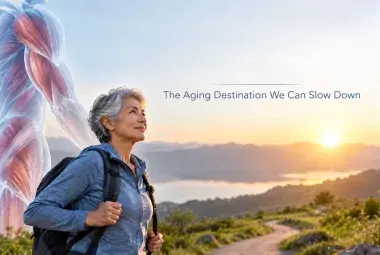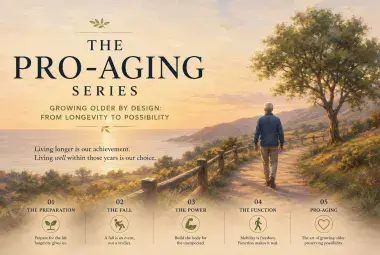
Aging is no longer a distant concern reserved for later life or future generations
In 2026, it has become a defining issue shaping public health systems, economic planning, family structures, and community life across the globe. The question is no longer whether societies are aging, but whether they are prepared to age well.
This article aims to clarify what credible medical institutions, nutrition scientists, and global organizations are actually focused on today when it comes to aging. Not trends. Not marketing narratives. But evidence-based priorities grounded in research, policy, and long-term societal responsibility.
Aging has become a shared societal reality
Population aging is accelerating in nearly every region of the world. Longer life expectancy is one of humanity’s greatest achievements, yet it also presents complex challenges. Healthcare systems face rising demand. Pension structures are under strain. Families are increasingly responsible for caregiving. At the same time, older adults are healthier, more capable, and more socially engaged than ever before.
Recognizing this dual reality, global institutions have shifted their framing of aging. It is no longer treated solely as a medical issue or a social burden, but as a life stage that must be actively supported. In 2026, the dominant institutional approach emphasizes preparedness, prevention, and dignity rather than crisis response.
What medicine is focused on: Preserving function, not chasing youth
Leading medical authorities, including the World Health Organization and the National Institutes of Health, are aligned on a critical shift: the goal of modern aging medicine is no longer simply to extend lifespan, but to extend healthspan.
Healthspan refers to the number of years a person lives in good physical, cognitive, and emotional health. Research published in journals such as The Lancet Healthy Longevity and Nature Aging consistently shows that the greatest burden of aging does not come from age itself, but from preventable or delayed decline frailty, mobility loss, cognitive impairment, and unmanaged chronic disease.
As a result, medical research and healthcare systems are increasingly oriented toward catching decline before it becomes disabling. Greater attention is being given to the early signs of functional loss, to managing chronic inflammation and metabolic risk long before they escalate into disease, and to preserving mobility and muscle strength so that independence can be sustained. Alongside this, cognitive resilience and mental health are no longer treated as secondary concerns, but as central pillars of healthy aging.
Another important focus lies in the distinction between chronological age and biological age. Two individuals of the same age may follow very different health trajectories depending on their lifestyle, environment, and access to care. By understanding these differences, healthcare providers can intervene earlier and with greater precision not to promise a reversal of aging, but to slow avoidable deterioration and extend the years lived with function and dignity.
This represents a more realistic, ethical, and sustainable approach to aging medicine.
Image
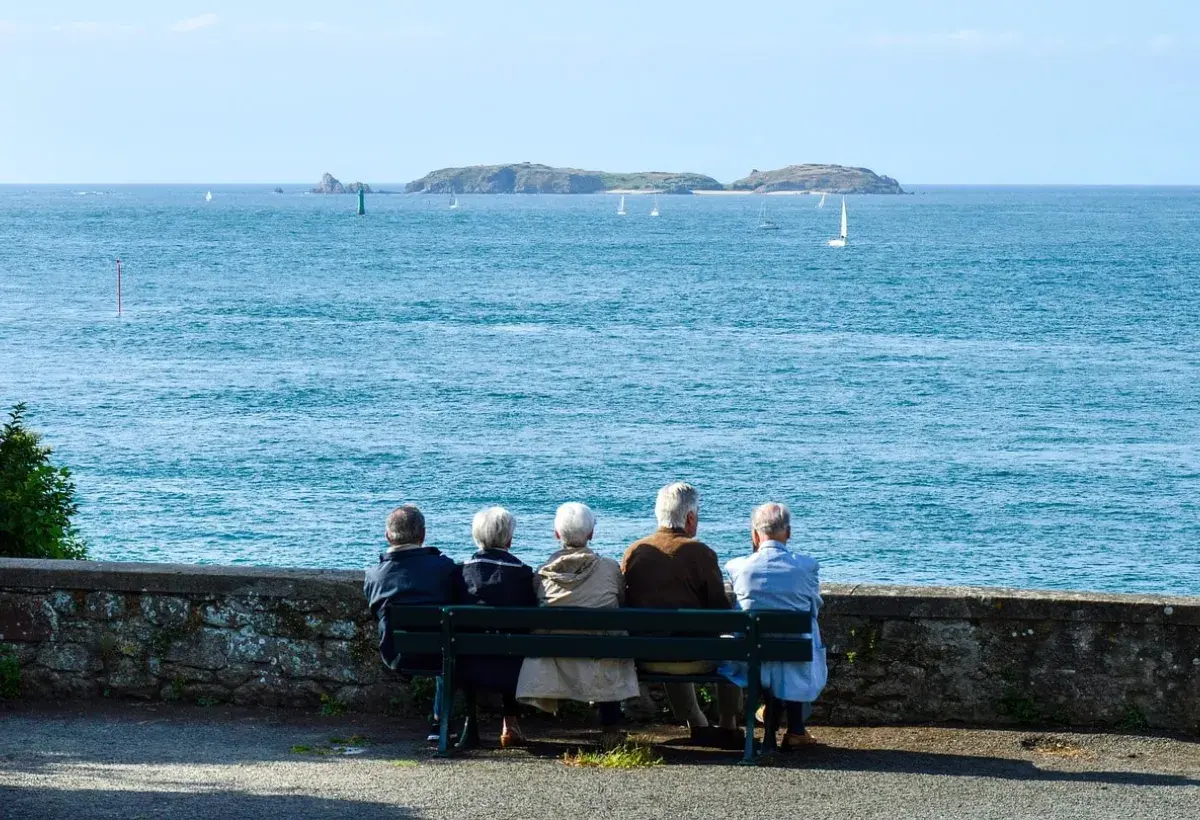
What nutrition science is focused on: Resilience across the life course
Nutrition has emerged as one of the most practical and evidence-backed tools for healthy aging. Institutions such as the Harvard T.H. Chan School of Public Health, the Food and Agriculture Organization, and the WHO emphasize that dietary patterns across adulthood particularly in midlife strongly influence outcomes in later years.
In 2026, nutrition science is not centered on restrictive or extreme dietary approaches. Instead, it emphasizes adequacy, consistency, and long-term sustainability. Research priorities focus on ensuring sufficient protein intake to maintain muscle mass and reduce frailty, achieving balanced micronutrient levels to support immune function and cognitive health, and understanding the role of gut health and inflammation in metabolic and neurological conditions. Equal attention is given to food accessibility and affordability, recognizing that nutrition for aging populations must be realistic and inclusive.
Authorities consistently caution against miracle foods, detox regimens, or aggressive supplementation without medical guidance. The strongest evidence supports culturally appropriate, balanced eating patterns that people can maintain over decades not short-term interventions measured in weeks.
Nutrition, from an institutional perspective, is not about optimization for youth, but about maintaining functional capacity as the body changes.
What healthcare systems are prioritizing: Prevention and integration
Healthcare delivery models are also evolving in response to aging populations. Analyses from the WHO and the OECD indicate that systems relying heavily on hospital-based, reactive care are neither cost-effective nor humane for older adults.
In practice, priorities in 2026 center on on strengthening primary and preventive care, integrating physical, mental, and social health services, and supporting aging in place rather than defaulting to institutionalization. Greater recognition is also being given to informal caregivers, whose roles are increasingly vital to the well-being of older adults and the sustainability of care systems.
These shifts reflect a deeper understanding that aging-related needs are inherently interconnected. Physical decline often affects mental health, social isolation can worsen medical outcomes, and fragmented care increases costs without improving quality of life. Integrated care models respond to this reality by addressing aging as a whole-person experience, rather than treating it as a series of separate diagnoses.
Integrated care models aim to address aging as a whole-person experience, rather than a collection of separate diagnoses.
What global institutions are preparing for: Aging as policy and economic strategy
At the global level, aging has become a central policy concern. The United Nations, through its Decade of Healthy Ageing initiative, frames aging as both a human rights issue and a development priority. Meanwhile, the World Bank and OECD emphasize that countries investing in healthy aging reduce long-term healthcare expenditures, maintain economic participation, and strengthen social stability.
At the institutional level, priorities focus on ensuring the long-term sustainability of pension and healthcare systems, while also addressing social isolation and loneliness, now widely recognized as public health risks. Equal emphasis is placed on promoting participation, contribution, and dignity in later life, alongside supporting communities as they adapt infrastructure, housing, and services to meet the needs of aging populations.
Importantly, global institutions no longer regard aging as a distant or unexpected shock. It is increasingly understood as a predictable demographic transition one that can be anticipated, planned for, and managed responsibly.
Image

What this means for individuals and families
For the public, these institutional shifts carry an important message: aging is not an individual failure to manage alone. It is a shared life stage shaped by personal choices, community support, and systemic design.
Healthy aging does not require extraordinary resources or perfect health. Evidence consistently points instead to a small set of foundational factors: regular movement and the maintenance of strength, adequate and balanced nutrition, sustained social connection and participation, reliable access to preventive healthcare, and a sense of purpose and belonging. Together, these elements shape how people experience later life far more than any single intervention.
These are not aspirational ideals or abstract recommendations. They are practical determinants of quality of life. Institutions are prioritizing them precisely because they are achievable at scale, adaptable across cultures, and capable of delivering meaningful impact over time.
Responsible Hope
The global response to aging in 2026 is sober, measured, and grounded in evidence. There are no promises of easy solutions, and no credible institutions claim otherwise. What exists instead is alignment: across medicine, nutrition, and policy, there is shared recognition that longevity must be matched with quality, dignity, and sustainability.
No single institution can address aging alone. But together through informed individuals, supportive communities, and responsible systems aging can become not a burden to fear, but a life stage to prepare for with clarity and respect. That is what the world is working toward today.
Author’s Reflection
What stands out most in today’s aging discourse is not urgency, but alignment. Across medicine, nutrition, and policy, institutions are converging on a shared understanding: longevity must be matched with dignity, prevention, and purpose. The work underway is measured and responsible, focused less on extending life at any cost and more on preserving function, participation, and quality of life for aging populations.
Image

Suggested citation
Lendez, M.(2026).What the World Is Really Doing About Aging in 2026-And Why It Matters to All of Us. Developer of Ikigai-Bayanihan purpose-driven retirement framework.
References
Alzheimer’s Association. (2024). 2024 Alzheimer’s disease facts and figures. https://www.alz.org/alzheimers-dementia/facts-figures
Food and Agriculture Organization of the United Nations. (2022). Nutrition throughout the life course. https://www.fao.org/nutrition/lifecycle
Harvard T. H. Chan School of Public Health. (2023). Nutrition and healthy aging. https://www.hsph.harvard.edu/nutritionsource/healthy-aging/
National Institutes of Health, National Institute on Aging. (2023). What happens to the body as we age. https://www.nia.nih.gov/health/what-happens-body-we-age
Organisation for Economic Co-operation and Development. (2023). Preventing ageing unequally. https://www.oecd.org/health/preventing-ageing-unequally.htm
Organisation for Economic Co-operation and Development. (2024). Health at a glance 2023: OECD indicators. https://www.oecd.org/health/health-at-a-glance/
The Lancet Healthy Longevity Commission. (2021). Transforming care for ageing populations. The Lancet Healthy Longevity, 2(8), e437–e466. https://doi.org/10.1016/S2666-7568(21)00104-1
United Nations. (2021). Decade of healthy ageing: Baseline report. https://www.un.org/development/desa/ageing/decade-of-healthy-ageing.html
World Bank. (2023). Silver economy: Policy insights for aging societies. https://www.worldbank.org/en/topic/socialprotection/publication/silver-economy-policy-insights
World Health Organization. (2015). World report on ageing and health. https://www.who.int/publications/i/item/9789241565042
World Health Organization. (2017). Integrated care for older people: Guidelines on community-level interventions. https://www.who.int/publications/i/item/WHO-FWC-ALC-17.06
Thank you for these beuatiful photos Freepik and Pixabay (Alisadyson, gaspartacus, nguyenhoangthack, and ignartonosbg)