

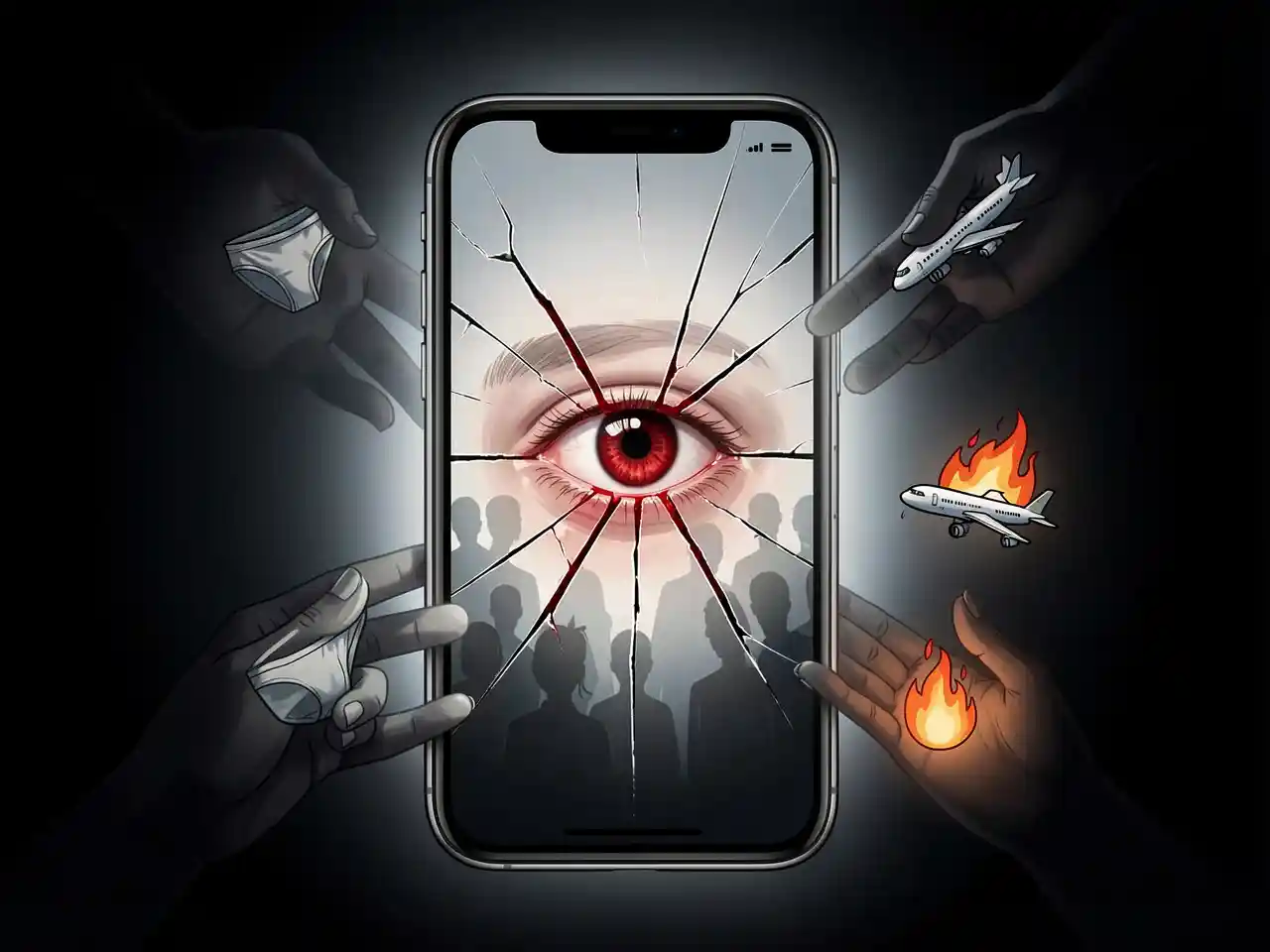
There was a time when people would quietly whisper, “Have some shame.” That subtle warning carried weight and reflected the moral compass of an era. Today, it has been replaced by a louder, more alarming phrase: “Do it for the content.” In the digital age, the rules of decency have not just been bent. They have been rewritten entirely.
Every scroll on social media presents a new spectacle. People are diving deeper into acts that were once unthinkable, dragging themselves, their families, communities, and total strangers into content that prioritizes shock over empathy. The most disturbing part is that these stunts are rarely condemned. Instead, they are celebrated, copied, and monetized. These are not fictional scenarios. They are real events, shared, liked, and consumed by millions, proving that viral attention often comes at the cost of humanity itself.
10 Viral Moments That Traded Dignity for Digital Applause
1. The Frozen Panty Prank (2023)
A woman stripped her underwear in a grocery aisle and placed it in the freezer section while filming herself. Ten others followed her lead, forcing supermarkets to lock freezers.
Source: Daily Mail (2023). Viral ‘Underwear in Groceries’ Trend Forces Stores to Lock Freezers.
Science: A Nature Human Behaviour study (2024) found public humiliation triggers three times more dopamine than praise, showing why such content spreads rapidly.
2. The Airplane Toilet Licker (2022)
Influencer Ava Louise posted herself licking an airplane toilet during COVID, branding it as the “Coronavirus Challenge.” A copycat reportedly tested positive. This was reckless behavior packaged as entertainment.
Source: Forbes (2022). Influencer Banned After Licking Plane Toilet for Views.
Science: Journal of Abnormal Psychology (2023) links extreme risk-taking for online clout to reduced prefrontal cortex activity, suggesting poor impulse control in these viral moments.
3. The Fake Kidnapping Trend (2024)
Teenagers staged fake abductions to go viral, facing felony charges. The social reward of attention outweighed rational judgment in these cases.
Source: NBC News (2024). Teens Facing Felonies for Staged Abductions.
Science: Child Development (2024) shows adolescent brains prioritize peer validation over logic, explaining the popularity of high-risk stunts among young people.
4. The Airport Runway Dare (2023)
A teen sneaked onto an active tarmac to dance near jets for Instagram. The stunt caused $83,000 in flight delays and felony trespassing charges, illustrating the extreme lengths some will go for views.
Source: BBC (2023). Teen Trespasses on Airport Runway for Instagram.
Image
5. The Funeral Selfie Epidemic
Mourners took photos with corpses, using filters and humorous overlays. As a response, forty percent of U.S. funeral homes now ban phones during services.
Source: The Guardian (2024). Funeral Homes Ban Phones Amid Selfie Epidemic.
6. AI-Generated Revenge Porn Surge
Ex-partners used AI to create fake nude images and shared them online as jokes. Fourteen states passed deepfake revenge laws in 2024 to combat this growing trend.
Source: WIRED (2024). Legal Responses to AI Revenge Porn.
7. School Brawl Livestreams
Students staged fights to monetize livestreams, earning up to $5,000 per video. Over 200 students were expelled, and schools filed lawsuits against platforms that enabled these streams.
Source: CNN (2024). School Brawls Livestreamed for Profit.
8. Elderly Abuse as Entertainment (2024)
Caregivers filmed mocking dementia patients and shared it online as dark humor. This led to firings and criminal investigations across seven nursing homes, highlighting how the pursuit of content can harm the most vulnerable.
Source: Washington Post (2024). Elderly Abuse Videos Spark Investigations.
9. The Grandma’s Ashes Challenge (2023)
A creator staged snorting what was claimed to be grandma’s ashes for shock value. It later turned out to be flour. One point two million complaints forced TikTok to ban death-related pranks, showing that there are limits to what audiences tolerate.
Source: Reuters (2023). TikTok Bans Death-Related Challenges.
10. Tiziana Cantone – Viral Sex Tape and Tragedy
Italian woman Tiziana Cantone sent intimate videos privately, only to have an ex share them publicly. The viral humiliation contributed to her suicide, a tragic example of the human cost of digital fame.
Source: Glamour (2016). An Italian Woman Committed Suicide After Her Sex Tape Went Viral.
These cases illustrate that society increasingly rewards shock, humiliation, and risk over kindness, empathy, or discretion. According to the Journal of Social Neuroscience (2024), the human brain responds to public embarrassment three times more strongly than to positive social reinforcement. This neurological reality explains why content that crosses moral boundaries spreads so rapidly.
The question is no longer whether someone will go viral. The real question is how far humanity is willing to compromise dignity for digital applause. Social media amplifies behavior, but the underlying psychology reveals the cost: rising desensitization, ethical erosion, and the normalization of cruelty.
Image