

I Never Thought of Choice as Something Alive
For most of my life, it existed as a word functional, almost procedural. Something one makes, then moves past. Choose this, not that. Decide, act, proceed. It felt clean, manageable, contained.
But the longer I stayed with it, the more it resisted being reduced to language. Choice began to feel less like a word and more like a threshold a silent moment where something unseen crosses over and becomes real.
And once I noticed that, I could not unsee it.
Choice does not merely influence life. It initiates it.
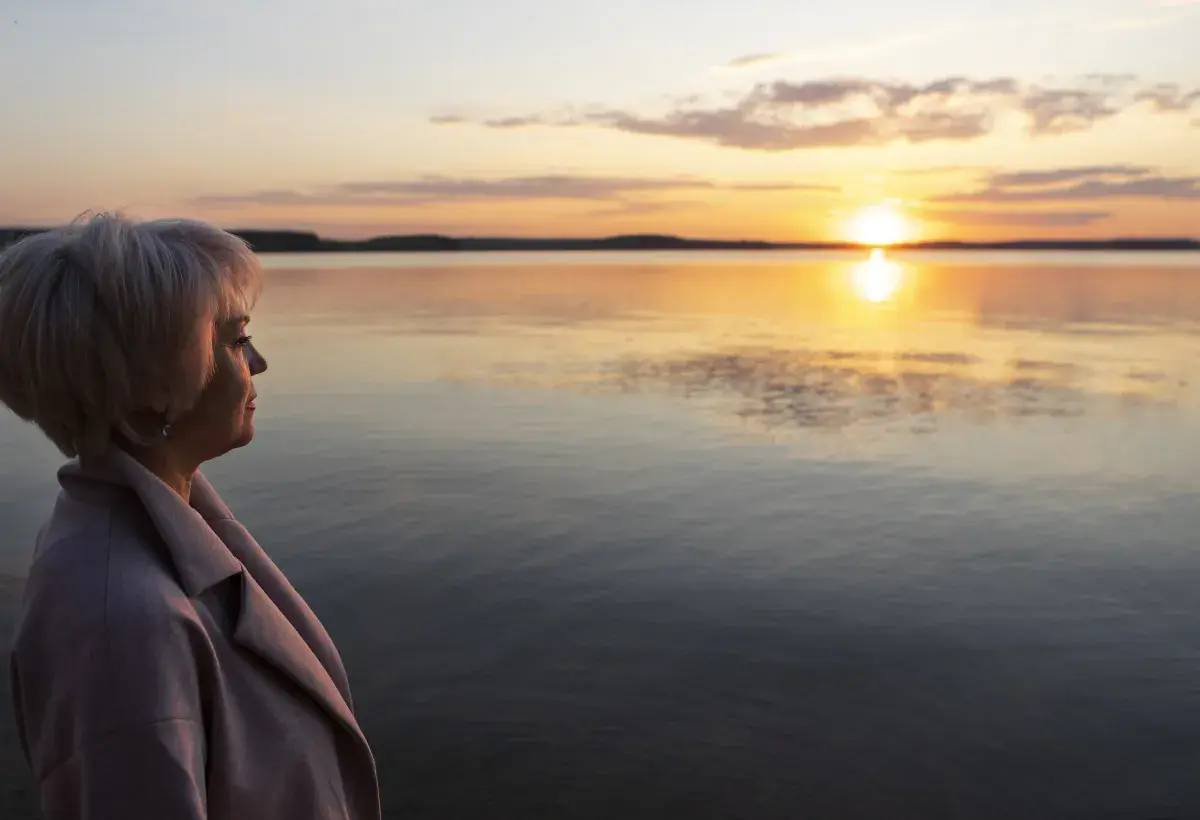
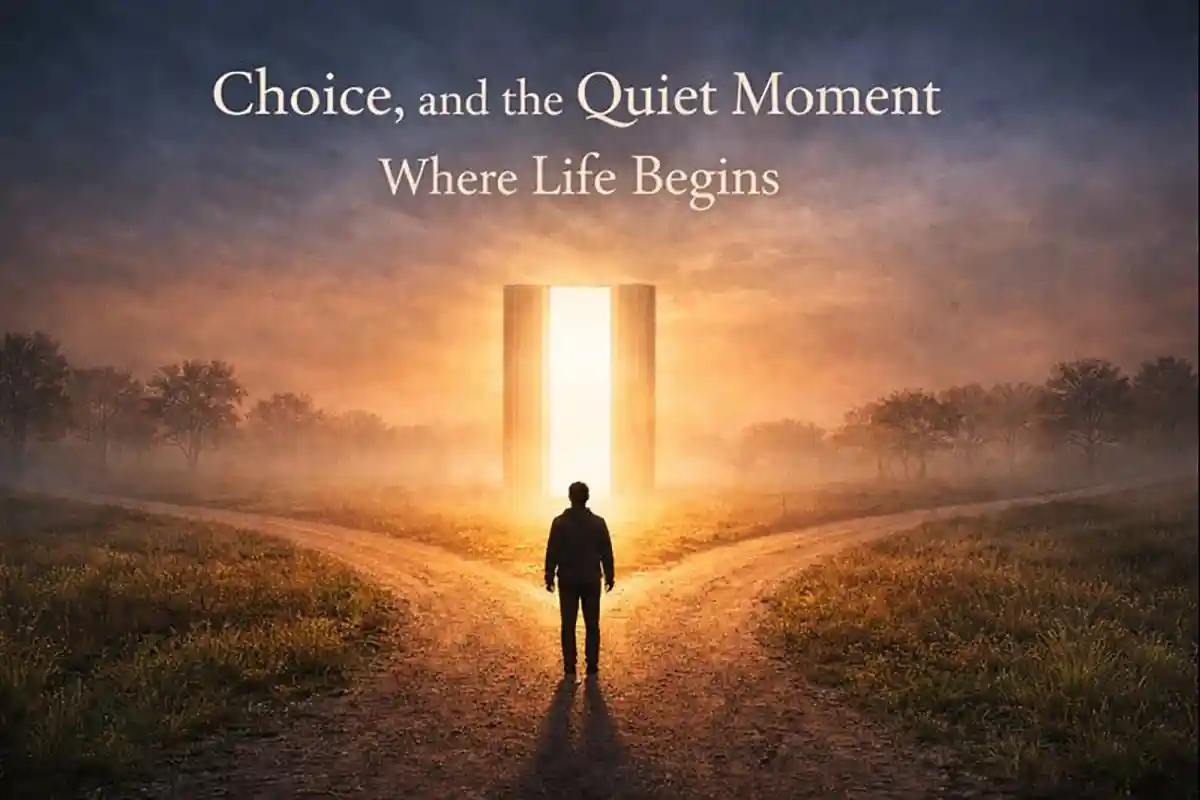
There is a moment often quiet, often overlooked when a person stands at a crossroads. Nothing visible has changed yet. No outcome has appeared. No consequence has arrived. And yet, everything is already in motion. The invisible world is crowded with possibilities, and one of them is about to be selected.
That selection is choice. And the moment it is made, something begins to breathe.
The Invisible Before the Visible
Before anything enters the physical world, it exists elsewhere within thought, emotion, imagination, fear, longing. This invisible space is not empty. It is dense with potential.
Choice is the act of reaching into that space and allowing one possibility to cross over. Not because it is perfect. Not because it is guaranteed. But because it has been chosen. Once selected, that possibility is no longer neutral. It becomes impregnated with intention, with reasoning, with emotion, or sometimes with nothing more than urgency.
Time becomes its carrier. Circumstance becomes its environment. Life itself begins to cooperate. What strikes me most is this: life does not respond selectively. It does not pause to assess whether the choice was wise, mature, or well-considered. It does not ask whether the chooser was ready.
Life simply responds. It supports what has been chosen. And this is where the power of choice truly resides.
Choice as Creation
Seen this way, choice is not decision-making. It is creation.
Every choice authorizes something to exist something that will eventually arrive in reality and ask to be lived with. Some choices arrive gently. Others arrive fully formed and heavy. Some open doors. Others quietly rearrange the room. But all of them are alive.
This understanding unsettled me. It removed the comfort of treating choices as passing thoughts. It replaced that comfort with something quieter and heavier not moral responsibility, but creative responsibility. Because if choice creates life, then every chooser participates in authorship. And authors do not get to disown what they bring into being.
Image

Beyond the Language of Positivity
This is where my understanding gently diverged from the familiar language of positive thinking. Not because optimism is wrong, but because it rarely governs the moment of choosing.
At a crossroads, people are seldom optimistic. They are protective. They are scanning risk rather than affirmations. They are not envisioning abundance; they are negotiating survival. What surfaces first is often an unspoken inventory of what must be protected emotional ground that feels too fragile to risk, financial stability that took years to build, physical safety, or a future that cannot easily be surrendered.
Sometimes the question is not what do I want, but what am I unwilling to lose.
Others drift toward gentler considerations. They wonder which direction might make life feel lighter than it does now. Which path might reduce strain, demand less energy, soften the weight of obligation. Often, the desire is not for more, but for something more livable something that feels less demanding, less sharp, more sustainable. These are not optimistic questions. They are human ones.
And then there are moments when no questions arise at all. A choice emerges directly from feeling from pain that seeks escape, from fear that wants safety, from longing that wants fulfillment, from urgency that refuses delay. In those moments, emotion becomes the interpreter of the invisible world, translating sensation into direction. The choice is made quickly, sometimes desperately, sometimes instinctively.
Life does not interrupt this moment. It does not ask for clarity or caution. Once the choice is made, it begins to build around it, quietly and faithfully, as it always does.
The Waiting Period
One of the most difficult truths about choice is that feedback is delayed.
After a choice is made, there is often a stretch of quiet an incubation. Nothing seems to happen. The absence of consequence can feel like relief. It can feel like escape. But it is simply preparation.
The choice moves through time, gathering form, gaining weight, preparing to arrive.
When the result finally enters the visible world, it is no longer theoretical. It is not an idea that can be revised. It is a living reality one that must be accommodated, endured, enjoyed, or transformed. At that point, the question changes. It is no longer “Was this the right choice?” It becomes “How long can I live with what I created?”
The Weight of Consequence
No one can offer certainty at a crossroads. No tool, no wisdom, no method can guarantee that the life born from a choice will serve the moment it eventually arrives. The future does not sign contracts. It only responds.
Some choices age gently. They soften with time, revealing their value slowly. Others do not. They begin with promise and harden into weight, asking to be carried longer than expected. Some choices reward quickly, offering relief or clarity. Others extract payment gradually, unnoticed at first, until one day the cost becomes unmistakable. Some bring peace. Others bring lessons disguised as permanence.
And when a choice no longer serves the present when it complicates life rather than clarifying it there are only a few ways forward. One can endure it and wait for it to loosen. One can reshape oneself around it. Or one can live with it quietly, accepting it as part of the terrain of one’s life.
None of these paths are easy. This is why choice, once truly seen, begins to feel heavy not oppressive, but solemn. It asks to be handled with care. It resists casual treatment. It demands attention, not because it seeks control, but because it deserves respect.
Image
The Quiet Companions of Choice
Over time, I noticed something else: the choices that endure well are rarely dramatic. They do not announce themselves with certainty or triumph. They arrive quietly, often shaped by restraint rather than urgency. They are accompanied by subtle forces.
There is self-discipline, the quiet capacity to delay creation.
There is self-control, the restraint that keeps emotion from becoming destiny.
And there is wisdom, which lingers long enough to sense consequence before it arrives.
These qualities do not shout. They steady. They do not remove uncertainty, but they soften recklessness. They do not eliminate regret, but they reduce the kind that comes from unconscious living. Together, they form something like a compass not one that points north or south, but one that gently reminds you, in the moment of choosing, that you are not merely deciding.
You are creating.
I did not always see choice this way. There was a time when I thought of it as a moment something brief that happened and then moved on, leaving little behind but memory. Now, it feels different. Choice no longer passes. It stays. It settles into reality and becomes something that continues. Not a pause born of hesitation or fear, but of regard. A recognition that once a choice is made, life receives it fully. It takes it seriously, carries it forward, gives it time and weight even when the one who chose it has already moved on.
There is no formula for choosing well. No rule that promises clarity or safety. Seeing choice as creation does not remove uncertainty; it simply makes space for it. And still, one question remains. It does not rush for an answer. It waits, quietly, until it is ready to be heard: “Is this the life I am willing to give birth to?” Not forever. Not perfectly. Just honestly.
Sometimes the answer comes easily. Sometimes it does not. And sometimes, the truest response is to wait to allow the moment to pass without forcing it, trusting that clarity has its own timing.
The Quiet Power of Awareness
This awareness does not make life easier but it makes it honest. It replaces magical thinking with grounded responsibility. It replaces fear with attentiveness. It does not guarantee success but it reduces unconscious suffering.
Choice, when seen clearly, becomes sacred. Not because it is perfect. But because it is powerful. And power, once recognized, can no longer be treated casually.
Choice is not just the doorway to outcomes. It is the act of stepping into authorship. The invisible listens. Life responds. Reality follows. And now that I know this, I cannot pretend otherwise. From this day forward, every choice I make will carry a single question:
“Is this the life I am choosing to create?”
And that, perhaps, is wisdom finally finding its voice.
“Every choice is a quiet beginning. What we choose eventually asks to be lived with.” - Clarity Edited
Image