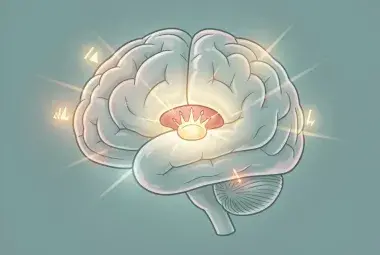



There is a quiet moment that many people rarely talk about. It happens after the tears. Your breathing slows. Your chest feels less tight. The storm inside you softens. You may even feel strangely clear, as if someone pressed a hidden reset button in your brain.
For generations, crying has been misunderstood. It has been labeled as weakness, oversensitivity, or emotional instability. People are told to toughen up. To hold it in. To stay strong. Yet biology tells a very different story.
Crying is not a malfunction of the mind. It is not a collapse of control. It is a built in neurological and physiological mechanism designed to regulate stress and restore balance. When you cry, your body is not betraying you. It is protecting you.
In 1983, researcher William Frey and colleagues published work exploring the biochemical nature of emotional tears in “Crying: The Mystery of Tears.” Their findings suggested that emotional tears are chemically different from reflex tears. Emotional tears contain higher levels of stress related substances. That discovery shifted the conversation from emotion alone to biology and regulation.
The next time tears come to your eyes, consider this possibility. Your brain may be recalibrating.
The Biology Behind Your Tears
Most people assume tears are simply water spilling from emotion. In reality, there are three distinct types of tears.
Basal tears constantly lubricate your eyes. Reflex tears protect you from irritants like smoke or dust. Emotional tears are different. They are triggered by psychological experiences such as grief, relief, empathy, joy, frustration, or deep connection.
Emotional tears contain stress hormones and natural painkillers. When you experience intense emotion, your nervous system activates. Heart rate increases. Muscles tighten. Cortisol levels rise. If the stress continues without release, the body remains in a heightened state.
Crying interrupts that cycle.
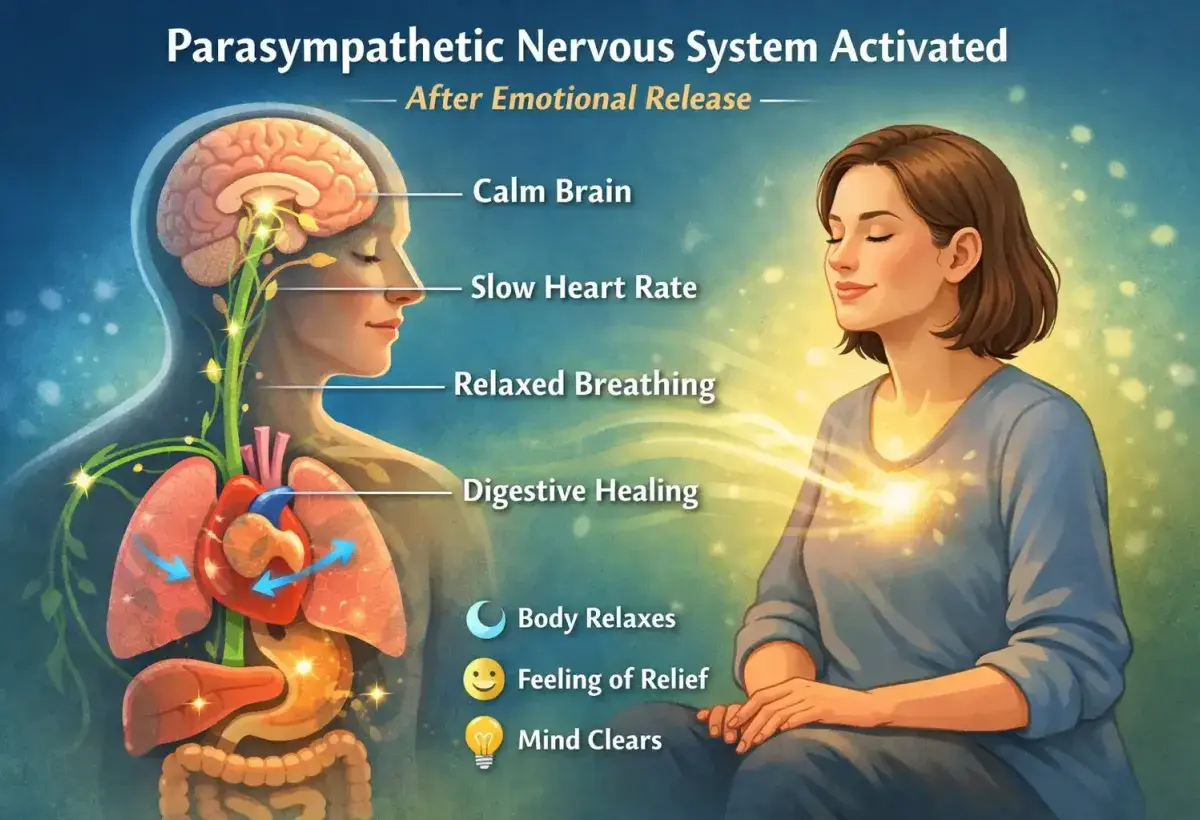
When tears flow, the parasympathetic nervous system begins to engage. This is the branch of your nervous system responsible for rest and restoration. It slows the heart rate. It reduces blood pressure. It signals to the body that the threat has passed.
That is why after a deep cry, you may feel tired but calm. The tension drains away. The body shifts from survival mode to recovery mode.
Crying is not weakness. It is regulation.
Image
Three Powerful Health Benefits of Crying
1. Crying Helps Flush Stress Hormones
Cortisol is often called the stress hormone. It plays a crucial role in survival, helping you respond to danger. However, chronic cortisol elevation is linked to anxiety, sleep problems, weakened immunity, and increased inflammation.
Emotional tears appear to contain stress related chemicals. While crying alone does not eliminate all stress hormones in the body, it contributes to the release process. More importantly, the act of crying activates the calming branch of your nervous system, which reduces ongoing cortisol production.
Think of it like opening a pressure valve. Instead of forcing your system to hold everything inside, crying allows the body to discharge accumulated emotional tension.
People who suppress tears often report lingering tightness in the chest, headaches, or irritability. Those who allow themselves to cry frequently describe feeling lighter or clearer afterward.
Your body was designed for release.
2. Crying Releases Oxytocin and Endorphins
When tears fall, your brain releases oxytocin and endorphins. Oxytocin is often referred to as the bonding hormone. It enhances feelings of connection and safety. Endorphins are natural painkillers that reduce both physical and emotional discomfort.
This chemical combination explains why crying can feel soothing even when the situation is painful. The body produces its own comfort response.
If someone holds you while you cry, the effect intensifies. Physical touch increases oxytocin levels even further. That is why a supportive presence during emotional release can feel profoundly healing.
Crying alone can still provide relief, but crying in connection can deepen restoration.
It is not dramatic. It is neurochemical.
3. Crying Activates Deep Relaxation
After intense crying, many people feel sleepy. This is not exhaustion from weakness. It is the parasympathetic nervous system doing its job.
Once the body exits high alert mode, it prioritizes repair. Muscles loosen. Breathing slows. Digestive processes resume normal function. The brain shifts toward integration rather than defense.
You may notice improved clarity. Problems that felt overwhelming can appear more manageable. Emotions that felt chaotic may begin to organize themselves into insight.
Crying clears emotional static.
The Cultural Stigma Around Tears
Despite its biological benefits, crying is still stigmatized in many societies. Children are often told to stop crying. Boys in particular are conditioned to equate tears with failure. Adults may hide in bathrooms or cars to avoid being seen.
This conditioning has consequences.
When people learn to suppress tears, they also learn to suppress emotional awareness. Over time, this can create emotional numbness or explosive reactions that feel out of proportion. Suppression does not erase emotion. It stores it.
Emotional intelligence requires the ability to feel and process internal states. Crying is one of the body’s most honest expressions of that process.
Strength is not the absence of tears. Strength is the willingness to experience them.
Emotional Release as Self Care
We often think of self care as bubble baths or vacations. True self care sometimes looks far less glamorous. It may look like sitting quietly and allowing yourself to feel grief. It may look like listening to a song that unlocks buried emotion. It may look like writing words you have never said out loud.
Tears are not interruptions to productivity. They are maintenance for your mental and neurological systems.
When you cry, you are acknowledging something meaningful. Something matters enough to move you.
That matters.
Image

A Therapist Inspired Approach to Healthy Crying
Emotional release can be intentional. It does not have to be chaotic.
First, let the tears come without judgment. Notice any internal voice that labels you as weak or dramatic. Observe it, then gently return focus to your breathing.
Second, deepen the release if needed. Music can access emotions that logic cannot reach. Journaling can help articulate what feels overwhelming. Even speaking aloud in a private space can clarify hidden thoughts.
Third, reflect afterward. Ask yourself what triggered the cry. Was it sadness, relief, empathy, frustration, or joy. What need surfaced. What boundary was crossed. What truth emerged.
Crying often reveals information.
It can show you what you care about. It can show you what hurts. It can show you what must change.
Tears are teachers.
The Surprising Power of Joyful Tears
Not all crying is rooted in pain. People cry at weddings, reunions, achievements, and moments of profound gratitude.
Joyful tears are powerful because they signal emotional overflow. When something exceeds your capacity to contain it, tears bridge the gap.
The nervous system does not distinguish sharply between intense positive and negative emotion. Both can activate strong physiological responses. Crying in moments of joy may also serve as a regulatory process, preventing emotional overload.
This is why you may laugh and cry at the same time.
Your body is balancing intensity.
When Crying Feels Stuck
While crying is healthy, there are times when persistent uncontrollable crying may signal deeper concerns such as depression, prolonged grief, or chronic stress. If tears feel constant, overwhelming, or disconnected from clear triggers, professional support can help.
Healthy crying provides relief. If there is no relief, it may be a sign that additional support is needed.
Seeking help is not weakness. It is wisdom.
Reframing the Narrative
Imagine if we taught children that crying is a biological reset. Imagine if workplaces understood that emotional processing increases clarity rather than diminishes competence. Imagine if men were encouraged to see tears as courage rather than collapse.
The narrative would change.
Instead of shaming tears, we would recognize them as signals. Signals that something matters. Signals that the nervous system is recalibrating. Signals that the body is healing.
Crying is not a breakdown. It is a breakthrough.
It breaks open stored tension. It breaks through emotional numbness. It breaks patterns of suppression that disconnect us from ourselves.
And on the other side of tears, there is often insight.
The Reset Button Within You
Your brain and body are designed for rhythm. Activation and rest. Tension and release. Effort and restoration.
Crying fits into that rhythm.
When stress builds, tears can discharge it. When emotion overwhelms, tears can organize it. When connection deepens, tears can honor it.
You do not need permission to cry. Your nervous system already gave it to you.
The next time tears well up, pause before you push them away. Notice the sensation. Notice the shift that follows. Notice the quiet after the storm.
That quiet is your reset.
In a world that celebrates constant productivity and emotional control, allowing yourself to cry may be one of the most radical acts of self respect. It is not weakness. It is biology. It is intelligence. It is healing.
And sometimes, it is exactly what your brain has been waiting for.
Crying is not a collapse of strength. It is the nervous system restoring balance. It is chemistry aligning with emotion. It is the body’s way of clearing space for clarity and resilience.
The next time someone says you are too emotional, remember this truth.
Tears are not a sign that you are falling apart.
They are proof that your mind and body are working exactly as they were designed to.
References
-
Frey, W. H., III, Malatesta, C. Z., & Steiner, J. (1983). Crying: The Mystery of Tears. Spectrum Publications.
-
Vingerhoets, A. J. J. M., & Cornelius, R. R. (2001). Crying: Basic mechanisms and functions. In A. Vingerhoets & I. van Tilburg (Eds.), Adult crying: A biopsychosocial approach (pp. 9–35). Brunner-Routledge.
-
Rottenberg, J., Bylsma, L. M., & Vingerhoets, A. J. J. M. (2008). Is crying beneficial? Current evidence and future directions. Emotion Review, 1(2), 104–113.
-
Hendriks, M., Croon, M., & Vingerhoets, A. J. J. M. (2008). Social reactions to adult crying: The help-soliciting function of tears. Journal of Social Psychology, 148(1), 22–32.
-
Grossman, P., & Taylor, E. W. (2007). Toward understanding respiratory sinus arrhythmia: Relations to cardiac vagal tone, evolution, and biobehavioral functions. Biological Psychology, 74(2), 263–285.
-
Frey, W. H., III. (1985). The Emotional Tear. In The Role of Emotions in Health. Spectrum Publications.
-
Sapolsky, R. M. (2004). Why Zebras Don’t Get Ulcers. St. Martin’s Press.
-
Schore, A. N. (2003). Affect Regulation and the Repair of the Self. W. W. Norton & Company.
-
American Psychological Association. (n.d.). Crying: Why we do it, what it does, and how it affects health.
-
Healthline. (2022). Why crying is good for your mental and physical health.
-
Verywell Mind. (2021). The science behind crying and why it makes you feel better.
-
National Institute of Mental Health. (n.d.). Stress and the nervous system.
-
Wikimedia Commons. (n.d.). Parasympathetic nervous system diagrams.