

When people speak about the evolution of American food culture, conversation usually turns to big national brands that dominate highways, malls, and television screens. Yet few casual observers realize that one company quietly shaped nearly every aspect of the modern fast food concept. That company is White Castle, a name instantly recognized by loyal diners who proudly call themselves Cravers. White Castle did not simply sell hamburgers. It helped invent the idea of speedy service, standardized food production, consistent flavor, and branding that remains recognizable across decades. Today people might see sliders in supermarkets or on late night menus and never consider that a family owned business from the Midwest helped ignite an entire industry.
White Castle began during a time when ground beef carried a negative reputation in the United States. Public fears about meat processing had escalated after investigative reports exposed unhealthy slaughterhouse practices. Many Americans felt uneasy about ordering hamburgers in public places. Rather than avoid the challenge, White Castle confronted public distrust through cleanliness, uniformity, transparency, and a polished look that suggested confidence. Its owners did not see burgers as a fad. They viewed them as a staple meal that could be made affordable, reliable, and widely available. Their decisions would transform public perception of casual dining.
White Castle’s famous architecture with small castle like buildings did not exist merely for decoration. It acted as a visual guarantee of quality. When a passerby saw gleaming white bricks and turret inspired edges, the company attempted to communicate purity and dependability. This was radical during an era when many restaurants were makeshift storefronts without brand identity. People needed reassurance. White Castle understood that what customers saw influenced what they felt about the food.
Over time White Castle held its ground while countless competitors grew outward into massive empires. Although White Castle never attempted to dominate every state, it retained a unique cultural standing. It became a symbol of regional pride in cities like Chicago, Detroit, Columbus, and St. Louis. For many who grew up with it, a tray of sliders represents road trips, late night cravings, hangout memories, and comedy fueled nostalgia. That last component became even stronger after a certain Hollywood film turned the pursuit of sliders into an unforgettable adventure.
Today more than one hundred years since its founding, White Castle remains controlled by the family that started it. In an age of acquisitions, mergers, and aggressive franchising, that continuity feels rare. The brand has never tried to reinvent itself into something unrecognizable. Instead it stays beloved by delivering the same signature flavor that made it famous in 1921.
Pioneers of Fast Food
Image
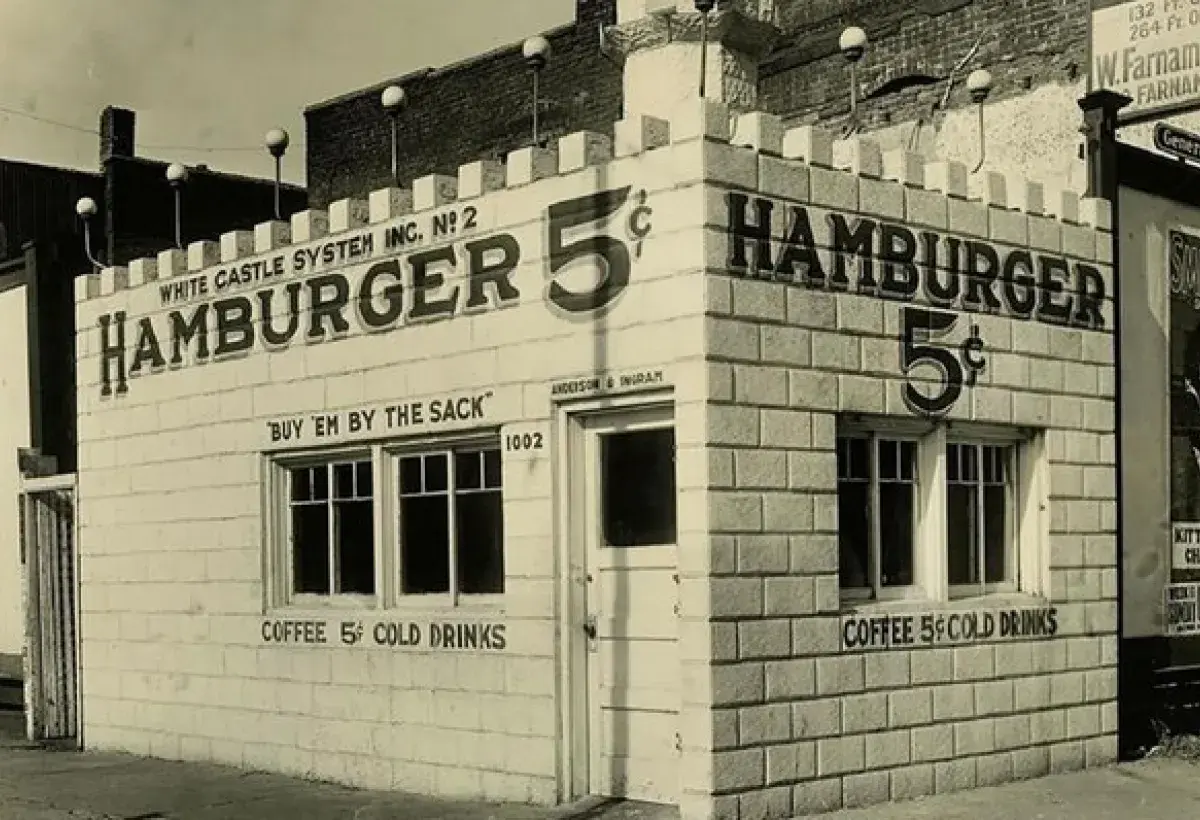
White Castle was founded in Wichita, Kansas in 1921 by Billy Ingram and Walter Anderson. Before White Castle existed, there was no standardized idea of fast food in the United States. Restaurants either prepared food to order in long sit down formats or sold items in informal street settings. White Castle looked at efficiency in an entirely different way. The team recognized that Americans were moving faster, traveling more frequently, working industrial shifts, and needing a meal option that was dependable and quick. They also saw that hamburgers allowed affordable protein to be served to the masses without creating a financial barrier.
White Castle standardized cooking, pricing, cleanliness, uniforms, and preparation. It represented early systemized food production. Employees were trained to follow precise measurements and procedures. Instead of guessing or improvising, White Castle ensured that a slider in Wichita would taste the same as a slider in another location. This concept inspired every major fast food chain that would appear later in the century.
Another important influence was the White Castle commitment to public perception. Sensational stories about tainted beef frightened customers. White Castle embraced transparency by placing meat grinders in visible preparation areas. Customers could watch beef becoming patties. Seeing the process created a feeling of safety at a time when customers needed visual proof. That level of reassurance was a brilliant marketing strategy that strengthened trust.
White Castle also popularized small sized burgers priced so customers could purchase multiple servings. This laid groundwork for a market that would eventually accept combo meals, quick menu turnover, and value driven pricing. While many brands now take credit for speed, White Castle did the heavy lifting first. Its systemization, branding, and attention to detail created the fast food economy long before the rest of the industry caught up.
Steam Grilled Perfection
Image
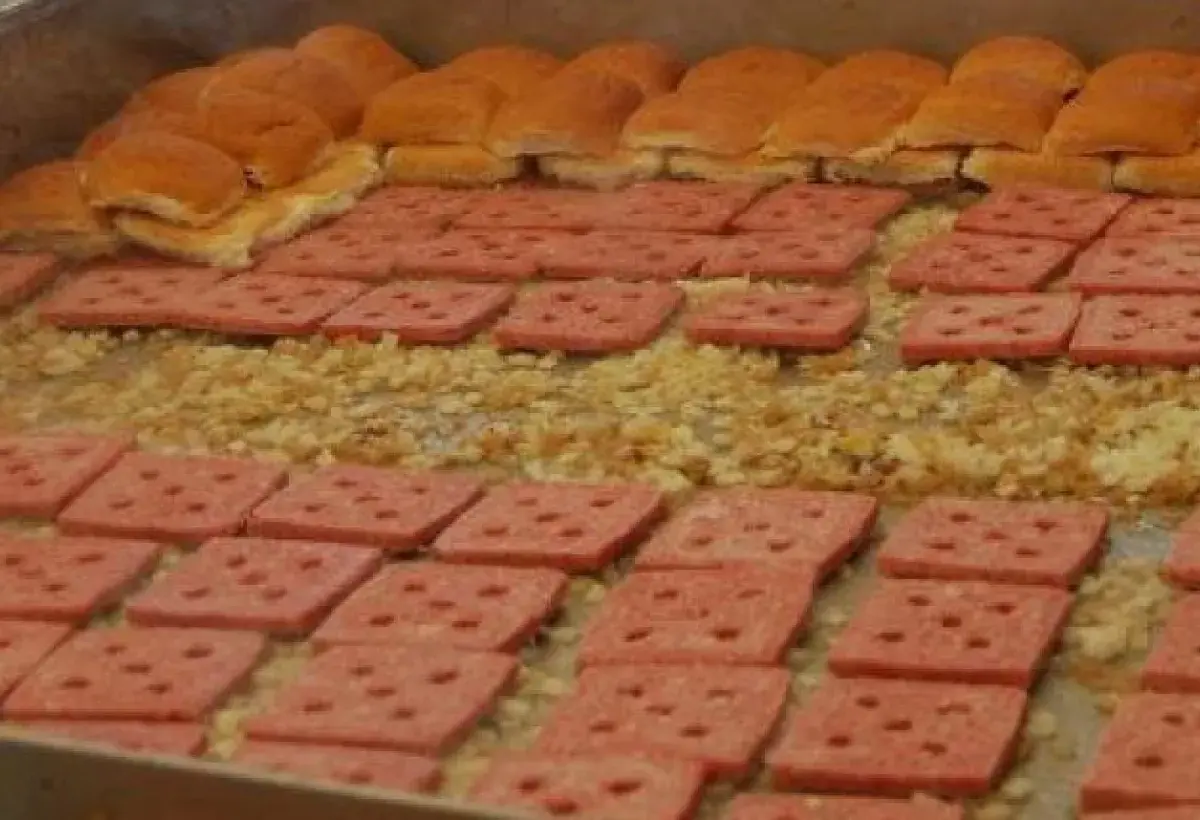
White Castle sliders do not taste like other burgers because they are not cooked like other burgers. Rather than applying direct fire to the patty, White Castle uses a steam grilling method that begins with a generous layer of onions placed on a flat grill. As the onions heat, they release moisture. Patties are positioned directly on top. The onions below act almost like flavor infused steam vents. The meat absorbs the onion aroma and remains incredibly juicy. This technique prevents dryness and ensures consistent cooking.
Because fat drips downward into the onions rather than into open flames, the burgers do not develop a charred crust. Instead they retain a tender texture that has become their signature. Fans often say a single bite is instantly recognizable. The technique also means burgers can cook very quickly without flipping. Speed is crucial inside a kitchen that produces large volumes of identical sliders.
Steam grilling has another cultural byproduct. The aroma of steamed onions is potent, distinct, and beloved by Cravers. Many people associate that smell with road trips, late night gatherings, and celebrations. Even before someone takes their first bite, the scent triggers anticipation. For many fans, that is part of the White Castle experience.
The method helped early employees deliver consistent results with minimal variation. Cooking became almost automated. This created a template that many larger chains later attempted to emulate in different ways. Yet none replicated the true effect achieved by White Castle because they did not prioritize steam, onions, and small patties working together. White Castle demonstrates that simplicity can create a powerful flavor identity.
Five Holes Make a Difference
Image
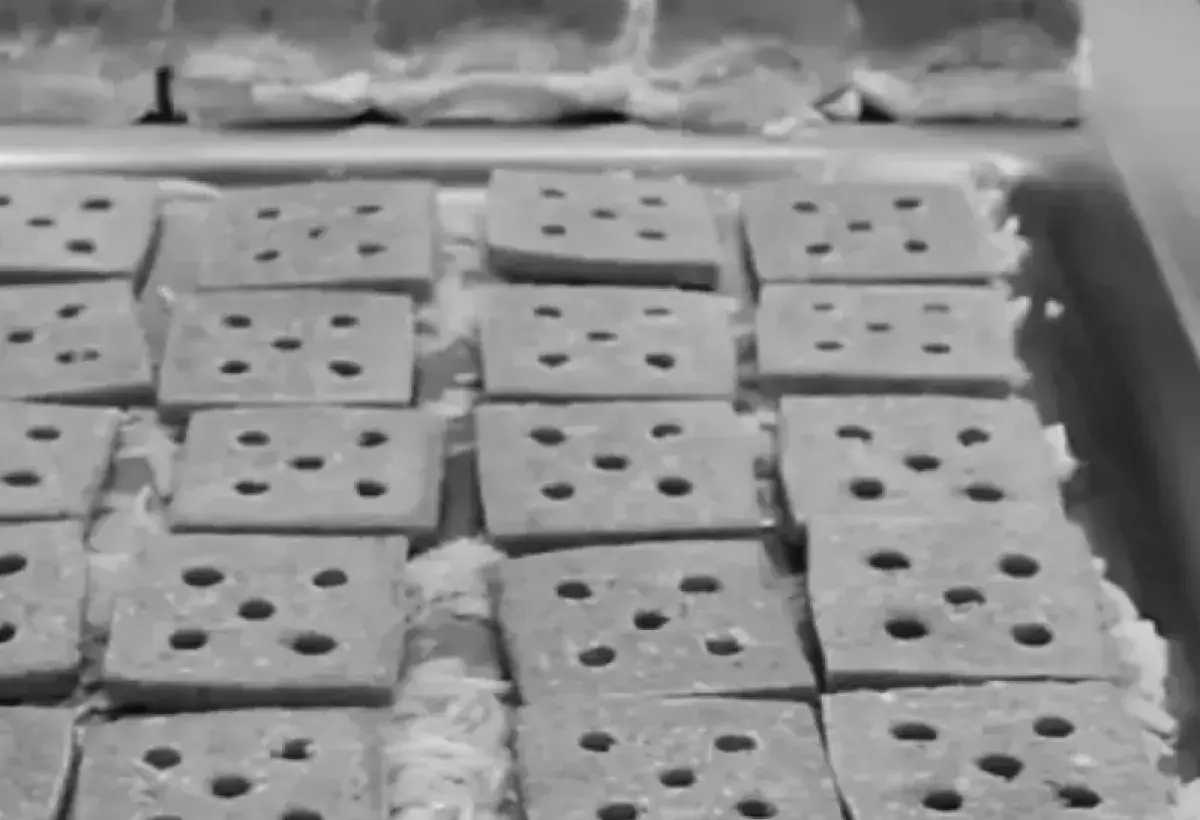
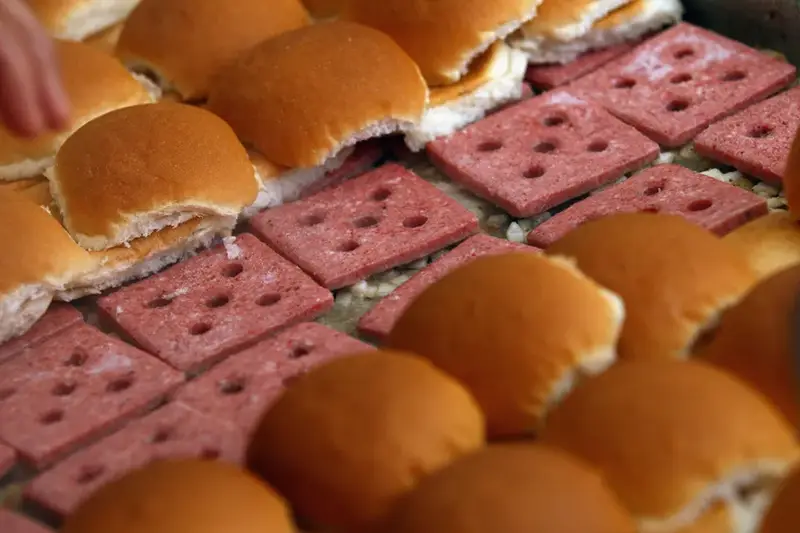
White Castle sliders contain five small holes in every patty. This design is not ornamental. It serves a technical function. The holes allow steam and onion vapor to pass through the meat, ensuring rapid and even cooking. The absence of flipping reduces labor and saves time. It also preserves shape and texture. When patties cook quickly and evenly, customers receive a uniform bite each time.
This small innovation created efficiency in a way few other restaurants imagined. During high volume shifts, workers could place multiple patties on the onion bed and trust that steam would rise through the holes, cooking every patty with minimal attention. It reduced training time for new hires because they did not have to learn complicated flipping techniques.
Customers benefit in flavor and texture. The holes assist in moisture retention. The bite remains soft. The onions soak into the meat instead of evaporating below. The size also encourages individuals to order multiple sliders. White Castle became associated with the idea of eating sliders four or six at a time, which increased menu volume while giving customers an enjoyable portioning experience.
Few restaurants are recognized for something as simple as holes in meat patties. Yet this change helped create a new standard in production. It aligned with the company goal of controllable speed and high consistency. While competitors searched for flashier innovations, White Castle focused on improving the fundamentals of cooking. Over time these fundamentals became legendary.
Castles by Design
Image
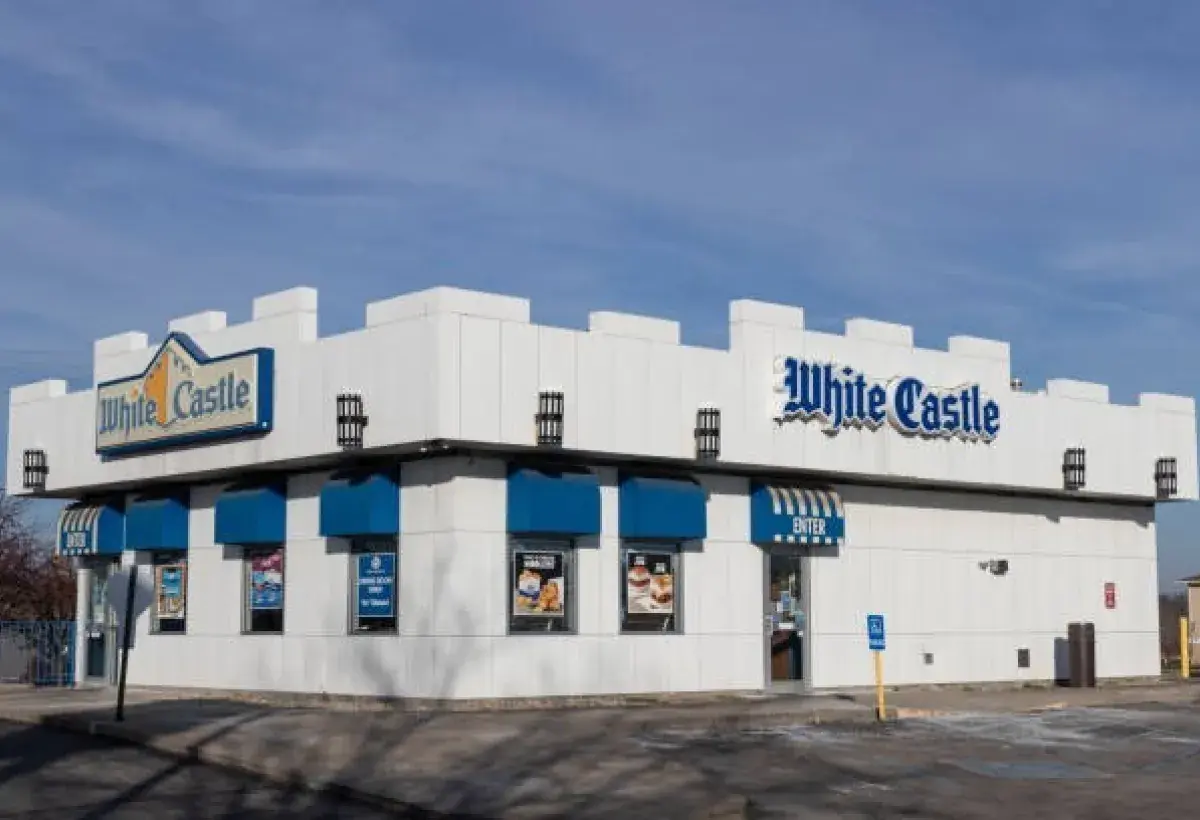
White Castle restaurants were intentionally designed to resemble miniature castles. The company adopted white exterior surfaces, towers, crenelated trim, and ornate trim lines reminiscent of European fortress structures. The aesthetic communicated purity, sanitation, and structural strength. During the early twentieth century, many diners distrusted ground beef because of negative media coverage. White Castle wanted the public to see a physical structure that projected reliability and order.
The exterior design signaled a new age of food service. Instead of pushing gritty street stall vibes, White Castle created a visual identity that seemed almost regal. Customers who approached the building did not feel like they were eating in an improvised space. They felt like they were entering a carefully regulated business. The concept of corporate image became tied to food safety. This was trailblazing for the restaurant industry.
Additionally, the castle shape made White Castle instantly recognizable from a distance. It was easy to spot on busy streets. Motorists could locate it quickly. Before national advertising campaigns became routine, physical architecture performed the same function as a billboard. White Castle recognized that repetition and visibility create trust and memory.
The castle design has also contributed to nostalgic value. Many people associate their childhood or teenage years with the sight of illuminated castle signs at night. Architecture became part of storytelling. When brands experiment heavily with redesigns, they risk losing cultural grounding. White Castle has never lost that connection.
Hollywood Fame
Image

In 2004 White Castle entered an entirely new level of cultural awareness after the release of the comedy film Harold and Kumar Go to White Castle. The film follows two friends who embark on an absurd late night mission to satisfy an intense craving for sliders. Although the story is fictional and comedic, audiences connected with the exaggerated enthusiasm. It spoke to a phenomenon many fans already understood. Once a craving hits, White Castle feels irresistible.
The film gave White Castle free publicity. It positioned the restaurant as a destination worth pursuing across state lines. People who had never tried White Castle suddenly wanted to experience the burgers. The movie became a cult classic which expanded the chain’s identity among younger audiences.
White Castle embraced the attention. The brand did not attempt to sanitize or distance itself from the outrageous humor. Instead it acknowledged that spontaneous late night food missions are part of fast food culture. The impact extended beyond box office numbers. The film helped cement White Castle in modern American comedy history.
Some films fade from memory after the first few years. Harold and Kumar established White Castle as something more than a restaurant. It became a comedic symbol of indulgence, friendship, and impulsive adventure.
Frozen Aisle Pioneers
Image
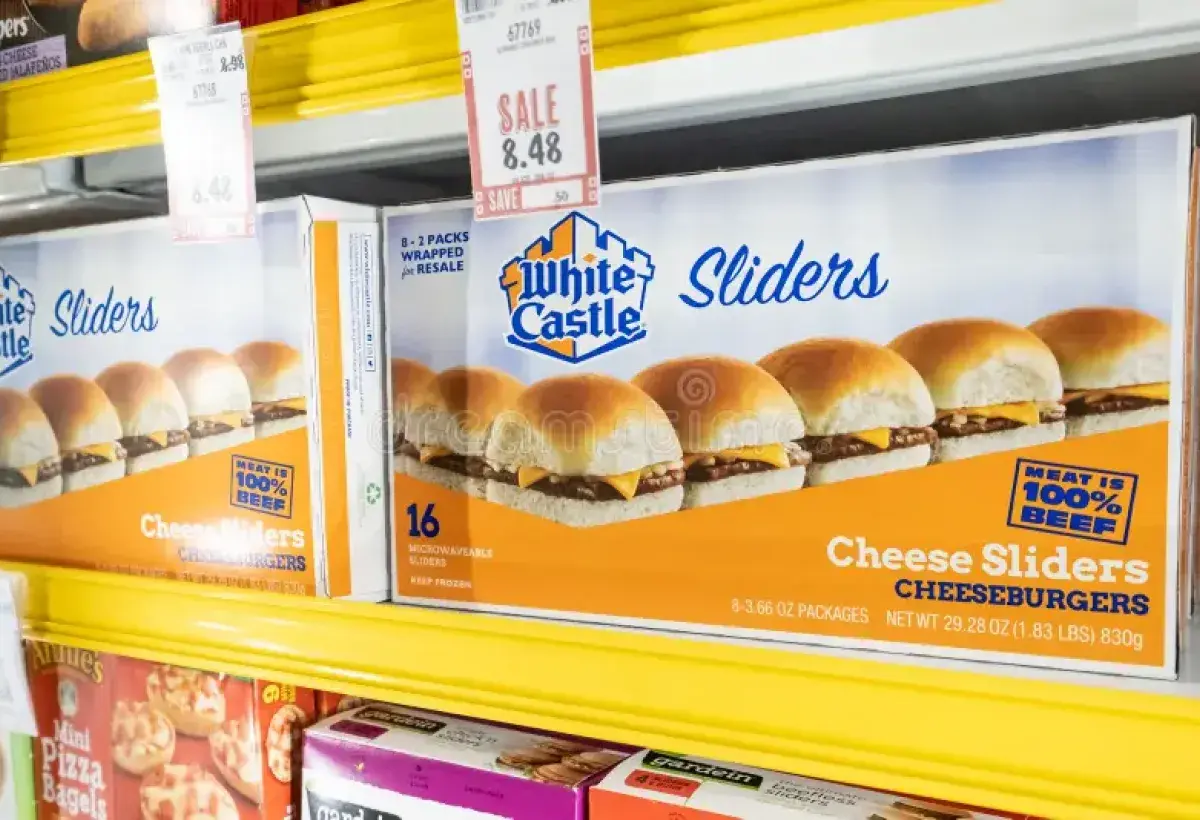
White Castle was one of the first fast food companies to produce a frozen line of its burgers for nationwide retail distribution. This move allowed the brand to reach customers far beyond its regional footprint. Individuals living outside the Midwest or Northeast could finally taste the iconic sliders at home. Retail products also created nostalgia among former residents who moved away from core White Castle markets.
Selling frozen sliders required careful engineering. The company had to maintain flavor and texture through freezing, storage, transportation, and reheating. By solving those problems, White Castle revolutionized brand accessibility. Many food companies followed later by packaging signature menu items for grocery stores, but White Castle helped set a precedent.
Frozen sliders served another function. They reinforced brand memory. Customers who kept White Castle in their freezers interacted with the brand more frequently than those who only visited restaurants. A craving could be satisfied at any time. Late night hunger did not require driving to a specific location. White Castle stayed relevant even in markets without restaurants.
This move shows a combination of smart marketing and logistical ambition. While competitors emphasized operational expansion, White Castle achieved national reach by entering household kitchens. It proved that cultural influence is not dependent on restaurant density.
Craver’s Hall of Fame
Image
White Castle invented a playful yet meaningful tradition called the Cravers Hall of Fame. The idea celebrates fans who express extraordinary love for the brand. Honorees include loyal customers, community members, performers, artists, and sometimes famous personalities who openly profess their affection for sliders. The Hall of Fame gives the brand a human personality rather than a corporate identity.
Induction stories often involve amusing or heartfelt narratives. Some individuals travel great distances for sliders. Others incorporate sliders into personal celebrations. Many describe family traditions passed through generations. By documenting these accounts, White Castle reinforces emotional connections with customers. Food becomes memory, and memory becomes loyalty.
This approach to fan celebration is uncommon in the restaurant industry. Brands often communicate through advertising rather than acknowledging fan devotion. White Castle does the opposite. It publicly thanks customers and encourages participation. Honorees become ambassadors. They spread enthusiasm without scripted endorsements.
The existence of the Hall of Fame also demonstrates White Castle’s self awareness. It knows that sliders are not merely food. They are symbolic objects present during road trips, job changes, vacations, personal milestones, and community bonding. The Hall of Fame immortalizes those moments and turns everyday people into brand legends.
Valentine’s Day Tradition
Image

White Castle may seem like an unconventional romantic destination, yet for decades the chain has hosted a Valentine celebration in which participating locations transform into themed dining rooms. White tablecloths are added. Centerpieces are arranged. Servers provide table service. Reservations are often required because events fill quickly. Couples attend for novelty, humor, and nostalgia.
This tradition began in the 1990s and continues because it offers something rare in fast food: a sense of occasion. Many couples bond over shared memories of road trips or late night meals, so celebrating romance at White Castle adds a playful twist. It rejects the idea that love must be expressed through formal dining environments. Some couples propose during the event, creating emotional stories that return year after year.
White Castle treats the occasion with genuine enthusiasm. Staff wear themed attire. Decorations embrace the spirit of celebration. Instead of making customers feel silly, the company encourages them to have fun. This helps strengthen the brand personality.
When a restaurant creates emotional rituals that repeat annually, it establishes cultural endurance. Valentine’s Day at White Castle is not a marketing stunt. It is a tradition embraced by customers who enjoy the combination of humor and sincerity. It also stands as proof that a burger chain can produce joyful memories without losing its identity.
Selective Expansion
Image
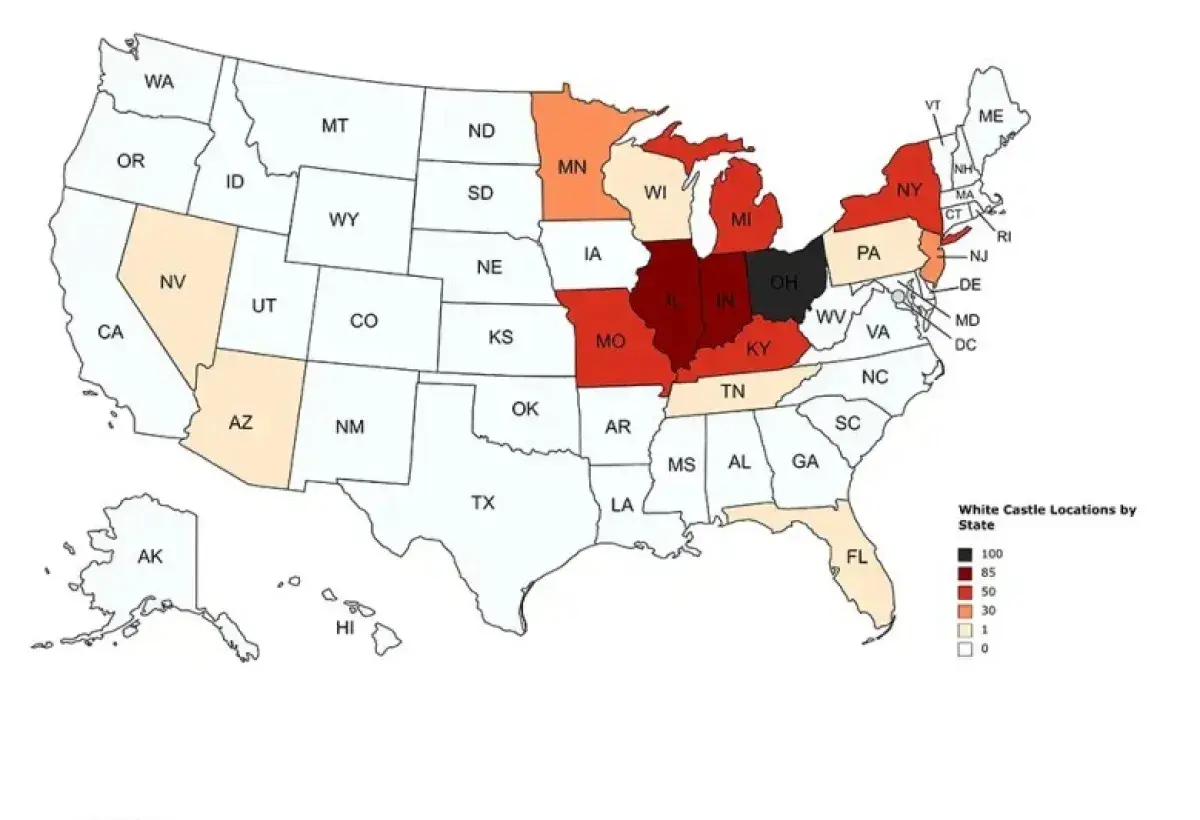
Unlike rival chains that pursue aggressive global expansion, White Castle has remained intentionally limited in its geographic presence. Most restaurants exist in the Midwest with additional concentrations in select eastern areas. This selective expansion strategy might surprise some observers, but it has helped preserve operational control. Family ownership means decisions reflect values rather than market pressure.
Restraint in expansion reduces the risk of overextending resources. It prevents dilution of identity and ensures product quality remains consistent. For many fans, the scarcity enhances desire. When something is not available everywhere, it grows special. Travelers sometimes treat White Castle as a destination on cross country drives. The rarity contributes to excitement.
Regional focus also reinforces community connections. Many customers view White Castle as a hometown institution rather than a faceless corporation. It supports local hiring and long term relationships. Big chains often struggle to maintain that sense of belonging when they rapidly scale.
Selective growth demonstrates confidence. White Castle does not need thousands of restaurants to stay relevant. Its cultural value comes from history, taste, and brand identity. While competitors aim for domination, White Castle aims for continuity.
Over a Century of Sliders
Image
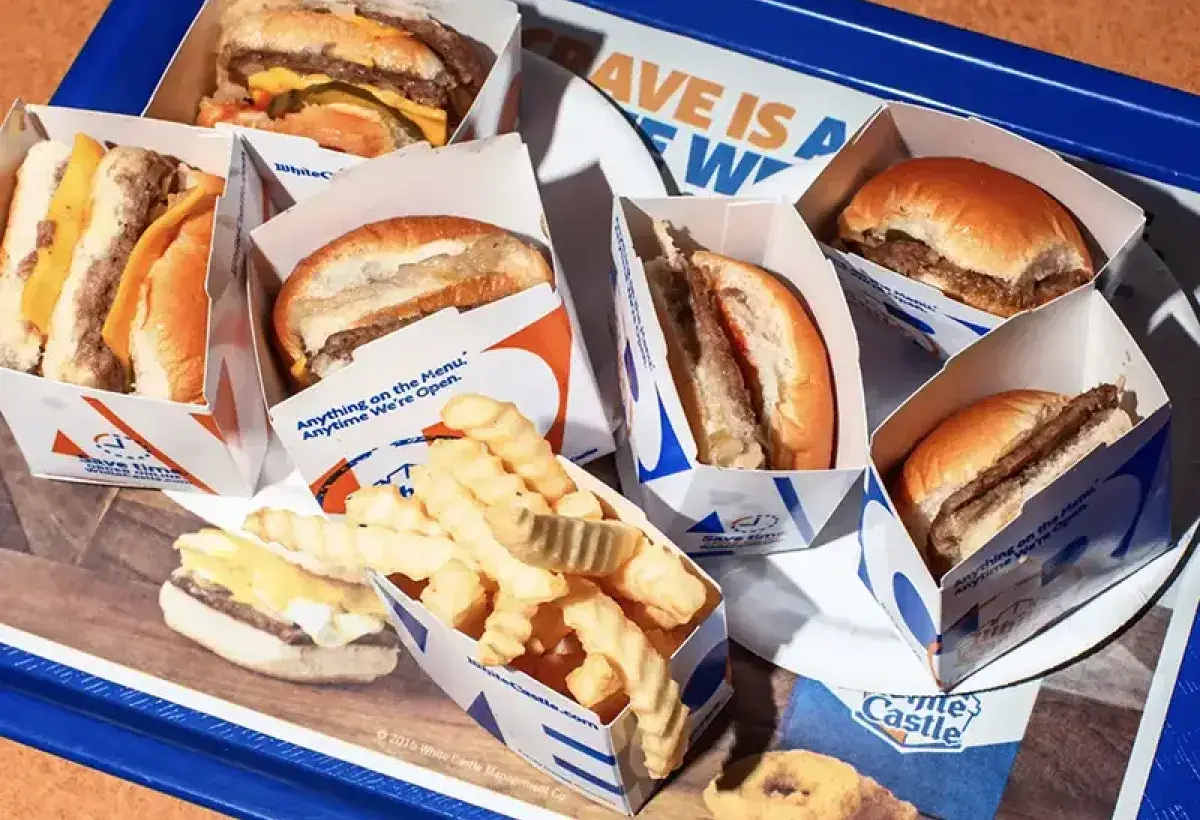
White Castle has exceeded one hundred years of business, a milestone that very few American restaurant chains can claim. It remains family owned, which means values are not dictated by quarterly shareholder demands. Instead decisions focus on preserving tradition, maintaining product consistency, and respecting customer heritage.
Reaching a century reflects resilience. White Castle has survived economic downturns, cultural changes, wars, shifting tastes, and intense competition. Yet sliders remain timeless for many. The experience is simple, affordable, and nostalgic. Because the company resisted drastic reinvention, it became an anchor in the fast food landscape.
The brand continues to introduce new products occasionally, yet the core slider endures as the primary attraction. That continuity encourages multi generational loyalty. Parents who ate sliders in their youth bring their children. Families pass down memories that restaurants cannot fabricate artificially. Longevity becomes an asset.
By staying privately held and regionally focused, White Castle shows that authenticity can outperform size. The company looks at history not as a museum piece, but as a living force that guides decisions. It continues to feed new generations of Cravers who wish to take part in a cultural tradition rather than merely ordering a meal.
White Castle stands as a reminder that cultural influence does not require overwhelming scale. It requires a strong identity, a consistent product, and a clear belief in what customers value. The company helped create fast food before the world had a phrase for it. It accomplished this through streamlined production, architectural confidence, steam based cooking, and relentless attention to brand reputation. All of these actions built trust at a time when Americans doubted the safety of hamburgers.
Even today White Castle remains a symbol of comfort, memory, and unpretentious enjoyment. Some customers visit after sporting events. Others stop by during long drives. Many view frozen sliders as an anchor in their grocery freezers. Each interaction adds another piece to the long cultural story. White Castle has something rare in retail dining. It has a soul. That soul lives in the aroma of onions, the vision of white exterior walls, the humor of late night cravings, and the tradition of Valentine dinners with tablecloths and candles.
The brand’s history proves that innovation does not always require radical reinvention. Sometimes it requires staying true to an idea. White Castle never abandoned that idea. It promised small, affordable, delicious burgers delivered quickly and consistently. It honored the science of simplicity. That commitment turned sliders into a national treasure. For all who call themselves Cravers, the journey is personal. For the rest of the world, it is an invitation to experience a piece of American food history one bite at a time.