


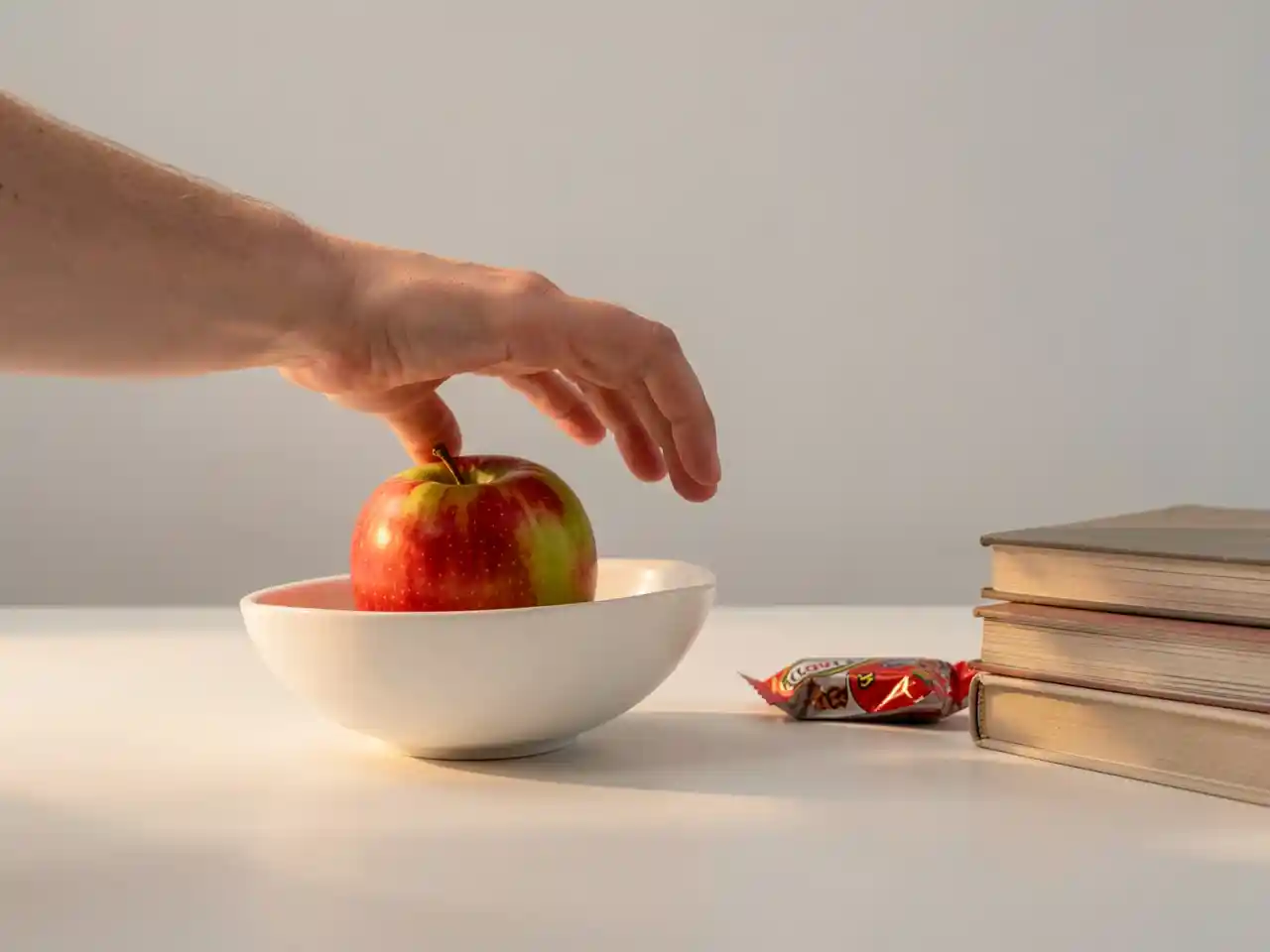
We have all heard motivational calls to action: "Just push harder" or "Stay disciplined" or "Where there is a will there is a way." But what if willpower, the force we often believe drives transformation, is not the hero we think it is? What if it is your environment that holds the majority of influence over your habits, your progress, and your ultimate success? Emerging research reveals that while willpower can spark action, your surroundings sustain or stifle it. Understanding this dynamic can transform how you approach personal growth, productivity, and long-term change.
The Willpower Trap: Why It Often Fails
Willpower is seductive. It promises that self-directed effort can overcome obstacles, but it is often unreliable. Consider the famous Stanford Marshmallow Test, which suggested that delayed gratification in childhood predicts later life success. Children who waited for the second marshmallow were assumed to have stronger self-control and better outcomes later in life. Yet a large-scale replication by Watts, Duncan, and Quan in 2018 revealed a more nuanced story. While children who waited slightly outperformed their peers academically at age fifteen, the effect diminished significantly when researchers accounted for socioeconomic background and early cognitive ability.
The conclusion is clear: willpower alone is not the universal predictor of success we once assumed. Relying solely on self-discipline can lead to frustration when circumstances overwhelm your ability to maintain control. This is why people often fail to stick to diets, workout plans, or study routines despite strong intentions.
The Silent Power of Environment
The Vietnam War Heroin Addiction Study
One of the most striking examples of environmental influence comes from the study by Robins, Helzer, and Davis in 1975. Researchers examined American soldiers who used heroin while deployed in Vietnam. Approximately thirty-four percent became dependent on the drug during service. Yet when these soldiers returned to the United States, only about one percent relapsed within a year. This dramatic shift was not the result of extraordinary willpower. It was the result of a sudden change in environment, social context, and daily routines. The conditions that triggered addiction were gone, demonstrating that environment can overpower self-control.
Obesity and Social Networks
Environment shapes behavior not only through physical space but also through social networks. Christakis and Fowler in 2007 analyzed decades of data from the Framingham Heart Study and discovered that obesity can spread through social ties. If a close friend became obese, a person’s risk of obesity increased by fifty-seven percent. Among mutual friends, the risk jumped to one hundred seventy-one percent. These findings illustrate that behavior, norms, and health choices are contagious. Surrounding yourself with people who embody the habits you aspire to can be more powerful than relying solely on willpower.
Habit Formation and Context
Habits are strongly influenced by context. Wood and Neal in 2007 showed that once habits form, environmental cues such as location, time, or associated tasks automatically trigger behavior, even when individuals have different conscious goals. For example, you might automatically reach for a soda at work every afternoon, not because you desire it in that moment, but because your environment cues the habit. The same willpower applied in two different settings can yield entirely different outcomes.
Productivity and Workplace Design
Physical space also affects performance. Knight and Haslam in 2010 found that employees performed significantly better when they had control over their work environment. Simple adjustments such as natural light, comfortable seating, and personalized workspace improved focus and efficiency. Conversely, cluttered or distracting environments made productivity more challenging. This shows that the design of our surroundings can either sabotage or support our efforts.
Image

How Your Environment Silently Sabotages You
-
The Wrong Social Circle: Peer influence can normalize unhealthy or unproductive behaviors, leading you to adopt similar habits unconsciously.
-
Context-Triggered Habits: Old environmental cues continue to prompt old behaviors even if your goals have changed.
-
Design-Driven Distraction: Cluttered or poorly designed spaces make bad habits easier and good habits harder, creating a silent barrier to success.
These invisible pressures demonstrate that environmental design often trumps willpower in determining outcomes.
Hack Your Environment for Success
Step 1: Remove Friction for Good Habits
Simplifying access to positive behaviors and increasing friction for negative ones is a powerful strategy.
-
Leave a book on your pillow instead of your phone to encourage reading.
-
Remove unhealthy snacks from your home to reduce temptation.
-
Charge your phone in another room to improve sleep quality.
Step 2: Harness Social Influence
Aligning with social networks that support your goals strengthens habit formation.
-
Join communities that embody the behaviors you aspire to.
-
Follow role models whose habits align with your aspirations.
Step 3: Design Default Wins
Automation and thoughtful design reduce the reliance on willpower by making positive behavior the path of least resistance.
-
Automate savings so you do not need to make constant decisions about money.
-
Use apps or tools that block distractions to maintain focus effortlessly.
-
Arrange your home, office, and daily routines so the environment itself guides better choices.
The Winning Formula: Willpower and Environment
Willpower sparks action, but environment sustains it. Motivation might get you to the gym once, but living near a gym or exercising with a partner transforms effort into routine. Motivation alone cannot compensate for poor surroundings, but when your environment supports your intentions, consistent action becomes second nature.
Designing your surroundings to align with your goals is one of the most effective strategies for success. Even small adjustments, such as rearranging your workspace, changing your social context, or automating key decisions, can produce dramatic long-term results.
Image

Science consistently shows that environment is a major architect of behavior. From soldiers overcoming addiction when returning home, to social networks influencing health and weight, to context-driven habits and productivity shaped by workspace design, the evidence favors environmental factors over sheer willpower.
If you want to change your life, do not focus exclusively on summoning more discipline. Instead, design your environment so that the easiest choice is the best one. When willpower and environment work together, success stops feeling like a struggle and begins to feel like a natural outcome.
Author’s Note
This article is an original work published under Clarity Edited, written by the Clarity Edited Team with the support of AI-assisted research and writing tools. The voice, insights, and recommendations are fully human-directed.
References
Christakis, N. A., & Fowler, J. H. (2007). The spread of obesity in a large social network over thirty-two years. New England Journal of Medicine, 357(4), 370–379.
Knight, C., & Haslam, S. A. (2010). Your place or mine? Organizational identification and comfort as mediators of relationships between the managerial control of workspace and employees’ satisfaction and well-being. British Journal of Management, 21(3), 717–735.
Robins, L. N., Helzer, J. E., & Davis, D. H. (1975). Narcotic use in Southeast Asia and afterward: An interview study of eight hundred ninety-eight Vietnam returnees. Archives of General Psychiatry, 32(8), 955–961.
Watts, T. W., Duncan, G. J., & Quan, H. (2018). Revisiting the marshmallow test: A conceptual replication investigating links between early delay of gratification and later outcomes. Psychological Science, 29(7), 1159–1177.
Wood, W., & Neal, D. T. (2007). A new look at habits and the habit-goal interface. Psychological Review, 114(4), 843–863.