When Pain Becomes Everyday: Why Chronic Pain With Age Is Often Misunderstood
Reframing Pain in Later Life
Pain frequently becomes part of everyday experience as individuals grow older. It may begin subtly like a stiffness upon waking, an ache after prolonged standing, or discomfort that lingers longer than it once did. Because such experiences are common, they are often dismissed as an inevitable consequence of aging. This assumption, while widespread, is conceptually flawed.
Framing pain as “just aging” risks normalizing avoidable suffering, while the opposite tendency interpreting all pain as a sign of serious disease can generate unnecessary anxiety and over-medicalization. Contemporary medical science supports neither view.
Instead, it offers a more precise interpretation: pain in later life is common, but it is neither trivial nor inherently pathological. It is a complex, multifactorial experience that requires proportionate understanding.
This article synthesizes established guidance from major health authorities to clarify how chronic pain in older adults is currently understood, why it is frequently misinterpreted, and how it should be approached conceptually.
Pain as a Multi-System Experience
Modern pain science no longer defines pain as a direct indicator of tissue damage. The World Health Organization and the National Institutes of Health have emphasized that pain arises from the interaction of multiple systems, including musculoskeletal structures, nervous system processing, inflammatory activity, sleep regulation, hormonal changes, physical conditioning, and psychological context.
Because these systems operate simultaneously, pain may persist even when imaging or laboratory findings appear unremarkable. This apparent mismatch between symptoms and diagnostic results is a common source of frustration for patients. From a scientific standpoint, however, it is expected.
Pain is not a direct measure of structural damage; it is an integrated output of the body and brain. This shift in understanding marks a critical departure from earlier biomedical models and aligns with the biopsychosocial framework now widely endorsed in global clinical guidance.
Image

Common Pain Patterns in Aging
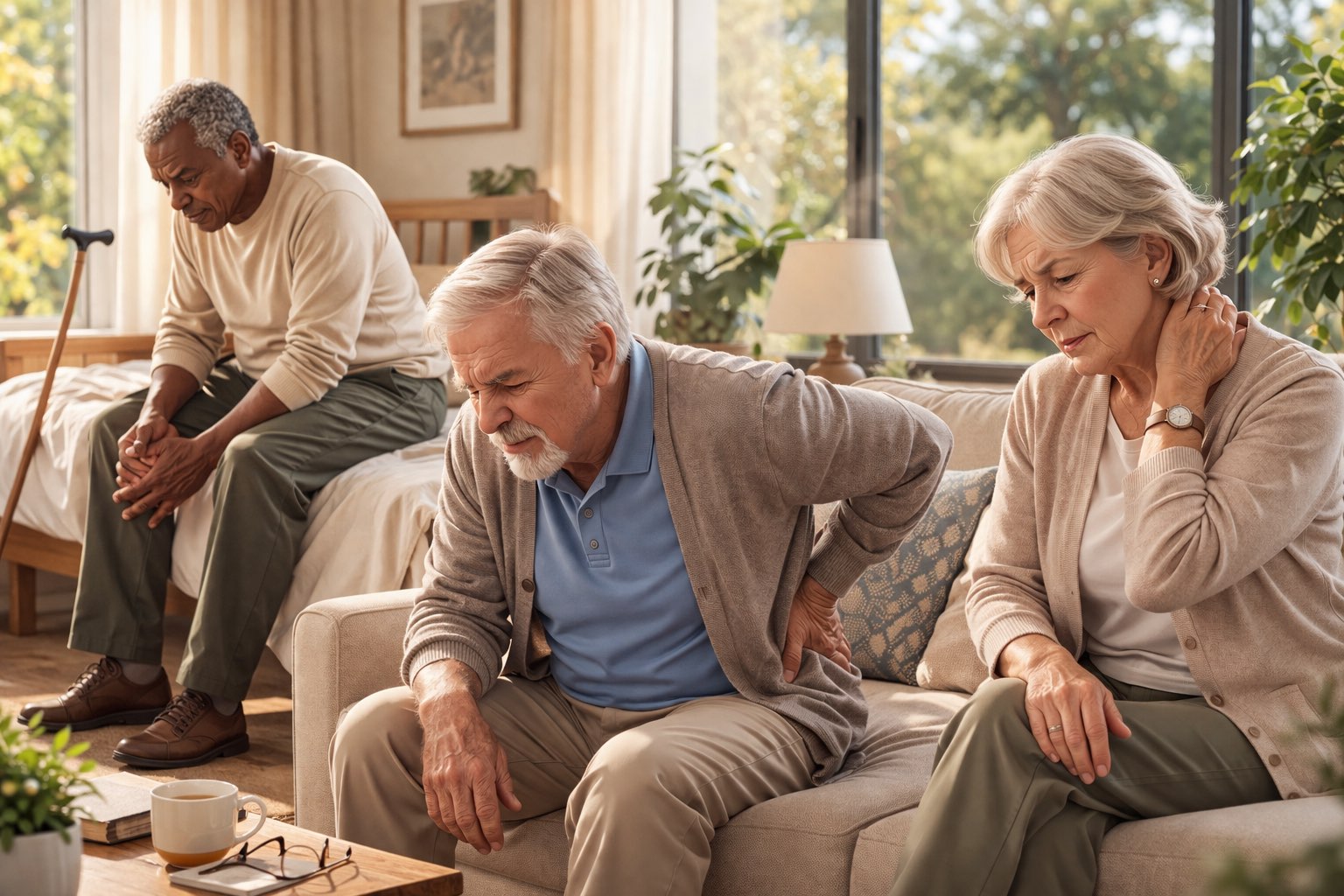
Population-level evidence has identified several pain patterns that increase in prevalence with age. The World Health Organization (2023) reported that low back pain remains one of the leading causes of disability globally, with increasing burden in older populations.
Osteoarthritis-related pain commonly affects weight-bearing joints such as the knees and hips, often presenting as stiffness after inactivity and discomfort during movement.
Neck and shoulder pain are frequently associated with postural strain and degenerative changes, while neuropathic pain may manifest as burning, tingling, or electric sensations when peripheral nerves are involved.
These conditions tend to follow recognizable patterns. They often fluctuate rather than progress linearly, are influenced by sleep quality and activity levels, and may improve with movement and conditioning. Their presence does not necessarily indicate serious disease, but neither should they be dismissed. Medical science emphasizes a critical distinction: common does not mean insignificant. Even non-life-threatening pain can substantially affect mobility, independence, and quality of life.
When Pain Requires Immediate Attention
While many pain experiences are part of common aging patterns, certain presentations require prompt medical evaluation. Clinical guidance consistently identifies warning signs that warrant urgent attention. These include sudden or severe pain, chest discomfort accompanied by breathlessness, new neurological symptoms such as weakness or speech difficulty, pain following trauma, and pain associated with systemic indicators such as fever, unexplained weight loss, or loss of bladder or bowel control.
The World Health Organization has emphasized that recognizing these “red flags” is more clinically useful than broadly categorizing pain as either benign or dangerous. The objective is proportional response distinguishing between patterns that can be monitored and those that require immediate intervention.
Image

Why Everyday Pain Is Often Misunderstood
Pain in later life is frequently misunderstood because it is interpreted through two opposing and equally unhelpful assumptions. On one side, many people are told, sometimes gently and sometimes dismissively, that pain is simply part of aging and something to be tolerated. Over time, this message can lead individuals to downplay their discomfort, delay seeking guidance, or quietly adapt their lives around pain they believe is unavoidable.
On the other side, persistent pain can provoke fear. When discomfort does not resolve, people may begin to worry that it signals a serious underlying condition. Every ache becomes suspect. Every flare raises concern. This mindset can lead to repeated testing, heightened anxiety, and a sense that the body is no longer trustworthy.
Medical science supports neither interpretation. The International Association for the Study of Pain emphasizes a foundational principle: pain is always real, regardless of whether it can be fully explained by imaging or laboratory findings. At the same time, global clinical guidance consistently advises against over-medicalizing common pain patterns when no warning signs are present.
This balance is important. Pain is not something to be dismissed, but neither should it be automatically interpreted as evidence of serious disease. Scientific understanding encourages a more thoughtful approach one that looks at patterns over time, context, and overall function. In this way, pain becomes something to be interpreted, not ignored and not catastrophized. Understanding replaces confusion, and proportion replaces fear.
What Medical Science Shows Actually Helps
Across recent guidance from the World Health Organization, the National Institutes of Health, and international pain authorities, there is strong and consistent agreement on what improves chronic, non-cancer pain in older adults.
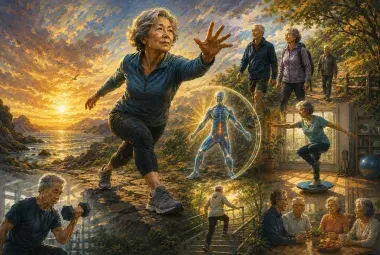
At the center of this agreement is regular, appropriately paced movement. Research shows that strength training, aerobic activity, and flexibility exercises improve pain levels, physical function, and confidence when introduced gradually and tailored to the individual. Movement supports joint health, improves circulation, and helps recalibrate how the nervous system processes pain.
Image

-
Physical therapy and pain education are also essential components of effective care. Learning how pain works, how to pace activity, and how to move safely allows people to remain active without worsening symptoms. WHO guidelines consistently prioritize active approaches over prolonged rest or passive treatments, which tend to reduce function over time.
-
Sleep quality plays a critical role as well. Fragmented sleep and nighttime discomfort increase pain sensitivity the following day. Addressing sleep disruption whether through improved sleep habits or evaluation of sleep disorders has been shown to reduce pain intensity and improve daytime energy.
-
Weight management and metabolic health are particularly important for joint-related pain. Excess weight increases mechanical load on the knees and hips and contributes to systemic inflammation. Even modest improvements in metabolic health can lessen pain and improve mobility.Why Pain Persists Without Clear Findings
One of the defining features of chronic pain is its persistence in the absence of clear structural pathology. Research synthesized by the National Institutes of Health has shown that pain involves both peripheral input and central processing mechanisms. Over time, repeated signaling can lead to sensitization within the nervous system, amplifying pain perception even when the original physical trigger has stabilized or resolved.
In parallel, aging is associated with low-grade systemic inflammation, often referred to as “inflammaging,” which alters tissue recovery and increases sensitivity to physical and metabolic stress. These processes help explain why pain can remain persistent and functionally limiting without a single identifiable cause.
Importantly, this does not imply that pain is psychological or imagined. It reflects a physiological adaptation in how pain is processed and experienced.
The Reinforcing Cycle of Sleep, Fatigue, and Stress
Chronic pain is closely linked to sleep quality, energy regulation, and psychological stress. The National Institutes of Health reported that disrupted sleep increases pain sensitivity, while persistent pain interferes with restorative sleep. This reciprocal relationship contributes to cumulative fatigue, reducing physical resilience and amplifying perceived discomfort.
Stress further compounds this cycle by maintaining heightened nervous system activation, lowering pain thresholds and increasing sensitivity to stimuli. The result is a reinforcing loop in which pain, sleep disruption, and fatigue sustain one another over time.
Current medical frameworks emphasize that effective management requires addressing this system as a whole, rather than isolating pain as a purely mechanical issue.
Why Pain in Aging Is Misunderstood
Pain in later life is frequently misinterpreted because it is filtered through two opposing assumptions. On one side, pain is normalized and minimized as an inevitable part of aging, leading individuals to delay seeking support or to adapt silently to declining function. On the other side, persistent pain may trigger disproportionate concern, prompting repeated investigations and heightened anxiety.
The International Association for the Study of Pain (2023) emphasized that pain is always a real experience, regardless of whether it is fully explained by diagnostic findings. At the same time, global clinical guidance advises against over-medicalizing common pain patterns in the absence of warning signs.
A balanced interpretation is therefore essential. Pain should be understood contextually evaluated over time, in relation to function, and within the broader health profile of the individual. This approach replaces both dismissal and catastrophization with informed judgment.
Image
What Evidence Consistently Shows Improves Outcomes
There is strong consensus across global health authorities regarding effective approaches to chronic, non-cancer pain in older adults. The World Health Organization (2023) emphasized that regular, appropriately scaled physical activity is central to improving pain and maintaining function. Strength training, aerobic exercise, and flexibility work contribute to joint health, circulation, and nervous system regulation.
Physical therapy and pain education further support functional improvement by helping individuals understand pain mechanisms, pace activity, and maintain movement without exacerbating symptoms. These approaches align with current guidelines that prioritize active rehabilitation over prolonged rest.
Sleep optimization and metabolic health also play critical roles. Addressing sleep disturbances reduces pain sensitivity, while improvements in metabolic factors such as weight and inflammation can lessen mechanical and systemic strain.
Psychological and behavioral strategies, including cognitive-based approaches, support adaptation by reducing fear, improving coping, and maintaining engagement in daily activities. These interventions are not substitutes for physical care but integral components of a comprehensive model.
Medication may be used selectively; however, global guidance increasingly cautions against long-term reliance on opioids in older populations due to associated risks, including falls, cognitive impairment, and dependency.
Interpreting Pain Over Time
Medical science does not frame pain as inevitable, nor does it dismiss it as inconsequential. Instead, it recognizes pain as a biologically real, multi-system experience that becomes more common with age due to interacting physiological and behavioral factors.
Within this framework, patterns over time are more informative than isolated episodes. Early, integrative, and function-focused approaches are consistently associated with better outcomes than reactive or passive strategies.
Understanding pain in this way shifts the focus from elimination to interpretation, allowing individuals to respond with clarity rather than uncertainty.
Conclusion: From Assumption to Understanding
Chronic pain in later life is neither a simple consequence of aging nor an automatic indicator of serious disease. It is a complex, dynamic experience shaped by multiple interacting systems.
Misunderstanding arises when pain is either dismissed or overinterpreted. Contemporary medical science offers a more balanced perspective, one that acknowledges pain as real, interprets it within context, and emphasizes proportionate response.
Clarity does not eliminate pain, but it changes how it is experienced and managed. In doing so, it preserves function, reduces unnecessary fear, and supports quality of life as individuals age.
Image

Suggested Citation
Lendez, M. (2026). When pain becomes everyday: Why chronic pain with age is often misunderstood. Part of the Silver Challenges and Opportunities Series. Developed within the Ikigai-Bayanihan Purpose-Driven Retirement Framework.
About the Author
Written by Dr. Mariza Lendez, the developer of the Ikigai-Bayanihan Purpose-Driven Retirement Framework, a model that redefines aging through purpose, dignity, and community-centered living.
Author's Note (Disclaimer)
This article was written to create space between experience and interpretation. Everyday pain is common in later life, yet it is often misunderstood either minimized or over-interpreted. By grounding the discussion in established medical research, the aim is not to offer solutions or conclusions, but to provide context, proportion, and language for understanding pain without judgment. When pain is approached with clarity rather than assumption, it becomes possible to respond thoughtfully and preserve quality of life, even as bodies change over time.
References
World Health Organization. (2023). WHO guidelines on chronic low back pain.
National Institutes of Health. (2023). Chronic pain and aging research summaries.
International Association for the Study of Pain. (2023). Global Year for Integrative Pain Care.