⚠️ A Note Before We Begin
This article is for public education, not medical advice, diagnosis, or treatment. We do not sell, endorse, or recommend any product, procedure, or remedy. We simply examine what credible scientific research, peer-reviewed literature, dermatological organizations, and health authorities have reported—and distinguish established evidence from emerging findings, uncertainty, and opinion.
“Natural” does not automatically mean safe or effective. When skin changes are persistent, severe, painful, or concerning, professional dermatological assessment is appropriate. We do not tell the evidence what to say. We listen to what the evidence says.
The Skin We Have Today Has a History
The skin we have today is not the skin we had in our youth. It has lived longer, experienced more, adapted to its surroundings, repaired itself and continued to protect the person within it. Over the years, sunlight, temperature, humidity, water, air pollution and everyday practices have formed the environment in which this living organ has carried out its protective work.
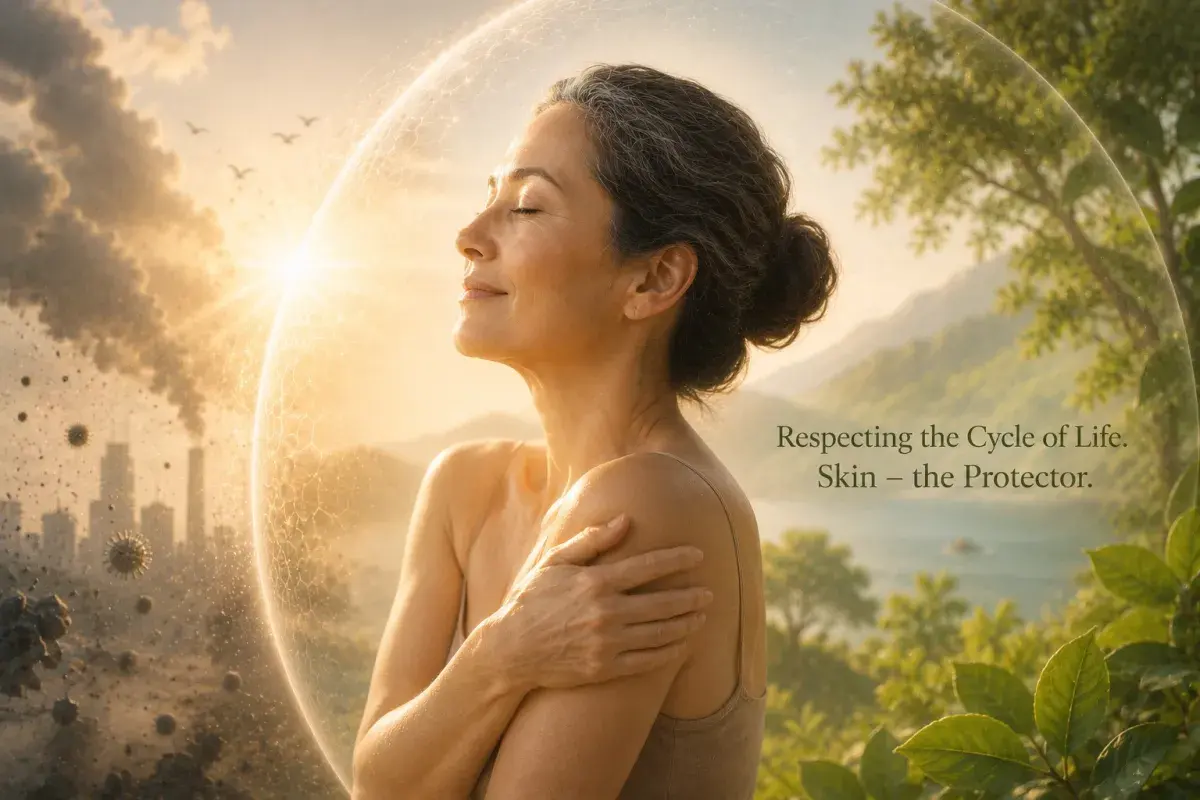
Skin is not simply a surface covering the body. Harris-Tryon and Grice (2022) described human skin as a protective barrier against the external environment and as a first line of defense against toxic, solar and pathogenic insults, while also helping prevent dehydration. Its protective role places skin at the boundary between the person and the constantly changing world outside.
That understanding changes how aging skin can be viewed. Aging skin is not younger skin that has failed to remain unchanged; it is living tissue that has undergone biological change while continuing to perform essential protective functions. Its present appearance therefore represents only one part of its story, while its structure and function reveal another.
Youth Was a Beginning, Not the Destination
Younger skin is often treated as the standard against which aging skin is judged. Yet younger skin was simply at an earlier point in its biological life, with fewer years of environmental exposure and age-related change behind it. The purpose of Pro-Aging care is not to declare that younger skin was better, but to understand what aging has changed and how the skin can be supported in its present state.
Research on environmental skin aging has shown that intrinsic biological processes interact with environmental exposures across the life course. Krutmann et al. (2021) described extrinsic skin aging as the result of environmental exposures interacting with genetic factors and discussed mechanisms involving molecular damage and alterations in dermal fibroblast function. These findings place environmental exposure within the broader biology of skin aging rather than treating aging as the result of one isolated cause.
This distinction matters because the objective of healthy aging is not to recreate an earlier biological state. It is to preserve function, manage conditions that can be addressed, and protect the skin as it continues through its natural life course.
The Skin: Our First Interface With the World
Every moment of daily life places the skin in contact with the external environment. It encounters sunlight, air, water, temperature changes and physical contact while maintaining the boundary between the body's internal environment and the world outside. The skin's barrier therefore has a practical biological purpose that extends far beyond appearance.
Harris-Tryon and Grice (2022) explained that the skin provides protection from toxic, solar and pathogenic insults while contributing to the prevention of dehydration. Their review also described the skin as an interface with sensory and protective functions, reinforcing that skin health cannot be reduced to how youthful or smooth the surface appears.
A useful way to understand this function is to think of the skin as a warm coat in the cold, an umbrella in the rain or a jacket against the elements. The comparison is our metaphor, not the researchers' language, but it captures the function their evidence describes: the outer covering matters because it helps protect the person within.
Image
A Lifetime Written on the Skin
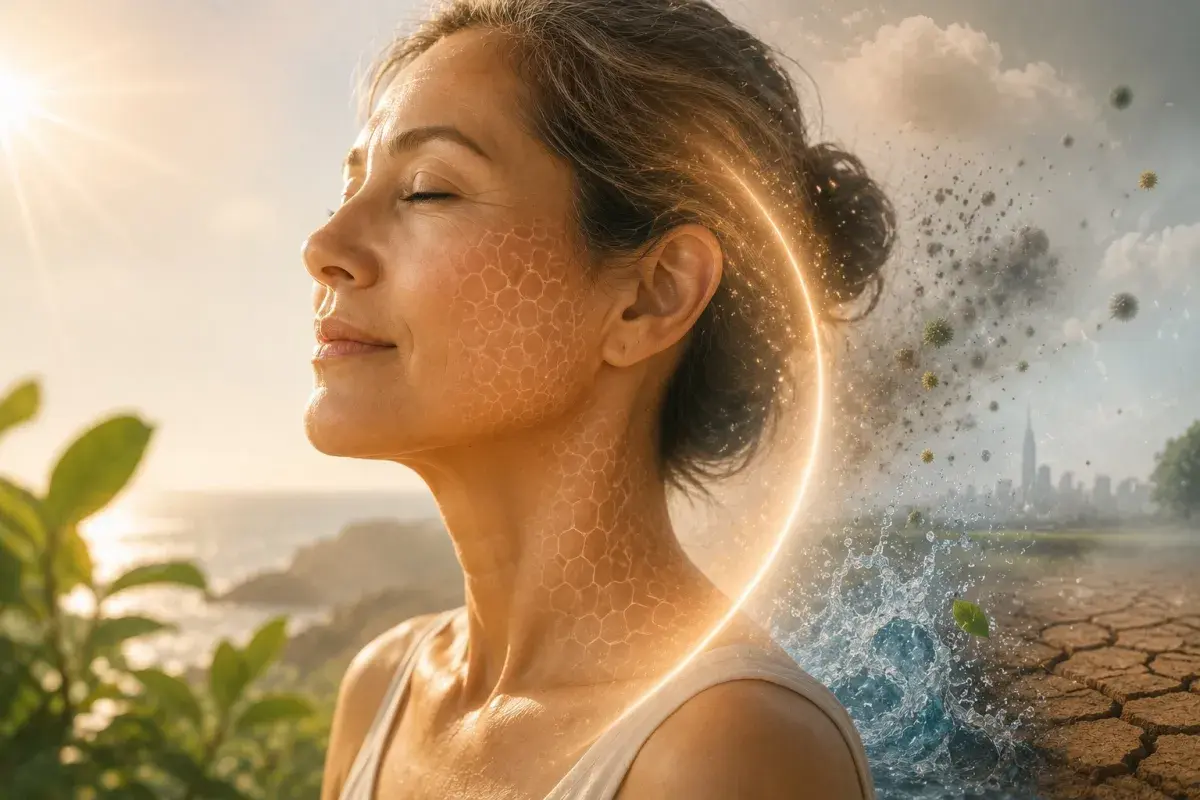
The environment meets the skin repeatedly rather than as a single event. Sunlight reaches it day after day, temperatures rise and fall, water repeatedly touches it, air moves across it, and pollutants may be present in the surrounding environment. Over decades, these exposures become part of the conditions in which aging skin has continued to function.
Krutmann et al. (2021) reviewed environmental factors involved in extrinsic skin aging and described the interaction between environmental exposures and biological processes involved in skin aging. Their review included factors such as ultraviolet radiation and air pollution and examined mechanisms through which environmental stress can influence skin biology.
The important point is not that every line, spot or change can be traced to one environmental exposure. The evidence establishes something more useful: the environment belongs in the history of aging skin.
The Sun Leaves a Biological History
Ultraviolet radiation is one of the most extensively studied environmental influences on skin. The World Health Organization (WHO, 2022) reported that excessive UV exposure produces acute and chronic effects and that chronic exposure contributes to premature skin aging as well as skin cancer.
The biological effects also differ according to wavelength. WHO (2024) explained that UVA penetrates deeper into the skin and can affect connective tissue, contributing to loss of elasticity and premature aging, while UVB is absorbed mainly in the epidermis and contributes to effects including DNA damage and sunburn.
UV exposure also varies with environmental conditions. WHO (2022) identifies latitude, altitude, season, time of day, cloud cover, ozone and reflection from surfaces as factors that influence the amount of UV reaching the skin. Understanding those conditions allows us to view sun exposure as part of a person's environmental history rather than as an isolated cosmetic concern.
Climate: The World Around the Skin
Temperature and humidity are often discussed as though their effects on skin were simple and predictable. Research tells a more precise story. Environmental conditions can influence skin-barrier measurements, but the direction and magnitude of those effects vary across studies and circumstances.
Green et al. (2022) conducted a systematic review of environmental and pollution influences on transepidermal water loss (TEWL), an objective measurement of water passing through the stratum corneum. Fifteen human studies met their inclusion criteria, including 11 studies examining climate or seasonal factors.
The findings showed that climate and seasonal studies produced contradictory results, while all four pollution studies included in the review reported increased TEWL following exposure to particulate matter or nitrogen dioxide. The authors concluded that climate and seasonal effects could not be reduced to temperature and relative humidity alone and called for further investigation of additional environmental variables (Green et al., 2022).
This is exactly why environmental skin care requires context. The climate matters, but the climate is not the whole story.
Tropical Asia and Four-Season Asia
A person living in a tropical environment may encounter high temperatures, humidity, perspiration and strong sunlight, while also spending substantial time in air-conditioned environments. A person living in an Asian region with pronounced seasonal changes may encounter periods of cold, lower humidity and indoor heating before moving back into warmer conditions.
These environments are different, but they should not be turned into simplistic categories of “good” or “bad” climates for aging skin. They are different exposure patterns that can place different demands on the skin. The 2024 global dermatology panel emphasized that mature xerosis involves both genetic and environmental factors affecting stratum-corneum hydration and barrier function (Fluhr et al., 2024).
The lesson is straightforward: understanding the environment means understanding the conditions in which a particular person's skin actually lives.
Image
Water: Necessary for Life, Part of the Skin Story
Water is essential, yet the skin does not encounter water under one single condition. Bathing, washing, swimming and other forms of exposure differ in temperature, duration, frequency and the cleansing practices that accompany them. Those details matter when we consider how the skin experiences repeated environmental contact.
The American Academy of Dermatology (AAD, n.d.) identifies hot water, long showers or baths and harsh cleansing products among factors that can worsen dry skin. The conclusion is not that water is harmful to aging skin. It is that exposure has conditions, and those conditions belong in the broader understanding of skin care.
The Climate We Create Ourselves
The environment surrounding our skin is not limited to outdoor weather. Modern life can move the skin repeatedly between outdoor heat or cold and indoor spaces with controlled temperature and humidity.
A person can move from humid outdoor air into an air-conditioned vehicle, then into an air-conditioned office, back outside and later into an air-conditioned home. The skin therefore experiences a sequence of different microenvironments within a single day.
Research on TEWL has included indoor humidity and environmental transitions, but Green et al. (2022) found that the available evidence did not support one universal explanation for how climate and seasonal conditions affect TEWL. The useful question is “What environments does my skin repeatedly experience?”
Pollution: Another Chapter in the Skin's History
Air pollution introduces environmental exposures that are less visible than sunlight or weather. Particulate matter and gases such as nitrogen dioxide have been investigated for their effects on skin-barrier function and other biological responses.
Green et al. (2022) found that all four pollution studies included in their systematic review reported increased TEWL after exposure to particulate matter or nitrogen dioxide. The authors identified oxidative stress as one possible mechanism while emphasizing the need for further research into the effects of other pollutants and environmental conditions.
Fitoussi et al. (2022) reviewed experimental models of human skin responses to environmental pollutants and described skin as a physical, chemical and immunological barrier against environmental stressors. Their review also demonstrated why evidence from laboratory and experimental models must be interpreted carefully when considering effects in real-world human populations.
The evidence therefore gives us a reason to investigate pollution as part of environmental skin exposure, without turning every laboratory finding into a universal claim about human skin.
The Skin Remembers - But It Also Adapts
A lifetime of exposure should not lead us to describe aging skin simply as accumulated damage. Skin is a living organ that maintains a barrier, regulates water movement, participates in immune defense and responds continuously to its environment. Its ability to maintain these functions is part of what has allowed it to protect the person throughout life.
Harris-Tryon and Grice (2022) emphasized the protective and barrier functions of skin, while the environmental-aging literature describes the interaction between biological aging and environmental exposure rather than reducing aging to one process (Harris-Tryon & Grice, 2022; Krutmann et al., 2021).
Aging skin can therefore be understood as living skin that has undergone change, not simply skin that has become damaged. Some changes are part of biological aging, some are influenced by environmental exposure, some may indicate disease or dysfunction, and some cannot be assigned to one cause from appearance alone.
When Appearance and Function Are Not the Same Thing
Looking younger can feel good. Feeling comfortable and confident in one's appearance has value, and aesthetic care has a legitimate place in personal choice. But appearance alone cannot establish whether skin is healthy or whether its protective functions are being maintained.
A smoother surface does not, by itself, demonstrate an intact barrier. Likewise, visible lines do not mean that the skin has failed to perform its biological purpose. Skin health involves functions that cannot be judged solely by how young or old the surface appears.
This distinction matters because looking younger and having healthy skin are not interchangeable measures.
Image
Don't Force the Skin Backward
Aging skin does not need to be treated as something embarrassing or shameful. It has spent years forming a boundary between the body and its environment, responding to exposure and continuing to perform its protective functions.
Aesthetic care may improve appearance, and medical or dermatological interventions may appropriately address specific conditions or concerns. But the pursuit of a younger appearance should not become the only standard by which aging skin is valued.
We do not need to force aging skin backward to care for it well. We can care for it forward.
Caring forward means understanding the skin we have today and supporting its present needs rather than demanding that it reproduce a biological state from decades earlier.
From Knowing to Understanding
Article 2 taught us to pay attention to what our skin is telling us. Article 3 adds the context behind those observations by asking what that skin has lived through and what environment it continues to experience.
Dryness, tightness, roughness or sensitivity are observations. Understanding them requires us to consider the skin's age, history, environment, habits and individual circumstances rather than assigning every change to aging itself. Knowing tells us what we notice. Understanding asks us to place what we notice in context.
From Understanding to Caring
Once we recognize that aging skin carries a history and constantly interacts with its environment, care shifts from an impossible attempt to recreate the past into a responsive dialogue with the skin's present condition. This approach does not mean ignoring appearance or refusing intervention; rather, it means giving equal weight to what the skin needs right now to function comfortably, remain resilient, and continue performing its vital protective role. The central question shifts from what the skin used to look like to What does this skin need now?
From Caring to Protecting
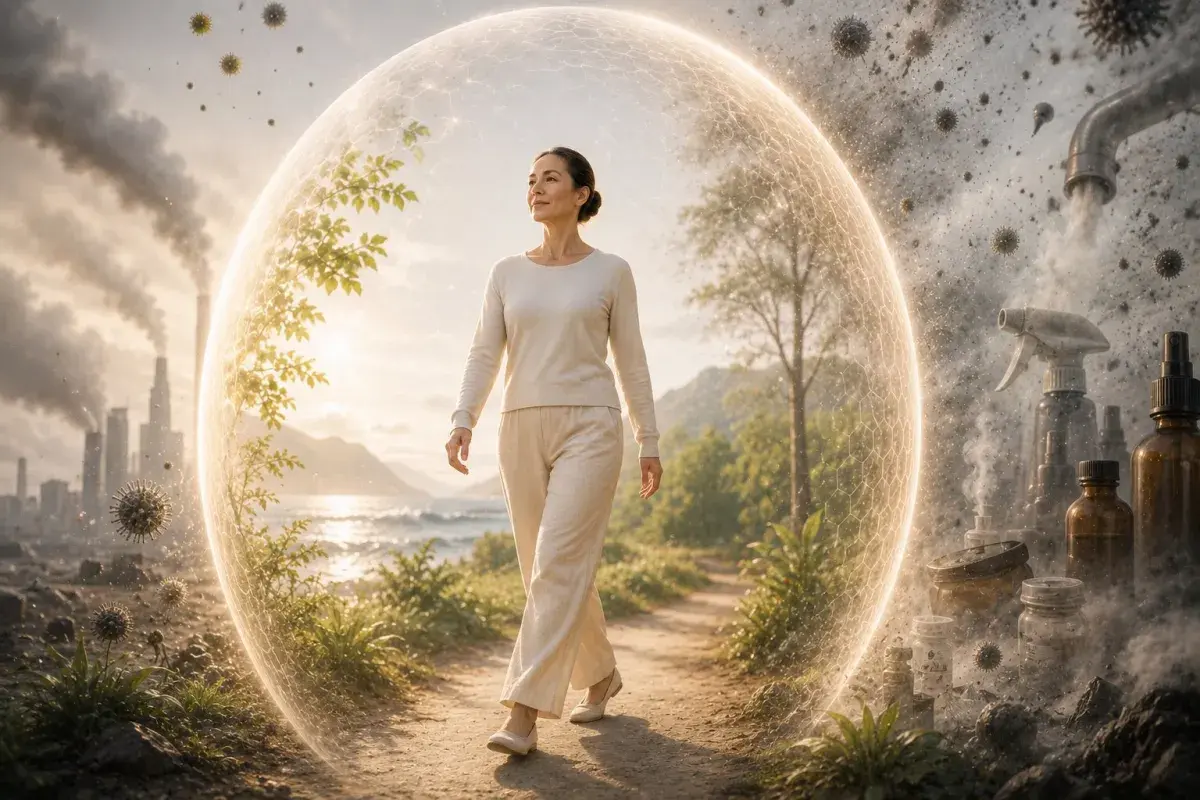
Protecting aging skin is not about halting time or fighting the aging process itself; it is about preserving the skin's ongoing physiological functions and its capacity to serve the person within it. This requires safeguarding the moisture barrier, supporting proper hydration, mitigating unnecessary environmental stress, and listening when the skin signals distress.
We are not defending ourselves against aging; we are defending the skin as it gracefully continues to age alongside us.
Respecting the Cycle of Life
The skin began its journey with us, changing as we changed, facing the world with us, and adapting to conditions both within and outside our control. Its aging is never a failure of purpose, but rather a physical manifestation of its history. To truly know the skin is to observe it closely, to understand it is to honor its past, to care for it is to answer its present needs, and to protect it is to respect the life it still has to live.
We do not need to force aging skin backward to care for it well; we can care for it forward.
Having already asked what changed, what our skin is telling us, and what it has lived through, we now find ourselves standing at the threshold of the next question as the journey continues…
What Can Nature Actually Provide?
In Article 4, we turn our magnifying glass toward the kitchen, garden, mountain, and sea, we investigate the fruits, vegetables, herbs, plants, oils, minerals, and marine resources that have earned a place in scientific literature.
Rather than taking claims at face value, we examine the actual research: the specific preparations used, the populations studied, the measured outcomes, the study limitations, the true strength of the evidence, and the cautious recommendations put forward by the researchers themselves.
After all, calling something "natural" is never a conclusion in itself; it is merely an invitation to investigate. 🔎🌿
Image

Suggested Citation
Lendez, M. L. (2026). PRO-AGING SKIN CARE: Your Skin Has a History. Chikicha.com (the author is the developer of the Ikigai-Bayanihan Framework for Purposeful Aging).
About the Author
Dr. Mariza Lendez is a researcher, social entrepreneur, and creator of the Ikigai-Bayanihan (Purpose + Collective Ethos) Retirement Model, an innovative framework that integrates purpose, community engagement, and sustainability to support meaningful aging and later-life well-being.
References
American Academy of Dermatology Association. (n.d.). Dry skin: Who gets and causes. https://www.aad.org/public/diseases/a-z/dry-skin-causes
Fitoussi, R., Faure, M.-O., Beauchef, G., & Achard, S. (2022). Human skin responses to environmental pollutants: A review of current scientific models. Environmental Pollution, 306, 119316. https://doi.org/10.1016/j.envpol.2022.119316
Fluhr, J. W., Alexis, A. F., Andriessen, A., Ferero Barrios, O. L., Bjerring, P., Foley, P., Gold, M. H., Kaderbhai, H., & Zhang, C. (2024). A global perspective on the treatment and maintenance of mature skin using gentle cleansers and moisturizers. International Journal of Dermatology, 63(12), 1676–1684. https://onlinelibrary.wiley.com/doi/10.1111/ijd.17375
Green, M., Kashetsky, N., Feschuk, A., & Maibach, H. I. (2022). Transepidermal water loss (TEWL): Environment and pollution—A systematic review. Skin Health and Disease, 2(2), e104. https://doi.org/10.1002/ski2.104
Harris-Tryon, T. A., & Grice, E. A. (2022). Microbiota and maintenance of skin barrier function. Science, 376(6596), 940–945. https://doi.org/10.1126/science.abo0693
Krutmann, J., Bouloc, A., Sore, G., Bernard, B. A., & Passeron, T. (2021). The skin aging exposome. Journal of Dermatological Science, 85(3), 152–161. https://doi.org/10.1016/j.jdermsci.2016.09.015
Viodé, C., Rouquier, A., Mias, C., Questel, E., Bessou-Touya, S., & Duplan, H. (2022). Specific protection of sensitive skin against environmental stress by maintenance and improvement of barrier function. Journal of the European Academy of Dermatology and Venereology, 36(Suppl. 5), 13–20. https://doi.org/10.1111/jdv.17910
World Health Organization. (2022). Ultraviolet radiation. https://www.who.int/news-room/questions-and-answers/item/radiation-the-known-health-effects-of-ultraviolet-radiation
World Health Organization. (2024). Radiation: The known health effects of ultraviolet radiation. https://www.who.int/news-room/questions-and-answers/item/radiation-the-known-health-effects-of-ultraviolet-radiation