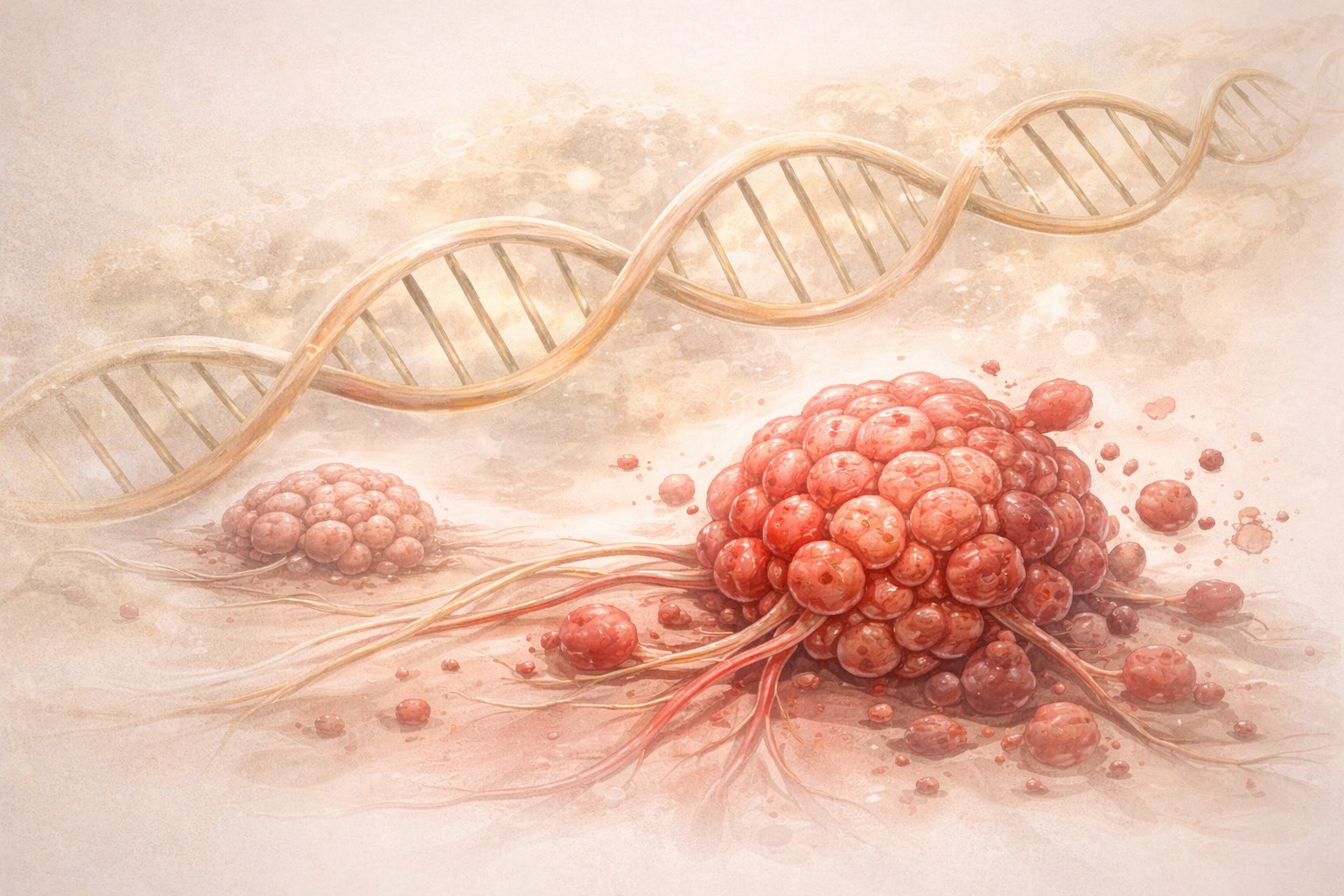
What Exactly Is Cancer? Breaking Down the Basics
Cancer is one of the most widely discussed and often most misunderstood conditions in modern health.
For many, the word itself carries immediate weight: fear, uncertainty, even silence. In many cultures, cancer is still spoken of in hushed tones, as if naming it makes it more real. This stigma often leads to delayed consultations, avoidance of screening, and a sense of isolation for those affected.
But here is the important shift: Cancer is not a single, mysterious disease. It is a biological process, one that can be understood.
And understanding it changes everything not by removing seriousness, but by replacing fear with clarity, and confusion with informed action.
According to the World Health Organization (WHO), cancer is among the leading causes of death globally, responsible for nearly 1 in 6 deaths worldwide. Yet at the same time, many cancers today are preventable, detectable early, and increasingly treatable.
The goal, then, is not alarm but awareness.
How Cancer Begins: When Normal Cells Lose Control
The human body is built on a system of balance. Every day, billions of cells divide, repair, and die in a tightly regulated process. This balance is controlled by our genetic code specifically, genes that signal when a cell should grow, repair, or stop. Cancer begins when this system breaks down.
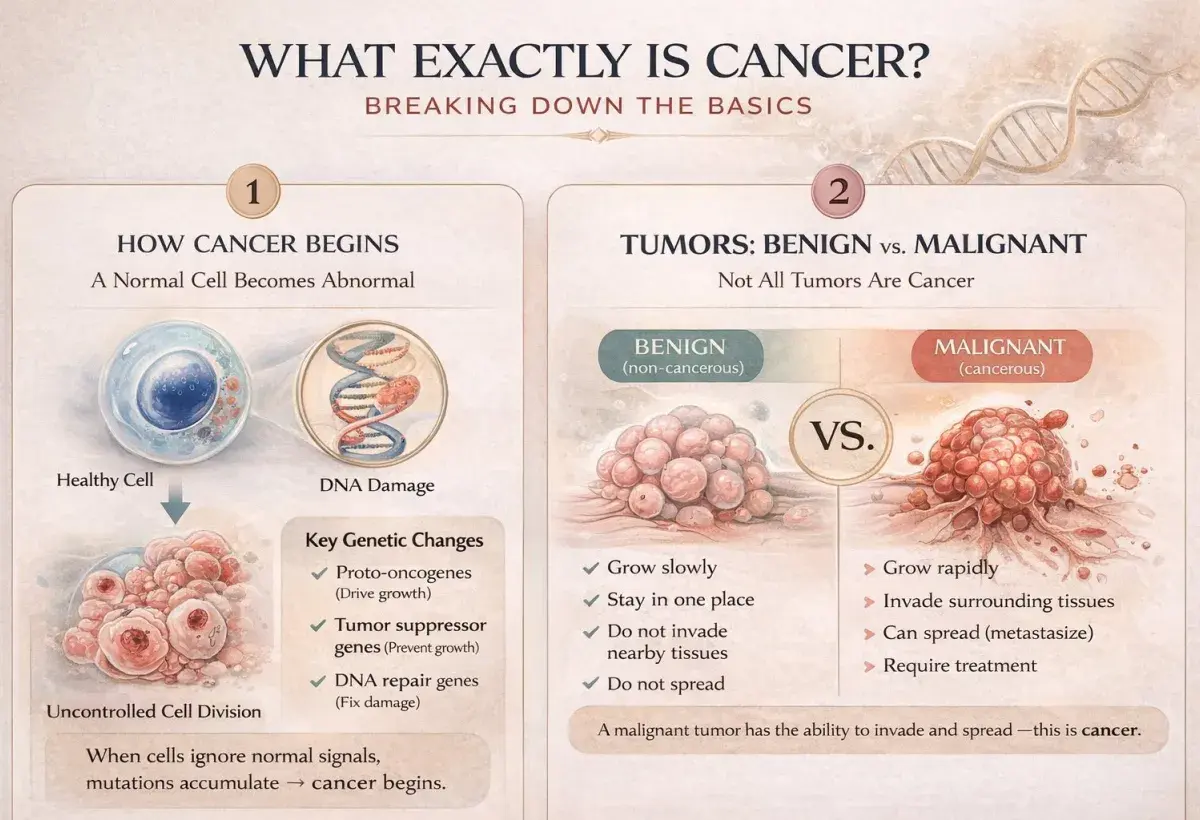
At the center of this process are genetic mutations changes in DNA that disrupt normal cell behavior. These mutations typically affect three key groups of genes:
- Proto-oncogenes, which normally promote healthy cell growth
- Tumor suppressor genes, which slow down or stop growth when needed
- DNA repair genes, which fix errors in the genetic code
When these systems fail, cells begin to:
- Grow when they shouldn’t
- Ignore signals to stop
- Avoid programmed cell death (apoptosis)
Over time, these abnormal cells accumulate, forming the foundation of cancer.
Tumors: Not All Growth Is Cancer
A tumor simply means an abnormal mass of cells but not all tumors are cancerous.
There are two fundamental types:
- Benign tumors: These grow slowly, remain localized, and do not spread to other parts of the body. While they can still cause problems depending on location, they are not cancer.
- Malignant tumors: These are cancerous. They have the ability to invade surrounding tissues and spread to distant organs.
This distinction matters, because the presence of a tumor alone does not automatically mean cancer.
Cancer Is Not One Disease But Many
Cancer is not a single condition. It is a broad group of diseases, with over 100 distinct types.
They are classified based on where they originate:
- Carcinomas begin in epithelial cells (skin, organs)
- Sarcomas arise from bone, muscle, or connective tissue
- Leukemias affect blood-forming tissues
- Lymphomas involve the immune system
Each type behaves differently, responds to different treatments, and carries a different prognosis.
A critical point often misunderstood:
If breast cancer spreads to the lungs, it is still breast cancer, not lung cancer. Treatment is based on the origin not the location it spreads to.
Image
Metastasis: When Cancer Spreads
Cancer becomes more complex when it spreads a process known as metastasis. This happens when cancer cells:
- Break away from the original tumor
- Enter the bloodstream or lymphatic system
- Establish new tumors in other organs
According to global cancer research, most cancer-related deaths are linked to metastasis, not the original tumor. This is why early detection matters not to create urgency, but to preserve more treatment options.
What Causes Cancer: A Combination of Factors
Cancer does not come from a single cause. It develops through a combination of genetic vulnerability and external exposure over time. The WHO identifies several major risk factors:
- Tobacco use (the leading preventable cause)
- Excessive sun exposure (UV radiation)
- Unhealthy diet and obesity
- Physical inactivity
- Alcohol consumption
- Environmental pollutants
- Certain infections (such as HPV, hepatitis B and C)
Importantly, only about 5-10% of cancers are inherited. The majority result from acquired mutations over a lifetime. This means that while not all cancer is preventable, risk can be significantly reduced.
What Makes Cancer Cells Different from Normal Cells
Cancer cells behave differently in fundamental ways. Scientists often describe these differences as the “hallmarks of cancer.”
These include the ability to:
- Grow continuously without normal signals
- Ignore signals that stop growthDNA and Tumor
- Avoid programmed cell death
- Stimulate blood vessel formation (angiogenesis)
- Invade tissues and spread
- Evade the immune system
These behaviors explain why cancer is not simply “fast growth” it is uncontrolled, adaptive growth.
Why Understanding Cancer Matters
Understanding cancer does not eliminate its seriousness but it changes how we respond to it. From a public health perspective (WHO and global oncology research), knowledge supports:
- Early detection and screening, which significantly improves outcomes
- Risk reduction, through lifestyle and environmental awareness
- Better treatment decisions, including targeted and personalized therapies
- Reduced stigma, allowing more open conversations and earlier care
In many cases today, certain cancers are increasingly managed as long-term conditions, especially when detected early.
Final Perspective: Clarity Over Fear
Cancer is complex but it is not unknowable. It is a process that begins at the cellular level, influenced by both biology and environment, and shaped over time. The goal is not to live in fear of it , and not to ignore it either. The goal is to understand it enough to act wisely:
- to screen when needed
- to reduce avoidable risks
- to seek care early
- and to approach it with informed awareness
Because the moment cancer becomes understood, it becomes something we can respond to and not just something we fear.
Image

About the Author
The author is a registered nurse with both clinical and personal experience in caregiving. Guided by the belief that prevention is always better than cure, she advocates for early awareness, intentional living, and informed decision-making to reduce long-term burdens, whether in health or in life. She is also a strong believer in a natural remedy–first approach, valuing the body’s innate ability to heal when supported by proper nutrition, lifestyle, and holistic care.
References
- World Health Organization (WHO). Cancer Fact Sheets & Global Burden of Cancer
- National Cancer Institute (NCI). What Is Cancer?
- American Cancer Society. Cancer Basics
- Hanahan, D., & Weinberg, R. (2011). Hallmarks of Cancer: The Next Generation. Cell
- Scharffetter-Kochanek, K., et al. Molecular mechanisms of aging and cancer
- International Agency for Research on Cancer (IARC)
Disclaimer
This article is intended for educational and informational purposes only. Individual health conditions vary, and consulting a qualified healthcare professional should always be the first step for proper evaluation, screening, and medical guidance. We do not sell, promote, or endorse any specific product or treatment mentioned.