Chikicha Series - The Forgotten Pillars of Being Human: Part 1: Dignity - The Structural Value of Human Worth | Part 2: Decency - The Behavioral Expression of Human Value | Part 3: The Moral Ecosystem - Integrating Dignity and Decency in Aging
The Structural Value of Human Worth
I. Introduction: When Value Becomes Conditional
In contemporary society, the criteria by which individuals are evaluated have become increasingly explicit. Productivity, visibility, and measurable contribution now function as dominant indicators of worth. These metrics serve practical purposes within economic and institutional systems; however, they also shape how individuals come to understand themselves and others.
Over time, this has produced a subtle but significant shift: human value is no longer assumed to be inherent but is often interpreted as conditional. Individuals are recognized, respected, or prioritized based on what they contribute rather than who they are.
This shift raises an important question particularly in the context of aging:
What happens to a person’s sense of worth when the structures that once validated it begin to change or disappear?
This article argues that dignity must be understood not as a moral abstraction but as a structural constant, a foundational element necessary for psychological stability, identity continuity, and meaningful participation across the lifespan.
II. Conceptual Foundation: Dignity as Intrinsic Worth
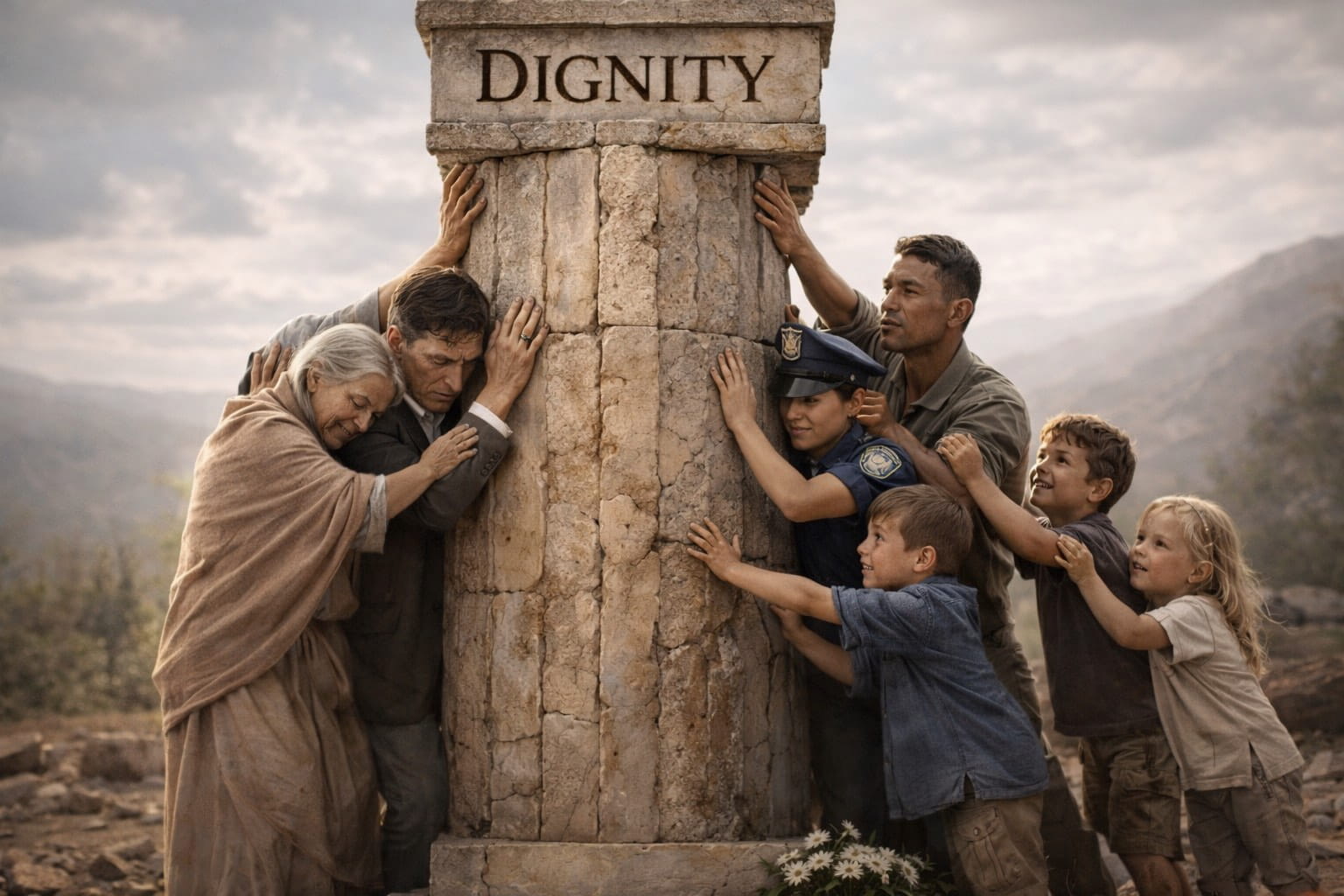
Dignity is most rigorously defined within moral philosophy as the inherent and inalienable worth of every human being. Unlike status or achievement, it is not contingent on external validation.
Immanuel Kant established one of the most enduring formulations of this idea, arguing that human beings possess intrinsic value and must never be treated merely as means to an end (Kant, 1785/1993). This principle later informed the foundations of modern human rights frameworks, including the Universal Declaration of Human Rights (United Nations, 1948), which affirms that all human beings are “born free and equal in dignity and rights.”
What ultimately matters in these formulations is not where the idea of dignity originates, nor how often it has been repeated across philosophical traditions. Its importance lies in what it demands of us in practice.
Dignity does not enter and exit a person’s life depending on circumstance. It does not adjust itself according to age, decline with economic standing, weaken with physical limitation, or depend on how visible or relevant a person appears within society.
A person does not possess less dignity because they have aged. They do not lose it because they no longer produce at the same level. It is not reduced by illness, nor diminished by being overlooked. Dignity is not responsive to conditions, it is indifferent to them.
Dignity is non-negotiable, it is constant, intact, and unaltered beneath all external changes. However, while dignity may be conceptually stable, its recognition in lived experience is not guaranteed. This gap between principle and practice is where most contemporary challenges emerge.
Image
III. The Shift Toward Conditional Worth
Despite the enduring philosophical grounding of dignity, modern social systems increasingly operate on conditional frameworks of value. This shift is not accidental; it is the result of overlapping structural forces.
1. Economic Instrumentalization
In market-driven systems, individuals are often evaluated based on productivity and output. Economic participation becomes a primary measure of value, reinforcing the idea that worth is linked to contribution (Sen, 1999; Piketty, 2022).
2. Meritocratic Narratives
Contemporary societies frequently emphasize meritocracy, where success is attributed to effort and ability. While this framework promotes achievement, it also introduces an implicit hierarchy of worth; those who achieve more are perceived as more valuable (Sandel, 2020).
3. Digital Visibility and Attention Economies
In digitally mediated environments, visibility functions as a proxy for relevance. Individuals who are less visible, particularly older adults, may experience a form of symbolic marginalization (Floridi, 2021). Together, these forces reshape the perception of human value. Dignity, while still acknowledged rhetorically, becomes implicitly conditional in practice.
IV. Mechanisms of Dignity Erosion
The erosion of dignity does not occur through explicit denial. However, it occurs through repeated exposure to conditions that subtly undermine recognition.
1. Internalization of External Valuation
When individuals are consistently evaluated based on external criteria, they begin to internalize those standards. Over time, self-worth becomes dependent on performance, relevance, or validation.
2. Role-Dependent Identity Formation
Identity becomes closely tied to roles, professional, social, or familial. When these roles change, individuals may experience a disruption in their sense of self.
3. Normalization of Conditional Respect
Social environments adjust expectations. Respect is extended selectively rather than universally, reinforcing the perception that dignity must be earned. These mechanisms are cumulative. Individually, they may appear insignificant. Collectively, they reshape how individuals understand their own worth.
Image

V. Psychological Consequences: Evidence from Recent Research
The implications of dignity erosion are not theoretical. They are supported by a growing body of interdisciplinary research. Studies in social psychology and public health indicate that perceived loss of respect or social value is associated with:
- Increased risk of depression and anxiety (World Health Organization, 2022)
- Reduced life satisfaction and well-being (Krys et al., 2022)
- Withdrawal from social participation and reduced trust (OECD, 2023)
Honneth (1995) conceptualizes this as a failure of recognition, in which individuals require acknowledgment of their worth to maintain a stable identity. When recognition is absent, individuals experience what can be described as identity destabilization.
For aging populations, this becomes particularly significant. As external markers of value diminish, the absence of a stable internal framework of dignity can lead to:
- Loss of purpose
- Increased isolation
- Psychological vulnerability
Thus, dignity is not only an ethical principle, it is a psychological necessity.
VI. Dignity and Aging: A Structural Perspective
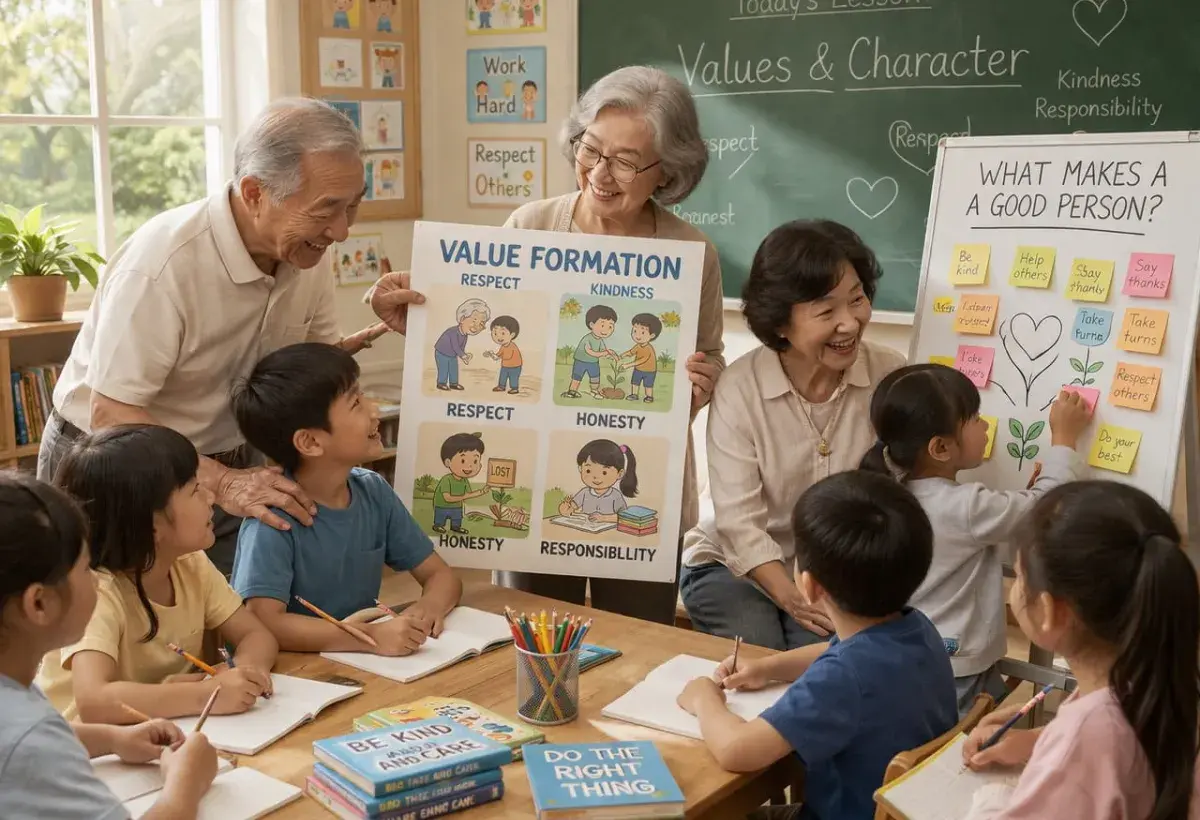
Aging, in many ways, brings clarity. Earlier in life, most of us do not question where our sense of worth comes from. It is reinforced, almost automatically, by the structures around us, our work, our roles, our responsibilities, and our ability to contribute.
These become the reference points through which we understand our place in the world. We introduce ourselves by what we do, we measure progress by what we achieve, and we feel anchored because these structures are stable. Over time, as work changes, or eventually comes to an end, those structures begin to shift and roles evolve. As expectations placed on us along with the recognition that once accompanied them - gradually fade from view, a subtle but significant transition begins to take place.
Image

The question of worth becomes less about what is externally reinforced and more about what remains when those reinforcements are no longer present. It is here that intrinsic worth dignity in its truest sense, becomes central. Not as an abstract idea, but as something that must hold, even when everything else changes.
Global research on aging has become increasingly clear on one point: well-being in later life is not determined by health alone, nor by financial security in isolation. What consistently emerges across studies and cultures is something more fundamental. People age better when they feel respected, retain a sense of autonomy, and remain part of social life rather than being gradually set aside (World Health Organization, 2021; Carstensen et al., 2021).
These are often presented as separate factors but in reality, they are closely connected. They are not independent conditions but are expressions of something deeper. They are expressions of dignity. When dignity is present as a lived experience, something stabilizes.
A person continues to recognize themselves across time. Their identity does not fracture simply because their roles have changed. Engagement remains possible, not because they are required to participate, but because they are still seen as someone who can. Relationships, particularly across generations, remain intact because there is mutual recognition of worth.
But when dignity is undermined, the pattern reverses. Slowly, and steadily, people begin to withdraw, participation declines then connections weaken.
And what begins as a shift in interaction gradually becomes something more structural. Social systems lose cohesion because individuals no longer feel anchored within them. Aging, in this context, is no longer experienced as continuity but as a slow form of detachment. This leads us to a critical point, that the quality of aging is not determined solely by how long people live, but by whether the conditions that sustain dignity remain present throughout that life.
Aging does not reduce dignity, but systems that fail to recognize dignity can diminish the experience of aging.
VII. Societal Implications: Beyond the Individual
It is easy to think of dignity as something personal, something that belongs to the individual, shaped by private experience and internal belief. But if we step back and look more closely, a broader pattern begins to emerge.
How dignity is treated at the individual level is rarely isolated. It reflects something larger, it is how a society is structured, what it rewards, what it overlooks, and what it ultimately considers valuable.
In societies where dignity is consistently upheld—not selectively, but as a baseline condition which certain patterns tend to emerge with notable regularity.
People are more likely to trust institutions when they experience them as fair and respectful in practice (Rothstein & Uslaner, 2005; OECD, 2023). Trust, in this sense, is not built solely through formal structures but through the repeated experience of being treated with recognition and consideration
Social interactions within such environments also become more stable and less defensive. Cohesion is not imposed through authority or regulation; it develops organically through consistent patterns of mutual respect. Individuals are more inclined to cooperate, participate, and engage when they do not feel the need to constantly negotiate their worth.
Image

Even the pressures associated with inequality are experienced differently. While structural differences may still exist, their psychological impact is mitigated when individuals do not feel entirely reduced to their position within those structures (Wilkinson & Pickett, 2009; Marmot, 2020). A baseline of dignity softens the social consequences of disparity by preserving a sense of inherent worth.
Recent global data reinforces this pattern. Studies on institutional trust and social cohesion have shown that perceptions of fairness, inclusion, and respect are central to maintaining stable societies (Edelman, 2024; World Health Organization, 2022). Where individuals feel recognized, systems tend to hold. Where they feel disregarded, fragmentation begins.
Now consider the opposite. When dignity becomes conditional, extended to some, withheld from others, the effects begin to accumulate in less visible but more consequential ways. Trust does not disappear overnight, it erodes gradually. People begin to question whether systems are fair, whether institutions are reliable, whether others can be depended on.
At the same time, social cohesion weakens, interactions become more cautious, and more transactional. The sense of shared belonging gives way to fragmentation. And perhaps most critically, marginalization becomes normalized. Not always through explicit exclusion, but through repeated patterns of being overlooked, dismissed, or deprioritized, until these experiences no longer stand out as exceptions, but begin to feel like the norm.
This is where dignity reveals its broader function. It is not only a personal condition as it operates as a system-level variable, one that shapes the stability, resilience, and overall quality of social life.
When dignity is consistently recognized, systems tend to hold. When it is not, systems begin to strain, inevitably. And in aging societies, where questions of worth, participation, and recognition become more pronounced, the presence or absence of dignity becomes even more consequential. Because in the end, the way a society treats dignity is not just a reflection of its values but a determinant of its future.
VIII. Conclusion: Restoring the Constant
Dignity is not a symbolic ideal. It is a structural element of human life that influences psychological well-being, social participation, and identity stability.
Dignity does not need to be redefined, it needs to be re-centered. Modern systems will continue to rely on metrics such as productivity and performance. These are necessary for function. However, they must not replace the foundational principle that human worth is intrinsic and constant.
The challenge is not philosophical, it is practical:
- How do individuals maintain a sense of worth independent of changing roles?
- How do societies ensure that dignity is recognized across all stages of life?
These questions become more urgent as populations age and traditional structures of validation evolve. Dignity, when understood as a structural constant, provides a stable foundation for navigating these transitions. The challenge is not to redefine dignity, but to restore its centrality in how we understand human worth.
However, dignity alone is not sufficient as it establishes what human beings are worth - but does not determine how that worth is expressed in everyday life. For that, another element becomes necessary.
In the next part, we turn to decency, the behavioral dimension that translates dignity into lived reality.
Image

Suggested Citation:
Lendez, M. (2026). Dignity and decency: The forgotten pillars of being human (Chikicha Series). Chikicha.
Dr. Mariza Lendez is the developer of the Ikigai-Bayanihan Purpose-Driven Retirement Framework, a model that redefines aging through purpose, dignity, and community-centered living.
Chikicha Series - The Forgotten Pillars of Being Human
👉 Part 1: Dignity - The Structural Value of Human Worth
👉 Part 2: Decency - The Behavioral Expression of Human Value
👉 Part 3: The Moral Ecosystem - Integrating Dignity and Decency in Aging
References
Carstensen, L. L. (2021). Socioemotional selectivity theory: The role of time in emotional experience. Annual Review of Psychology.
Edelman. (2024). Edelman trust barometer global report.Floridi, L. (2021). The ethics of information. Oxford University Press.
Honneth, A. (1995). The struggle for recognition: The moral grammar of social conflicts. MIT Press.
Kant, I. (1993). Groundwork of the metaphysics of morals (M. Gregor, Trans.). Cambridge University Press. (Original work published 1785)
Marmot, M. (2020). Health equity in England: The Marmot review 10 years on.
Organisation for Economic Co-operation and Development (OECD). (2023). Trust and public governance review. OECD Publishing.
Piketty, T. (2022). A brief history of equality. Harvard University Press.
Rothstein, B., & Uslaner, E. M. (2005). All for all: Equality and social trust. World Politics, 58(1), 41–72.
Sandel, M. J. (2020). The tyranny of merit: What’s become of the common good? Farrar, Straus and Giroux.
Sen, A. (1999). Development as freedom. Oxford University Press.
United Nations. (1948). Universal Declaration of Human Rights. https://www.un.org/en/about-us/universal-declaration-of-human-rights
Wilkinson, R., & Pickett, K. (2009). The spirit level: Why more equal societies almost always do better. Allen Lane.
World Health Organization. (2021). Decade of healthy ageing: Baseline report. WHO.
World Health Organization. (2022). World mental health report: Transforming mental health for all. WHO.